Difference Between Refrigerator and Chiller: A Practical Guide
Explore the essential differences between refrigerators and chillers, focusing on temperature targets, uses, energy implications, and how to choose the right appliance for your home.


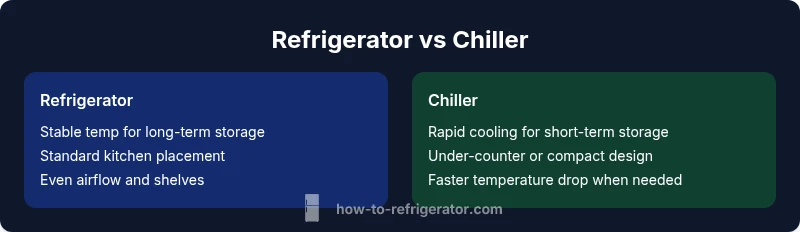
Refrigerators are standard home appliances designed to store perishable foods at typical refrigeration temperatures, while chillers are dedicated coolers intended for rapid cooling and short-term storage. The difference between refrigerator and chiller hinges on temperature targets, use cases, and energy behavior. Knowing these roles helps homeowners avoid storage mistakes and select the right appliance for daily meals and special events.
What the terms mean: refrigerator vs chiller
To begin, it’s essential to define what people typically mean by refrigerator and chiller in everyday home use. A refrigerator (often simply called a fridge) is a standard household appliance designed to store foods and drinks at refrigerated temperatures sufficient to slow spoilage. A chiller, by contrast, is a cooling device intended for rapid chilling and short-term cold storage, often used for beverages, produce, or in beverage stations and under-counter setups. In some regions, “chiller” is used interchangeably with a lower-end or specialty cooling unit, but the core distinction remains: duration and temperature emphasis. Understanding these definitions helps homeowners align equipment with storage needs, ensuring foods stay safe and flavors remain best, while avoiding unnecessary energy use. Throughout this article, we compare these two approaches across temperature targets, use cases, and design, so you can decide what makes sense for your home.
Temperature control as the backbone of the distinction
The central axis in the difference between refrigerator and chiller is how temperature is controlled and applied. A standard refrigerator maintains a stable, moderate range ideal for everyday foods, dairy, and leftovers. A chiller focuses on achieving rapid cooling for shorter periods, which benefits drinks, pre-chilled ingredients, or items that must be cooled quickly for immediate use. Because chillers often emphasize fast transfer of cold, they can reach colder temps more quickly, but their long-term storage stability may not match a traditional fridge. When you plan storage routines, ask whether you need steady, long-duration cooling or quick access to very cold items. How you answer this question shapes which unit earns a place in the kitchen.
Design and architecture: what makes them work differently
Beyond temperature targets, the two types of units diverge in design. Refrigerators prioritize even heat distribution, adjustable shelves, crisper drawers, and door storage that balances capacity with energy efficiency. They also include defrost cycles that prevent ice buildup while maintaining consistent temperatures. Chill units tend to be more compact, with rapid-cooling features, often optimized for under-counter spaces or beverage stations. They may adopt different insulation strategies, seal designs, and airflow configurations aimed at quickly pulling down temperature on contact. The result is a trade-off: speed of cooling versus storage stability and capacity. Understanding these mechanical differences helps homeowners predict performance and maintenance needs.
Typical storage roles: where to put what
For most households, the refrigerator is home to staple groceries, dairy, eggs, and leftovers—items that require steady temperatures to stay safe over several days. A chiller is ideal for beverages, pre-chilled ingredients for events, or rapid cooling of items that will be used within a shorter timeframe. In bars and small kitchens, chillers support service speed and flow, while in family homes, chillers can act as a supplemental unit for bulk beverages or quick-cooling tasks. Recognizing these roles prevents cross-use that can compromise safety and quality. If your storage demands include long-term preservation, you should favor a traditional refrigerator; for fast service or specialty storage, a chiller delivers tangible benefits.
Energy use and efficiency considerations
Energy behavior is a meaningful point of comparison between refrigerator and chiller. Model selection, size, and usage patterns drive differences in energy consumption. A standard fridge emphasizes stability and even cooling with steady energy use, while a chiller’s rapid cooling cycles may temporarily raise energy draw during peak use. How To Refrigerator Analysis, 2026 indicates that choosing appropriately sized units with proper insulation and modern compressors can yield favorable energy performance for either option. The key is optimizing load, minimizing door openings, and using features like adaptive defrost and adjustable temperature zones when available.
Space planning and installation considerations
Space constraints and kitchen layout influence the practicality of each option. Refrigerators typically come in standard width profiles and offer multiple compartments to accommodate diverse food groups. They’re often freestanding and common in most kitchens. Chill units, by contrast, excel in under-counter or built-in configurations and can slip into tight spaces where a full-size fridge would be impractical. When planning, measure clearance, consider ventilation requirements, and ensure electrical capacity matches the device’s needs. A thoughtful layout can improve usability and energy efficiency across both options.
Real-world use cases: matching needs to a solution
Imagine a family that cooks daily, shops weekly, and values stable food safety; a refrigerator remains the most sensible choice. Now picture a beverage-focused setup or a home bar with frequent rapid cooling needs; a chiller adds value by speeding up service and reducing wait times. For households with high-volume entertaining, a hybrid approach—using both appliances strategically—can balance capacity, speed, and cost. The best practice is to audit your actual usage: how often you open the door, how long items stay in storage, and which items require rapid cooling or prolonged preservation.
How to assess models and decide: a practical checklist
Begin with your daily routines: estimate how many people you serve, what you store most, and how frequently you need quick cooling. Then compare key features: volume and shelving flexibility, door configuration, energy rating, defrost methods, and maintenance needs. If possible, test door opening volumes, evaluate the ease of cleaning, and check for storage accessories that fit your pantry style. Finally, consider total cost of ownership: upfront price, energy usage, expected lifespan, and potential repair costs. A careful, methodical assessment ensures you pick the appliance aligned with your home and budget.
Common myths and misconceptions worth debunking
Several myths persist about refrigeration and cooling devices. Some assume a chiller is always more energy-efficient; others think a chiller can replace a fridge for daily cooking needs. In reality, efficiency depends on the model and how you use it. A unit that’s too large for your space wastes energy, while a too-small fridge forces more door openings and longer run times. Another misconception is that all chillers are commercial-grade; there are many residential options designed for home use. Debunking these myths helps homeowners avoid overpaying for features they won’t use and helps focus on practical requirements.
Maintenance: keeping either appliance performing well
Maintenance for refrigerators and chillers includes routine cleaning, door seal checks, and periodic drain and filter checks if applicable. Defrosting, if manual, requires attention to avoid ice buildup that impedes airflow. Inspect coils for dust and ensure adequate clearance around the back and sides for proper ventilation. Regular maintenance reduces energy consumption and extends the life of the appliance. How To Refrigerator emphasizes consistent upkeep, noting that a well-maintained unit saves money and preserves safe food storage conditions.
A quick-start guide for homeowners: action steps
- Map your typical weekly storage needs and identify items that benefit from long-term preservation versus rapid cooling. 2) List essential features and space constraints; measure the intended installation area. 3) Compare models with a focus on shelves, door configurations, and energy labeling. 4) Check installation requirements, including electrical, ventilation, and water connections if applicable. 5) Decide whether you want a primary refrigerator with a secondary chiller or a dedicated unit for specific tasks. 6) Purchase from reputable sources with solid warranty coverage and accessible service options.
Comparison
| Feature | Refrigerator | Chiller |
|---|---|---|
| Temperature range | Typically maintains stable refrigeration temps for everyday storage | Designed for rapid cooling and short-term storage at colder temps |
| Primary use | Everyday food storage and long-term preservation within a safe range | Short-term cooling needs, beverages, and quick-access chilling |
| Design & placement | Standard kitchen unit, multiple compartments, door shelves | Compact or under-counter options; specialized installations in some homes |
| Energy efficiency | Depends on model; typically optimized for steady energy use | Varies by model; rapid cooling cycles can affect short-term energy draw |
| Maintenance | Regular defrost (auto or manual), door seals, airflow management | Condensate management and frequent filters where applicable |
| Cost and value | Widely available across a broad price range | Often more specialized; prices vary by capacity and features |
Strengths
- Helps align storage needs with dedicated cooling principles
- Reduces energy waste by avoiding improper use
- Wide range of models for homes and small spaces
- Clear guidelines for when to use each appliance
Cons
- Potential confusion from overlapping features
- Chillers can be more expensive and space-limited
- Mismatched units may demand additional space or wiring
- Hybrid solutions may complicate maintenance and parts availability
Refrigerators remain the all-around choice for daily meals; chillers excel for rapid cooling and short-term storage.
If you need consistent, long-term food preservation, choose a refrigerator. If rapid cooling and quick access to cold items matter more, add a chiller. For many households, a combination tailored to use cases offers the best value.
FAQ
What is the difference between a refrigerator and a chiller in home kitchens?
A refrigerator stores foods at stable, refrigerated temperatures for longer periods, prioritizing food safety and energy efficiency. A chiller focuses on rapid cooling for short-term storage, such as beverages or ingredients needed quickly. The distinction is primarily about temperature targets and intended use.
In homes, a fridge keeps food cold for days, while a chiller cools things fast for short-term use like drinks. They serve different goals, so pick based on your storage patterns.
Can I replace a refrigerator with a chiller for daily cooking needs?
Not generally. A chiller may not provide stable long-term preservation for a wide range of foods, which can lead to safety and quality issues. Use a chiller to supplement a fridge when you need rapid cooling or additional beverage storage.
A chiller is usually not a full fridge substitute for everyday cooking and storage.
Which is more energy-efficient?
Energy efficiency depends on model and usage. Neither type is inherently better; modern energy-saving features and correct sizing drive efficiency. Compare energy labels and cycling behavior rather than assuming one type is always more efficient.
Energy use depends on the specific model and how you use it.
What should I consider when buying?
Consider capacity, space, typical groceries, and whether you need rapid cooling or long-term storage. Check shelves, door storage, energy ratings, defrost method, and service options. A careful plan helps you avoid overbuying or underfitting your kitchen.
Think about your storage habits, space, and energy usage when shopping.
Are there domestic chillers suitable for home use?
Yes. Many under-counter and compact chillers are designed for home kitchens or beverage bars. They come with varying capacities and features, so match them to your space and usage.
There are home-friendly chillers, especially under-counter models.
Do refrigerators have express or rapid chill features?
Some modern refrigerators offer rapid chill or quick-cool modes to bring items down faster. These features should be used for short periods and with awareness of overall energy impact.
Many fridges have quick-cool options, but they vary by model.
Top Takeaways
- Define your daily storage needs before buying
- Refrigerator = steady, long-term storage; chiller = rapid, short-term cooling
- Evaluate space, energy use, and maintenance requirements
- Consider a hybrid approach for flexible home use
- Prioritize models with good warranties and service support