Refrigerator vs Freezer: Key Differences for Homeowners
A clear, evidence-based guide to the difference between refrigerator and freezer, with practical tips for storage, energy use, and choosing the right setup for your kitchen.


Refrigerator vs freezer: The fridge keeps foods cool for daily use, while the freezer stores items frozen for long-term preservation. The key difference is how each appliance handles temperature, moisture, and accessibility. For most homeowners, understanding where to store perishables versus bulk items reduces waste, enhances safety, and simplifies meal planning. This comparison clarifies when to rely on each space.
What is a Refrigerator and What is a Freezer?
According to How To Refrigerator, a refrigerator is designed to keep foods fresh and cool for everyday use, while a freezer is intended to store items frozen for longer periods. The two appliances share essential cooling components, but their primary functions, temperature targets, and everyday usage differ. Understanding these differences helps homeowners plan smarter storage, reduce waste, and avoid improper use that can lead to spoilage or energy waste. In this section, we unpack the core roles of each appliance, the typical layouts inside, and how everyday kitchen routines rely on both spaces to keep food safe and ready to eat. By recognizing the distinct tasks of the fridge and freezer, you can optimize what to store where and how to organize your kitchen for speed, safety, and cost control.
Core design differences and layout
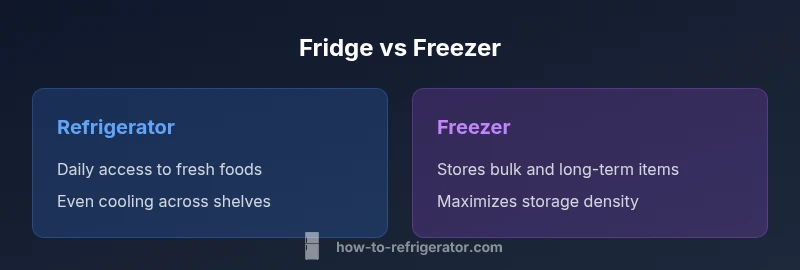
Refrigerators typically emphasize quick access to items used daily, featuring wide shelves and a combination of shelves, drawers, and door bins. Freezers prioritize maximizing storage density and long-term preservation, often using deeper bins, bulk shelves, and drawer systems that reduce air exchange during use. The arrangement affects how you store perishables vs long-term stock. For example, dairy and leafy greens generally live in the fridge’s crisper and shelves, while bulk meats, frozen vegetables, and prepared meals fit best in a freezer compartment. The How To Refrigerator approach is to match your layout to your shopping habits: easy access for everyday foods, with a dedicated cold zone for frozen items. A thoughtful design minimizes temperature fluctuations and makes it easier to rotate stock, which helps maintain safety and quality without guesswork.
Temperature management and food safety implications
Temperature control matters more than the exact number when you’re storing food. The fridge should stay cool enough to slow bacterial growth for ready-to-eat foods, while the freezer should keep items frozen or deeply chilled for longer-term storage. Humidity control within fridge drawers helps maintain texture, while freezer drawers reduce air exchange and moisture loss. Proper door shut force and regular defrosting (if non-frost-free) prevent ice buildup that can impair performance. When items sit in the wrong zone, you risk accelerated spoilage or freezer burn. Following best practices for organization—not just temperature—improves safety, quality, and energy efficiency. The practical takeaway is simple: use each appliance for what it’s best at, and avoid cross-storing items that require different temperature environments.
Capacity, layout, and how space is used
Capacity is not just about tall numbers; it’s about how you allocate space for different item sizes and consumption patterns. Fridges benefit from adjustable shelves, door bins for frequently accessed items, and drawers that separate produce from dairy. Freezers require stable, compact storage configurations to maximize volume and minimize air exchange. A well-balanced kitchen design might place a medium fridge with a dedicated freezer or opt for separate specialty units (e.g., a compact freezer for bulk purchases). The key is to map your shopping cycle to your cabinet space: frequent perishables near the front, bulk frozen goods in the back or lower drawers, and seasonal items in a separate storage area if possible. This layout reduces rummaging time and helps maintain consistent cooling.
Energy efficiency and operating costs
Energy efficiency is influenced by how well a unit is sized for your household and how you manage door openings. Modern frost-free designs often incorporate improved insulation, adaptive defrost, and better door seals. Frost-free freezers prevent ice buildup, reducing energy draw and maintenance needs over time, while efficient refrigerators minimize waste by maintaining stable temperatures even with daily usage. The practical step for homeowners is to choose models with good door seals, appropriate capacity for your family, and suitable energy-saving features. Regular maintenance, like cleaning condenser coils and ensuring proper airflow around the appliance, further reduces energy consumption and prolongs the life of both devices.
Configurations: single unit vs two units
Single-unit configurations (a fridge with a built-in freezer or a fridge-freezer combo) offer space and budget efficiency but may force compromises in storage layout. Two separate units—a full-size refrigerator and a dedicated freezer—provide better optimization for each function and can improve energy use when sized appropriately for your family. The decision hinges on kitchen layout, floor space, and shopping habits. If you frequently stock up on frozen meals or large quantities, a separate freezer can be a wise investment. If space is tight, investing in a larger refrigerator with a generous freezer compartment might be more practical.
Maintenance and common repair issues
Maintenance is essential for reliable performance. Common fridge issues include door seal wear, unusual condensation, or uneven cooling, while freezer problems may involve frost buildup, temperature fluctuations, or occasional motor noise. Regular cleaning of door gaskets, condenser coils, and drainage channels helps prevent costly repairs. In cases of persistent cooling problems, a professional diagnosis is recommended. Two-unit configurations may complicate maintenance, but they also enable targeted fixes without compromising the other appliance. If you notice frost buildup that you cannot control with standard defrost routines, seek service promptly to avoid energy waste and food safety risks.
Organization strategies: where to store what
A practical store-to-space strategy reduces waste and saves time. Store ready-to-eat foods, dairy, and fresh produce in the fridge’s upper shelves and crisper drawers, while bulk frozen foods, meats, and ready-to-cook meals go in the freezer. Group items by use and space needs: beverages near the fridge door, meats in the freezer’s bottom shelves, and leftovers in clearly labeled containers. Use clear bins to maintain visibility and rotation. Regularly audit contents to avoid overstocking or leaving items behind—both can lead to waste or energy inefficiency. The goal is a consistent, intuitive layout that supports quick meal prep and safer storage.
Buying considerations: one unit vs two units
When deciding between a single unit and two separate appliances, assess kitchen space, budget, and storage goals. If you value compact design and lower upfront costs, a well-sized fridge with a robust freezer compartment could suffice. If you regularly stock large quantities or bulk items, a dedicated freezer paired with a fridge may offer longer-term storage flexibility and better energy efficiency spread across two appliances. Consider the footprint of each option, the noise level, and the potential for future kitchen renovations. Budgeting for delivery, installation, and potential energy rebates can also influence the decision.
Common myths and misconceptions
A common myth is that one larger fridge can replace a separate freezer entirely. In reality, some items require freezing to maintain safety and quality, while others are best kept chilled in the fridge. Another misconception is that frost-free freezers always save energy; while they reduce manual defrosting, they may still consume significant energy if overfilled or poorly organized. Myths like these can lead to improper storage and higher food waste. Correct understanding comes from recognizing the distinct roles of fridge and freezer, and designing storage around actual needs rather than assumptions.
Practical planning checklist and quick-start guide
- Map your kitchen space and measure doorway openings to determine feasible appliance configurations.
- List typical weekly groceries and bulk items to estimate freezer vs fridge needs.
- Prioritize energy-efficient models with tight seals and frost-free features.
- Plan for easy access to daily staples in the fridge and reserve freezer space for bulk and long-term storage.
- Establish a rotation system to move older items to the front and label everything with dates.
- Schedule regular maintenance tasks: clean coils, check seals, and inspect drainage paths to prevent issues.
- Reevaluate storage layout every 6–12 months as family size and routines change.
Comparison
| Feature | Refrigerator | Freezer |
|---|---|---|
| Primary purpose | Keeps foods cool for daily use | Stores items frozen for long-term storage |
| Typical storage emphasis | Ready-to-eat items, perishables, dairy | Bulk, meat, frozen meals, and long-term stock |
| Door and shelf layout | More shelves and bins for easy access | Deeper drawers and fewer frequent openings |
| Energy considerations | Balanced cooling with frequent access can affect energy use | Frozen storage typically optimized for density and insulation |
| Maintenance | Frost-free options common; regular defrost if not | Frost-free or manual-defrost options with periodic ice management |
| Best use case | Daily meal prep and perishables | Bulk storage and long-term preservation |
Strengths
- Clear separation of food storage roles reduces waste
- Better organization and faster meal planning
- Modern frost-free features lower maintenance in many models
- Two-unit setups offer flexible kitchen configurations
Cons
- Two appliances take more floor space
- Higher upfront and potential maintenance costs
- Managing two separate units can be more complex
Use both when possible for maximum storage flexibility.
A fridge and freezer combination typically offers the best balance of daily access and long-term storage. If space and budget allow, two dedicated units optimize organization and energy use. When space is limited, a high-capacity fridge with a sizable freezer compartment can still meet most household needs.
FAQ
What is the primary difference between a refrigerator and a freezer?
A refrigerator keeps foods cool for everyday use, while a freezer stores items frozen for longer-term preservation. They serve distinct roles to maintain safety and quality in your kitchen.
The fridge is for daily foods, the freezer is for long-term storage.
Can a refrigerator operate without a freezer?
Yes. Many homes use a fridge with a small freezer compartment or none at all, depending on how you shop and plan meals. If you store bulk frozen items, a separate freezer may be valuable.
You can have a fridge without a dedicated freezer, but assess your frozen-storage needs.
Is it better to buy a separate freezer or a fridge with a large freezer?
Separate units offer dedicated storage and potential energy efficiency, especially for large families or bulk buyers. A fridge with a roomy freezer can save space and often reduces upfront costs.
Think about space, budget, and how much you stock in bulk.
How should I organize items between fridge and freezer for safety?
Keep ready-to-eat foods and perishables in the fridge, while long-term and bulk frozen items go in the freezer. Label items with dates and rotate stock to avoid waste and ensure safety.
Use labels and rotation to stay on top of freshness.
What maintenance tasks help both appliances?
Regularly clean door seals, vacuum condenser coils, and check drainage pathways. Address unusual noises or temperature fluctuations promptly to prevent larger problems.
Keep seals clean and coils dust-free to maximize efficiency.
What signs indicate a fridge or freezer is failing?
Persistent frost buildup, unusual noises, frequent cycling, or uneven cooling indicate a potential issue. If problems persist after basic checks, contact a repair professional.
Watch for frost and temperature swings; call a pro if they continue.
Top Takeaways
- Define clear roles for fridge vs freezer to reduce waste
- Choose configurations based on space, budget, and shopping habits
- Prioritize energy-efficient models with good door seals
- Organize with a simple rotation system and labeled items
- Maintain both appliances regularly to extend life