Is Refrigerator or Freezer the Right Choice for Your Home?
Compare refrigerators and freezers to decide which fits your needs. Learn how they work, energy use, capacity, and maintenance for smarter kitchen storage decisions.


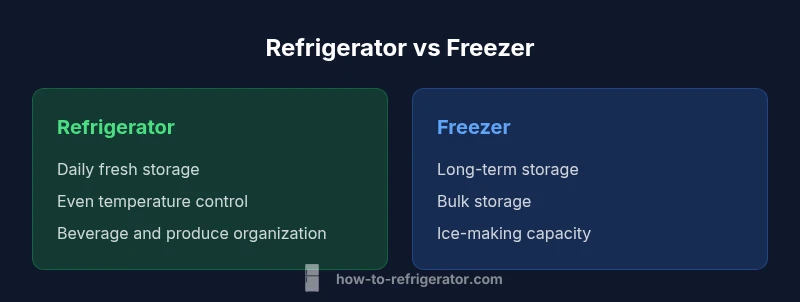
Refrigerators and freezers serve different roles in kitchen storage. A fridge handles daily fresh foods, dairy, and produce, while a freezer stores long-term items in bulk. In most homes, both are ideal, but a compact combo or a well-chosen stand-alone unit can cover essential storage when space or budget is tight.
Is Refrigerator or Freezer the Right Starting Point for Your Kitchen Planning?
The short answer is that both a refrigerator and a freezer play distinct roles in keeping food safe, fresh, and convenient. In daily life, everyday meals rely on a fridge for produce, dairy, and beverages, while the freezer protects bulk buys, leftovers, and seasonal ingredients. According to How To Refrigerator, most households benefit from keeping both appliances in a practical balance, even when space is limited. This section sets the scene for a deeper comparison by outlining the fundamental purpose of each appliance and how they interact in real-world kitchens. Readers will gain a mental model that helps them decide whether to prioritize freezer space, fridge capacity, or a balanced approach. It also highlights common layout scenarios—such as a standard-width fridge paired with a compact standalone freezer—and explains why many kitchens benefit from a mixed approach. By framing storage needs in terms of daily use versus long-term preservation, homeowners can make smarter choices about what to buy first, what to upgrade later, and how to configure doors and shelves for maximum access. The How To Refrigerator team emphasizes that planning with purpose saves space and money over time.
How Each Appliance Works: Thermodynamics and Components
Both appliances rely on the same cooling cycle, but they’re tuned to different temperatures and use cases. The compressor pushes refrigerant through a condenser to shed heat and then to an evaporator to absorb heat from the interior. The thermostat modulates internal temperature, while the defrost system prevents frost buildup. Modern units also feature fans, multiple shelves, and digital controls for precise adjustments. From a practical standpoint, the fridge is calibrated for a warmer interior and more flexible layout than the freezer, which is optimized for stable low temperatures. Maintaining a tight door seal and clean condenser coils can dramatically improve efficiency and reduce noise, according to How To Refrigerator analysis. If a seal leaks, warm air enters, forcing the compressor to work longer and increasing energy use. This section translates cooling science into everyday kitchen decisions, helping homeowners target the tasks that deliver the biggest gains.
Key Differences in Design and Use-Cases
Design differences reflect how households use each appliance. Refrigerators typically emphasize adjustable shelves, crisper drawers, and smart organization that makes daily groceries accessible. Freezers prioritize large storage volumes, space for bulky items, and sometimes drawers or doors that minimize frost exposure. Frost-free models reduce manual defrosting but may consume more energy due to constant airflow. The freezer’s temperature stability supports bulk purchases, ice production, and long-term preservation, while the fridge excels at beverages, dairy, and produce. If your family cooks daily, you may lean toward a roomy fridge with a modest freezer; if you shop weekly and freeze meals, a larger freezer may be worth prioritizing. How To Refrigerator suggests mapping out typical weekly menus to weigh which storage pattern aligns best with your routine, then selecting a model that minimizes door openings and maximizes organization.
Common Scenarios: Household Habits That Drive the Choice
Different households have different needs. A family that cooks from scratch every day benefits from a spacious fridge for fresh ingredients and a small, accessible freezer for leftovers. A couple planning bulk meals might prioritize a larger freezer, with a compact or under-counter fridge for daily drinks and perishables. Apartment dwellers often rely on compact or counter-high models, pairing a full-size fridge with a small freezer or a dedicated chest freezer if space allows. Entertaining guests frequently requires additional beverage storage, which can influence fridge dimensions. The central insight is to balance daily use with long-term storage, so your kitchen stays versatile without over-allocating space to one function.
Energy Efficiency: Consumption, Ratings, and Costs
Energy efficiency is a central consideration for any kitchen upgrade. Fridges and freezers are most efficient when properly sized for your household and used with stable temperatures. Frost-free features reduce maintenance but can add to running costs, so model selection matters. Energy Star-rated units typically deliver better efficiency, especially when paired with right-sizing and intelligent controls. While exact energy consumption varies with model and climate, choosing the right size and defrost type generally yields lower operating costs over time. How To Refrigerator’s analysis emphasizes that the long-term savings from efficiency can outweigh upfront price differences, particularly in homes with high daily usage.
Capacity and Organization: Space Planning and Layout
Effective storage hinges on interior layout. Flexible shelving, adjustable door bins, and multi-level crisper drawers help maximize everyday accessibility in the fridge, while freezer drawers or tall bins enable bulk organization. Consider how often you access items and whether you prefer zoning for dairy separately from produce. If you plan for future growth (more occupants or seasonal storage), factor in extra capacity for both fridge and freezer. Proper placement—avoiding heat sources, ensuring adequate clearance for doors, and maintaining good air circulation—extends lifespan and keeps temperatures steady.
Maintenance and Longevity: Gaskets, Defrost, Hygiene
Maintenance reduces failures and keeps performance consistent. Inspect door gaskets for cracks or gaps, clean coils and condenser fins periodically, and monitor defrost systems for proper drainage. In frost-free models, occasional manual cleaning of frost buildup in corners can prevent uneven cooling. Hygiene matters too: wipe spills promptly, keep crisper drawers clear, and sanitize shelves to maintain food safety. Regular maintenance can extend appliance life and help preserve food quality, a point reinforced by How To Refrigerator’s ongoing guidance.
Price, Availability, and Value: Budgeting for Your Kitchen
Prices vary with size, features, and brand, but a well-sized fridge and freezer combination often represents a substantial investment. The key is to evaluate total cost of ownership, including energy use, repair likelihood, and potential reconfiguration costs if your kitchen layout changes. Budget planning should consider whether you need a single compact system or a dual-appliance setup to maximize reliability and usability. How To Refrigerator notes that thoughtful budgeting, aligned with your cooking and shopping patterns, yields the best long-term value.
Safety, Food Safety, and Storage Guidelines
Food safety hinges on proper temperatures and storage practices. A fridge is kept at temperatures that preserve fresh produce, dairy, and drinks, while a freezer maintains low temperatures for long-term preservation. Keep raw meats separate, use airtight containers, and label leftovers to avoid cross-contamination. If you’re transporting groceries, consider insulated bags to maintain temperature until you reach home. Following general storage guidelines helps prevent spoilage and keeps household health intact.
Hybrid and Specialty Models: Drawer Units, Mini-Fridges, and More
Not every kitchen requires full-size fridges and freezers. Drawer-style fridges or under-counter freezers can fit compact spaces, while combination units or dual-zone drawers offer flexible, modular storage. Consider whether a portable mini-fridge suffices for beverages or a compact freezer chest supports bulk freezing. Specialty configurations can reduce footprint while preserving access and organization, particularly in kitchens with unusual layouts or restricted space.
Practical Decision Framework: Quick Rules of Thumb
- Start with daily-use needs: prioritize fridge capacity for fresh foods and beverages. - Add freezer capacity based on bulk buying or meal-prepping habits. - Favor energy-efficient, properly sized models with strong door seals. - Plan layout to minimize door openings and maximize accessibility. - Budget across initial purchase, ongoing energy costs, and potential future upgrades. This framework helps you choose iteratively, refining your setup as family size and shopping patterns change.
Comparison
| Feature | Refrigerator | Freezer |
|---|---|---|
| Primary function | Daily fresh-food storage and organization | Long-term frozen storage and bulk items |
| Energy efficiency | Typically efficient when properly sized | Depends on model and defrost type |
| Capacity flexibility | Great for fresh foods with adjustable shelves | Large freezer compartment for bulk items |
| Maintenance | Door seals and occasional defrost checks | Defrost drain and ice-maker upkeep |
| Best use case | Everyday meals and produce | Bulk storage and advance planning |
Strengths
- Clear division of daily vs long-term storage
- Can optimize kitchen workflow
- Energy efficiency when appropriately sized
- Easier inventory management with separate zones
Cons
- Requires more kitchen space or two appliances
- Costly upfront and upkeep
- Defrost maintenance and potential repairs
- Not always convenient in very small kitchens
A balanced two-appliance setup typically offers the best overall value
Choose a separate fridge and freezer when daily meals and bulk storage are both priorities. If space or budget is tight, start with a well-sized fridge and add a freezer later, then reassess your layout and usage.
FAQ
Do I need both a refrigerator and a freezer for a small kitchen?
In many small kitchens, a compact refrigerator paired with a small freezer or a drawer unit can meet essential needs. If space is extremely limited, consider a single unit with separate zones or a combined refrigerator-freezer model with efficient partitioning. The best choice depends on how often you shop, cook, and store bulk items.
For small kitchens, start with the fridge and add a freezer only if you bulk shop or meal prep regularly.
What factors should I consider when choosing between a fridge and a standalone freezer?
Consider daily eating patterns, the volume of fresh produce, and how often you stock up on bulk items. Also assess energy efficiency, door placement, and available space. If you often prepare meals, a larger freezer combined with a capable fridge is often ideal.
Think about daily needs vs bulk storage, energy use, and layout when deciding.
Can a single appliance serve as both fridge and freezer?
Some models offer dual-zone or convertible spaces that function as both fridge and freezer, but performance and energy use vary. For most households, distinct zones optimize temperature stability and storage convenience. If you’re space-limited, a well-designed combo unit could be a practical compromise.
Dual-zone units can imitate two appliances, but check performance specs first.
What maintenance tasks minimize frost build-up?
Regularly clean door gaskets, keep coils dust-free, and ensure proper drainage from the defrost system. For frost-free models, periodic manual checks of corners and drawers prevent cold air leaks. Prompt spill cleanup and proper organization also reduce frost exposure and improve efficiency.
Keep seals clean, coils dust-free, and check drainage—these steps cut frost and save energy.
Are energy-efficient models worth the investment?
Energy-efficient models often pay back the upfront cost through lower running costs and longer lifespans. The savings compound with daily use and frequency of door openings. If you plan to stay in your home for several years, an efficient fridge or freezer is usually worth the premium.
Yes—efficiency pays off over time, especially with frequent use.
Top Takeaways
- Prioritize daily use in fridge capacity first
- Add freezer space for bulk storage needs
- Aim for energy efficiency and strong door seals
- Balance layout to minimize door openings
- Plan for future changes in family size and shopping habits