Why Would a Refrigerator Trip a GFCI? Quick Troubleshooting Guide
Explore why refrigerators trip GFCI outlets and learn a safe, practical troubleshooting path for homeowners. Identify moisture, grounding faults, and faulty outlets, plus step-by-step fixes and prevention tips.


Most likely, a refrigerator trips a GFCI due to moisture, grounding faults, or a short near the power cord or internal components. Start by unplugging, inspecting the outlet and cord, and testing the GFCI with a known-good device. If the fault persists after these checks, move to a safe diagnostic flow before calling a pro.
Why would a refrigerator trip a gfci
Understanding why would a refrigerator trip a gfci starts with the basics of how GFCI outlets work. A refrigerator typically contains metal-to-ground leakage sources if moisture seeps into the back panel or if a damaged cord or connector allows tiny currents to escape to ground. In practice, a fridge may trip a GFCI when the startup surge or a leaking defrost heater nudges the leakage current over the GFCI threshold. The most common culprits are moisture in the cabinet, a damaged power cord, or a compromised outlet on a shared circuit. The How To Refrigerator team notes that safe, systematic testing reduces risk and avoids unnecessary component replacements. According to How To Refrigerator, many trips stem from simple, fixable issues that homeowners can address with basic safety steps. This is why you’ll want to approach the problem methodically: unplug the unit, inspect connections, and run a controlled test on the outlet.
Note: If you see visible moisture or signs of arcing, do not power the fridge back on until you have dried and inspected thoroughly. Handling electrical components around water is dangerous and can lead to shock or fire.
First checks you should perform safely
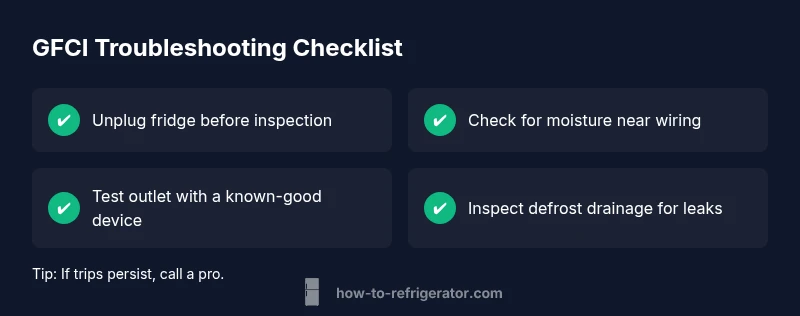
Before diving into complex diagnostics, start with the simplest, safest checks. These quick reviews help determine whether the problem is the outlet, the cord, or something inside the unit. Always unplug the fridge before touching any wiring or the back panel. Inspect the power cord for cuts, kinks, or scorch marks, and examine the rear plug for bent prongs. If you detect moisture on the outlet or cord, dry the area completely and avoid powering the unit until you confirm it is dry. Test the wall outlet with a known-good device to confirm the circuit itself is healthy. If the outlet or circuit trips again with a different device, the problem is likely on the wall side rather than inside the fridge. Finally, consider testing the GFCI itself by plugging in a small lamp or tester on a different device on the same circuit to isolate whether the GFCI might be faulty.
Common causes that trigger a GFCI in a fridge
Several recurring issues are known to trigger GFCI trips in refrigerators. Moisture intrusion around electrical connections, especially on the back panel or near the water line to an ice maker, is a frequent culprit. A damaged power cord or outlet can create a leakage path that the GFCI detects as ground fault. A defective GFCI outlet or a shared circuit with other high-draw appliances can push current beyond the trip threshold during startup. In rare cases, internal components such as a failing defrost heater, a faulty start relay, or refrigerant-related arcing can cause leakage currents. Each cause requires a different fix path, so avoid assuming a single culprit without testing and observation. According to How To Refrigerator analysis, moisture and grounding faults are among the most common investigate-and-fix items for homeowners. Inspecting signs of wear and eliminating moisture are your first confidence boost steps.
Safe testing and measurement methods
When testing, prioritize safety and controlled steps. Start by verifying the fridge is unplugged before inspecting the back panel. Use a flashlight to check for moisture, corrosion, or loose connections around the cord, terminal blocks, and ice-maker water line. If you have a plug-in outlet tester, use it on the outlet to confirm correct wiring and ground. For more advanced diagnostics, a multimeter can help measure continuity and verify there is no leakage to ground on accessible components, but avoid opening sealed areas if you are not trained. If any moisture is found, dry thoroughly and allow time for all components to equilibrate before rechecking. Remember, never bypass the GFCI or stack devices on a single outlet as a workaround; this creates a dangerous safety compromise. If you suspect the GFCI itself is faulty, replace it with a new unit rated for kitchen appliances and test again with a simple load before reconnecting the fridge. The goal is to rule out common causes first, then progressively escalate to more involved repairs.
When to call a professional
If basic checks do not resolve the issue or if the fridge trips again after addressing obvious causes, it’s time to involve a professional. Electrical work around appliances, moisture exposure, and possible internal faults require expertise. A licensed appliance technician can safely test for ground faults, energize tests on the defrost circuit, and verify if the compressor or start relay is causing leakage. In some cases, it may be appropriate to hire an electrician to inspect the dedicated fridge circuit and ensure there is a proper, dedicated outlet to avoid shared loads that trigger trips. The How To Refrigerator team recommends erring on the side of safety and seeking professional help when there is a recurrence or uncertainty about the source of the fault.
Prevention tips to avoid future trips
Prevention is simpler than repair when it comes to GFCI trips on refrigerators. Use a dedicated outlet for the fridge on its own circuit if possible, and avoid running other high-draw appliances on the same circuit. Keep the back of the unit clean and dry, with any water lines properly secured to prevent leaks near electrical connections. Regularly inspect the power cord and plug for wear, and replace damaged components promptly. Ensure the GFCI itself is within its service life and test it monthly using the built-in test button. Finally, maintain a simple trip log so you can detect patterns (time of day, duration, circuit involved) that help a technician diagnose more efficiently. By staying proactive with moisture control, cord integrity, and circuit management, you reduce the likelihood of future GFCI trips.
Diagnostic flow you can follow (summary)
Symptom → check for obvious moisture/cord issues → test outlet and GFCI → inspect ice-maker/water line and defrost components → verify circuit integrity → consider professional help if trips persist. This flow helps isolate whether the fault lies with moisture, a damaged cord, a faulty outlet, or an internal fridge component.
Step-by-step diagnosis (detailed) — see next section for in-depth fixes
Steps
Estimated time: 60-90 minutes
- 1
Power down and unplug
Begin by unplugging the refrigerator and removing any nearby standing water. This ensures you won’t be exposed to live components while inspecting. Check for any signs of moisture on the back panel or cord. Allow the area to dry completely before proceeding.
Tip: Use a non-conductive tool to wipe away condensation and wear rubber-soled shoes. - 2
Inspect the power cord and outlet
Examine the cord for cracks, splits, or discoloration. Inserted prongs should be straight and intact. Check the wall outlet for scorch marks or moisture; if you see damage, do not attempt to power the fridge until the outlet is replaced by a qualified electrician.
Tip: If you don’t have a replacement outlet tester, substitute with a known-good lamp on a separate outlet to test circuit integrity. - 3
Test the GFCI itself
Push the reset button on the GFCI and then plug in a simple lamp or tester to confirm it behaves as expected. If the GFCI trips with an ordinary load, it likely needs replacement.
Tip: Avoid resetting the GFCI repeatedly in quick succession; this can mask an underlying fault. - 4
Check for moisture near electrical components
Look for any signs of moisture around the terminal blocks, ice-maker line, and defrost heater. Dry and reseal any areas where water could reach electrical connections. Ensure grommets and seals around doors aren’t allowing moisture in behind the panel.
Tip: A small fan can help dry the area faster after a spill. - 5
Inspect the ice maker and water line
Check the water line for kinks or leaks and inspect the ice maker fill tube for moisture. A leak near live components can create a ground fault detected by the GFCI.
Tip: Turn off water supply if you notice a leak and contact a professional if repair requires removing the ice maker. - 6
Check for defrost-related issues
During defrost cycles, stray moisture or a faulty heater can create leakage currents. Inspect the defrost drain for clogs and ensure the heater connector is dry and tight.
Tip: If you detect a burnt smell or visible arcing, stop immediately and call a pro. - 7
Try a controlled re-test on a dedicated circuit
Move the fridge to a different outlet on a different circuit if available and test again with a light load. Confirm that the GFCI does not trip under normal operation.
Tip: Do not run multiple high-draw devices on this same circuit during testing. - 8
Assess whether a professional is needed
If the GFCI trips again after basic fixes, or you’re unsure about handling appliances, schedule an appointment with a licensed technician.
Tip: Document all observations (tripping times, sounds, moisture) to share with the tech. - 9
Document and prevent future trips
Keep a simple maintenance log and perform periodic moisture checks around electrical areas. Consider a dedicated fridge circuit to reduce the chance of future trips.
Tip: Set a monthly reminder to recheck connections and seals.
Diagnosis: Fridge trips GFCI when plugged in or after starting compressor
Possible Causes
- highMoisture intrusion near electrical connections or back panel
- highDamaged power cord or outlet
- mediumFaulty GFCI outlet or circuit sharing
- lowInternal components like defrost heater or start relay short
Fixes
- easyUnplug the unit and dry any visible moisture around connections; inspect cord and plug for damage
- easyTest the wall outlet with a known-good device; replace GFCI if it trips independently
- mediumCheck for leaks on water line and defrost drain; repair leaks and dry area
- easyIf the trips continue after basic checks, call a professional appliance technician or electrician
- mediumConsider moving the fridge to a dedicated circuit to prevent overloads
FAQ
Why would a refrigerator trip a GFCI outlet?
GFCI trips are typically caused by ground faults, moisture near electrical connections, or a faulty outlet. Inspect for water leaks and damaged cords before proceeding.
Fridge GFCI trips are usually due to ground faults or moisture near the wiring; check for leaks and damage first.
Is it safe to reset a GFCI after a fridge trip?
Resetting is safe if the area is dry and you have performed a basic inspection. If it trips again, stop and seek professional help.
You can reset if it's dry and you checked basics, but don’t ignore another trip.
Could a defrost heater cause a GFCI trip?
Yes, a short in the defrost heater or related components can trip a GFCI; inspect for moisture and arcing behind the panels.
Yes, a faulty defrost heater can trip a GFCI; check moisture and connections.
When should I call a professional?
If trips persist after basic checks or you’re uncomfortable with electrical work, contact a licensed appliance technician or electrician.
If it keeps tripping after basic checks, call a pro.
Can other appliances on the same circuit affect the fridge GFCI?
Yes, shared circuits can overload the GFCI. Try moving the fridge to its own dedicated outlet if feasible.
Yes, other devices on the same circuit can trigger trips.
What tools do I need to diagnose a fridge GFCI trip?
A plug-in outlet tester, a basic multimeter if available, and a flashlight help. Safety gear is recommended.
A tester and possibly a multimeter help diagnose safely.
Watch Video
Top Takeaways
- Unplug and inspect first
- Moisture/ground faults are common culprits
- Use a dedicated fridge circuit to prevent trips
- Call a professional if trips persist after basic checks