When to Defrost Refrigerator: A Practical Home Guide
Learn practical, safety-focused guidance on when to defrost your refrigerator, the differences between manual and auto defrost, and a safe, step-by-step approach to restore efficiency and food safety.


By following this guide, you will determine when to defrost refrigerator based on frost buildup, freezer temperature, and airflow. It covers signs you need a defrost, how to choose manual or auto defrost options, and a safe step-by-step process to restore efficiency with minimal downtime. Prepare with basic tools, follow safety cautions, and verify the fridge returns to proper temperatures before restocking.
Understanding frost and when to defrost refrigerator
Frost forms when moisture in the air condenses on cold surfaces inside the fridge and freezer compartments and freezes. The question of when to defrost refrigerator depends on frost depth, how often the door is opened, and whether your model uses a manual or automatic defrost cycle. If the frost layer grows thick enough to obstruct airflow, or if the freezer shows inconsistent temperatures, defrosting becomes necessary. The How To Refrigerator team emphasizes that recognizing frost depth and temperature trends helps homeowners time maintenance effectively. Even frost-free models can accumulate frost after power interruptions or in very humid conditions. Staying aware of these signs helps you act before efficiency plummets or food safety is compromised.
Signs you may need to defrost soon
Frost that visibly thickens on walls or coils, reduced airflow through vents, longer cycling times for the compressor, icy buildup in the freezer, and a warmer interior than intended are all indicators that you should inspect for defrost needs. If your fridge has an auto-defrost feature but still seems to frost up, it may indicate a faulty timer, heater, or defrost drain. In these cases, addressing the underlying issue can save both energy and groceries.
Manual vs automatic defrost: choosing the right approach
Manual defrost requires you to routinely remove frost buildup, while automatic defrost uses a timer and heater to melt ice on a set schedule. Modern models with auto-defrost can reduce manual maintenance, but they still benefit from occasional checks if frost accumulates after a door being left open, a power outage, or a humid environment. The decision comes down to your fridge model, energy goals, and how strictly you want to manage defrost cycles. Regardless of the method, proper defrosting timing helps maintain consistent temps and extends appliance life. How To Refrigerator notes that understanding your unit’s defrost system is essential for safe and effective maintenance.
Safe planning before you start: what to do first
Before you defrost, plan around food safety and energy use. Move perishables to a cooler or secondary fridge, gather towels, a plastic scraper, and a shallow basin for meltwater. Unplug the unit if you’re performing a thorough manual defrost, and ensure you have time set aside so the fridge can return to the correct temperature after restocking. Clear the surrounding area and remove drawers or shelves if needed to access frost-heavy areas. This preparation minimizes temperature spikes and keeps food safe during the process.
Best practices to prevent frost buildup going forward
Keep door seals clean and intact, avoid leaving the door ajar, and set temperatures to recommended ranges (generally around 37–40°F for fresh food and 0°F for freezing). Ensure adequate airflow around the condenser and avoid overpacking, which can obstruct cooling. Position the fridge away from heat sources and maintain consistent room conditions. Regular maintenance like cleaning coils and replacing worn gaskets can significantly reduce frost formation and energy use.
Common mistakes to avoid during defrosting
Don’t use metal tools that could scratch interiors or heat guns and boiling water that risk damage or burns. Never unplug or unplug/replug repeatedly in quick succession, which may confuse sensors. Avoid leaving the fridge unplugged longer than necessary, and never mix hot water with cold surfaces—rapid temperature changes can damage plastics. Finally, never rush the job by skipping drying steps; moisture left behind can promote mold growth and odors.
Tools & Materials
- Plastic scraper or spatula(Non-metal to avoid scratching interior lining)
- Soft cloths or towels(Absorb water and wipe surfaces dry)
- Bowl or basin(Catch melted ice and drips)
- Warm water (not hot)(Gentle moisture to speed melting)
- Dish soap or mild cleaner(Light cleaning of shelves and walls)
- Gloves (optional)(Protect hands from cold surfaces)
- Vacuum with brush attachment (optional)(Clean dust around coils before/after defrost)
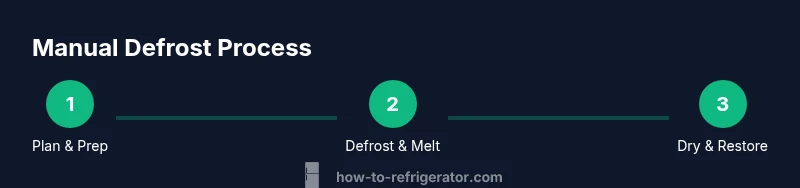
Steps
Estimated time: 60-90 minutes
- 1
Prepare and protect food
Unplug the refrigerator, and move perishable items to a cooler or secondary fridge. This prevents spoilage while the freezer and fridge warm up. If you can’t relocate everything, keep items tightly sealed and monitor temperature.
Tip: If you’re short on space, group items by temperature requirements to minimize exposure to warm air. - 2
Remove shelves and accessories
Take out removable shelves, crispers, and bins to expose frost-heavy areas. Plastics dry quickly, so place items on towels to catch melting ice and keep the interior accessible.
Tip: Keep the removed parts in a sheltered area to avoid misplacement during the process. - 3
Melt frost with warmth
Apply warm (not hot) towels to the frost buildup. Allow 20–40 minutes for ice to soften; re-wet towels as needed. Do not use sharp tools to chip away ice; this can damage interior surfaces.
Tip: Regularly check the towels to prevent water from pooling inside the fridge. - 4
Remove softened ice
Gently use the plastic scraper to dislodge softened ice. Work from the outer edges toward the center. Collect meltwater in the basin to prevent spills.
Tip: Avoid forcing ice chunks into crevices, which can damage seals. - 5
Clean and dry interior
Wipe down interior surfaces with a damp cloth and mild cleaner if needed. Dry thoroughly with clean towels before returning shelves. Ensure the drain is clear to prevent standing water after restocking.
Tip: A dry interior helps prevent future frost formation and mold growth. - 6
Restore power and restock
Place shelves back, plug the unit in, and allow it to reach normal operating temperatures before adding food. If frost remains after the power is restored, consult the user manual or a professional.
Tip: Avoid loading heavy items until temperature stabilizes to prevent overworking the compressor.
FAQ
When should I defrost my refrigerator?
Defrost when frost thickness starts to impede airflow, or the interior isn’t cooling evenly. If your freezer shows ice buildup and the fridge is warmer than usual, it’s a good time to inspect for manual defrost needs or check automatic defrost components.
Defrost when frost is thick enough to block airflow or you notice uneven cooling inside the fridge.
Can I speed up defrost with heat?
Use warm towels to soften ice gradually. Do not use hot water, hair dryers, or other direct heat sources, as rapid temperature changes can damage plastics and seals.
Warm towels can help, but avoid direct heat sources that could damage the appliance.
Is a frost-free fridge immune to defrosting?
Frost-free models still require occasional checks. A malfunctioning defrost system or unusual humidity can cause frost to reaccumulate. If frost returns quickly, have the defrost drain and heater inspected.
Even frost-free models can frost up if the defrost system isn’t working properly.
How often should I defrost?
Manual defrost frequency depends on usage and climate, typically every 3–6 months for older units. Frost-free fridges usually need less frequent manual intervention unless components fail.
Most manual defrost fridges need it every few months; frost-free models rarely require it unless there’s a fault.
What should I do with food during defrost?
Keep perishable items in a cooler or secondary fridge. Check temperatures frequently and return items to the main fridge only after it has reached proper operating temperatures.
Move food to a cooler or secondary fridge and wait until temperatures are safe again.
What if water leaks during defrost?
Contain meltwater with towels and an empty basin. If leaks persist, check the defrost drain for clogs and clear it following the manufacturer’s guidance or call a technician.
If water leaks, use towels and clear the defrost drain; consult a pro if it keeps happening.
Watch Video
Top Takeaways
- Recognize frost depth to time defrost.
- Choose manual or auto defrost based on model and usage.
- Prepare food and tools before starting defrost.
- Follow a safe, gradual melt with proper drying.