What Voltage Rating Is Needed for a Refrigerator Outlet
Learn the exact voltage rating needed for a refrigerator outlet, how it varies by region, and how to verify/install safely. Includes practical checks, code notes, and a regional comparison from How To Refrigerator (2026).


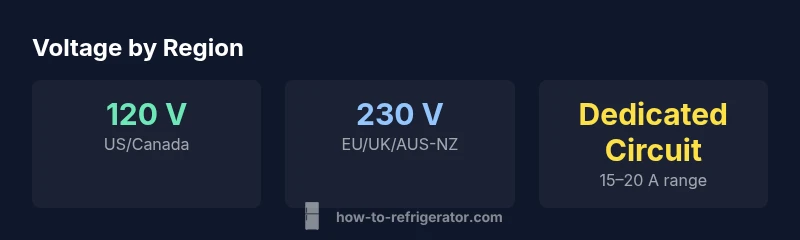
What voltage rating is needed for a refrigerator outlet? For most homes in the United States, refrigeration equipment runs on about 120 volts on a dedicated circuit, typically 15 or 20 amps. In many other regions, you’ll see 230‑volt outlets on 10–16 amp circuits. Always verify the appliance label and local codes. Using the wrong voltage can shorten the fridge’s life or trip safety devices.
Why voltage rating matters for a refrigerator outlet
If you’re asking what voltage rating is needed for a refrigerator outlet, you’re asking the most fundamental question about appliance reliability and safety. The voltage controls how much electrical energy the compressor and defrost heaters receive, and it affects starting torque and running efficiency. An incorrect voltage can cause the compressor to work harder, shorten the appliance’s life, or trigger nuisance trips on the circuit breaker. How To Refrigerator stresses that the right voltage also aligns with the appliance’s warranty and safe operation. In practice, you should always read the nameplate on the refrigerator, which lists the nominal voltage, required amperage, and recommended circuit type. For homeowners, the rule of thumb remains: match the outlet to the appliance label and adhere to local electrical codes to reduce risk.
Key takeaway: the correct voltage rating is not universal; it depends on your region, the appliance design, and the circuit it’s connected to. Always verify before plugging in a new refrigerator or upgrading an older outlet.
Regional variations in voltage and plug standards
Voltage standards vary worldwide, which means the same appliance may require different circuitry depending on where you live. In the United States and Canada, most refrigerators operate on 120 V and rely on dedicated 15‑ or 20‑amp circuits, with outlets typically being NEMA configurations. In Europe, the standard is commonly 230 V on single‑phase supply, with different plug types and slightly higher current ratings in some installations. Australia and New Zealand generally use 230 V as well, with Type I outlets and similar circuit protections. Frequency (Hz) can also differ (60 Hz in North America vs 50 Hz in many other regions), which can influence motor performance and energy usage. Understanding these regional differences helps homeowners plan for safe operation and avoids mismatches that could void warranties or trigger safety devices.
How to verify your outlet and circuit is up to spec
Start with the appliance label: the voltage, current, and recommended circuit type should be listed there. If you aren’t sure, use a multimeter to confirm that the outlet provides the nominal voltage when the refrigerator runs or is plugged in. Check the circuit breaker or fuse rating to ensure it matches the appliance’s amperage requirements (usually 15–20 A for standard refrigerators). In damp areas or kitchens with moisture exposure, consider GFCI protection as an additional safety measure, but verify that the outlet type you install supports this protection. If any reading deviates from the label or you detect a nuisance trip, stop using the outlet and consult a licensed electrician.
What voltage rating means in practice: labels, cords, and plugs
Voltage rating is part of a trio along with current rating and plug type. The label on the refrigerator guides you to the proper circuit. The power cord and plug must be compatible with the outlet; mismatches can cause overheating, poor contact, or arcing. Grounding is essential for safety—use a grounded outlet and avoid adapters that bypass ground features. If you have an older home with nonstandard outlets, consider upgrading to a compliant, properly grounded receptacle on a dedicated circuit. Always ensure the outlet is securely mounted and free from damage, and never overload a circuit by running multiple high‑demand appliances at once.
Safety and code considerations you should know
Electrical codes require careful planning when installing a fridge outlet. In the US, the NEC generally recommends dedicated circuits for major appliances like refrigerators to prevent nuisance trips and voltage drops that can impact performance. In other regions, local codes outline acceptable voltages and protections—often emphasizing proper isolation and grounding. It’s wise to consult a licensed electrician for a code-compliant upgrade, especially if you’re replacing an old outlet, relocating the refrigerator, or adding a second appliance on nearby circuits. Noncompliance can void warranties, create safety hazards, and complicate insurance claims.
Practical steps for upgrading or replacing a fridge outlet
If you’re upgrading or replacing an outlet to support the correct refrigerator voltage, follow a structured plan. First, confirm the appliance’s voltage and current requirements from the label. Next, assess the existing circuit: is it on a dedicated 15–20 A breaker, and is the wiring gauge appropriate for that load? If not, plan a dedicated circuit run with the correct gauge wire (typically 14 AWG for 15 A or 12 AWG for 20 A in many regions) and appropriate receptacle type. Install an outlet rated for the circuit and ensure proper grounding. Finally, have the installation inspected if required by your local codes. If in doubt, call a licensed electrician to perform the upgrade safely.
Quick maintenance checks to avoid voltage-related issues
Regular maintenance helps prevent voltage-related problems with refrigerators. Inspect the outlet for signs of discoloration, scorching, or loose connections. Listen for buzzing or humming noises that could indicate poor contact or a loose mount. Ensure the breaker remains steady during startup and that there are no frequent trips. Keep the vicinity dry and clean, especially in kitchens. Schedule a professional evaluation if you notice repeated power interruptions, unusual sounds, or heat around the plug, as these can indicate a higher risk of electrical faults.
Global voltage patterns for refrigerator outlets
| Region | Nominal Voltage | Typical Circuit | Outlet Type |
|---|---|---|---|
| United States / Canada | 120 | 15-20 A | NEMA 5-15/5-20 |
| Europe / UK | 230 | 13-16 A (single‑phase) | Schuko / UK BS 1363 |
| Australia / NZ | 230 | 10-15 A | Type I |
FAQ
What voltage rating is standard for residential refrigerators in the United States?
In the United States, refrigerators typically operate on 120 V on a dedicated 15-20 A circuit. Check your appliance label and local codes.
Most US fridges run on 120 volts on a dedicated circuit.
Do international models require different outlets?
Yes. Regions outside North America commonly use 230 V single-phase outlets, and plug types vary by country. Verify the outlet and circuit amperage before installation.
International models usually need 230 volts and country-specific plugs.
Can a standard 15-amp outlet handle a fridge?
A dedicated 15-20 amp circuit is recommended. A standard multi-outlet 15-amp arrangement is not ideal for reliability and safety.
A fridge should have its own dedicated circuit, not a shared one.
What about cord and plug configurations?
Ensure the refrigerator’s power cord matches the outlet type. Use a grounded outlet and avoid adapters that could cause overheating.
Make sure the cord matches the outlet and is properly grounded.
What safety checks should I perform?
Inspect the outlet, check for loose connections, test GFCI protection if in damp areas, and verify circuit protection matches the appliance label.
Check for loose connections and ensure proper protection.
“A dedicated circuit and proper receptacle are essential for reliable fridge operation and electrical safety.”
Top Takeaways
- Always verify local electrical codes before installing a fridge outlet
- Most homes use 120 V in North America on a dedicated circuit
- In many other regions, standard outlets are 230 V on dedicated circuits
- Use a dedicated circuit to prevent nuisance trips and fire hazards
- Check the appliance label for voltage and amperage before installation
- Upgrade work should be performed by a licensed electrician to ensure safety