What Size Wire Is Needed for a Refrigerator: A Homeowner's Guide
A practical, data-driven guide to selecting the correct wire size for refrigerator installation, including AWG gauges, circuit types, safety tips, and when to call a professional. Insights from How To Refrigerator.


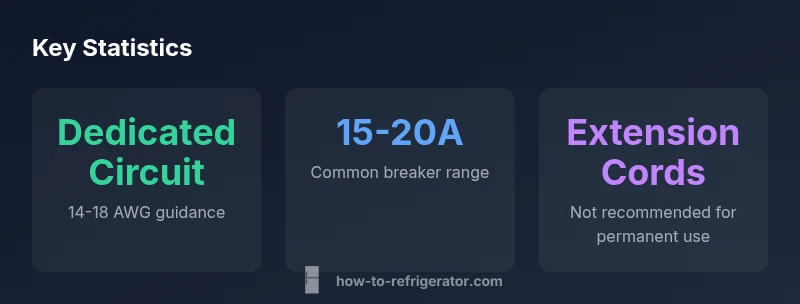
Most standard 120‑volt refrigerators require a dedicated circuit. For typical homes, start with a 15-amp circuit using 14 AWG copper. If your breaker is 20-amp or local code requires it, use 12 AWG copper. Do not share the circuit with other appliances or rely on extension cords. Always read the fridge nameplate for its exact requirement.
What size wire is needed for a refrigerator? Practical baseline
According to How To Refrigerator, most standard refrigerators run on a 120‑volt supply and demand a dedicated circuit to avoid nuisance trips and electrical interference that can affect performance. The baseline recommendation you’ll often see is a dedicated 15-amp circuit wired with 14 AWG copper. This configuration provides a balance between the fridge's running load and typical home wiring. If your panel or local code specifies a 20-amp circuit, then 12 AWG copper becomes the appropriate choice. Avoid using shared circuits or extension cords for a permanent refrigerator installation, as these can introduce fire hazards and voltage drop that impair performance. Always start with the appliance’s nameplate, which lists the minimum electrical requirements and helps you verify the right gauge and breaker.
This baseline approach aligns with common practice in many residential kitchens and is designed to minimize nuisance trips while keeping wiring practical for typical runs from the outlet to the fridge outlet. By adhering to these basics, homeowners reduce the risk of overheating wires, tripped breakers, and erratic compressor operation, which can occur when the circuit is undersized or overloaded.
To ensure reliability, maintain clear separation between the refrigerator circuit and high-load devices such as dishwashers or ovens. If you’re upgrading an older kitchen, consider a dedicated circuit installation or a panel check with a qualified electrician to confirm that the wiring meets current safety standards. The How To Refrigerator team emphasizes that starting with a proper gauge and dedicated circuit is the best foundation for safe, long-term fridge operation.
Wiring guidance aligned with typical refrigerator installations
| Aspect | Recommended wire size | Circuit type | Notes |
|---|---|---|---|
| Baseline fridge wiring | 14 AWG copper | 15-amp dedicated circuit | Common setup for standard refrigerators in homes |
| High-draw models | 12 AWG copper | 20-amp dedicated circuit | For models with higher startup current and longer runs |
| Non-dedicated circuits | N/A | Not recommended | Avoid sharing circuit; risk nuisance trips |
FAQ
Do I need a licensed electrician to install refrigerator wiring?
For new circuits or rewiring, a licensed electrician is the safest choice and often required by code. They’ll verify proper grounding, protection, and routing to prevent hazards.
Yes—get a licensed electrician for new or modified circuits to ensure safety and code compliance.
Can I use an extension cord for a refrigerator?
Extension cords are not recommended for permanent fridge wiring. They can overheat or fail under load and may violate electrical codes. Use a properly installed outlet and circuit.
Avoid extension cords; install a proper outlet on a dedicated circuit.
What gauge wire should I use for a 15-amp refrigerator circuit?
For a standard 15-amp circuit, use 14 AWG copper. This gauge supports the required current safely, provided the run is not unusually long or loaded with other devices.
Typically 14 AWG copper on a 15A circuit.
What should I do if the fridge trips the breaker?
If a breaker trips, unplug the fridge, reset the breaker, and inspect the outlet wiring. Repeated trips indicate the circuit may be undersized or there could be a fault in the fridge—call a professional.
If it trips repeatedly, have a professional check the circuit and the fridge.
Is a dedicated circuit required for built-in vs freestanding models?
Both built-in and freestanding refrigerators typically require a dedicated circuit to ensure stable operation and prevent overloading other outlets. Always follow the model’s nameplate and local code requirements.
Yes, both usually need a dedicated circuit; follow the model’s specs.
“Electrical wiring for a refrigerator should prioritize safety and code compliance; start with a dedicated circuit and verify the appliance's nameplate before proceeding.”
Top Takeaways
- Install a dedicated circuit for the refrigerator.
- Check the fridge nameplate for exact amperage and gauge needs.
- Choose 14 AWG on a 15A circuit; 12 AWG on a 20A circuit.
- Avoid extension cords and shared circuits for permanent fridge wiring.