What Voltage Is Needed for a Refrigerator: A Homeowners Guide
Learn the voltage needs for refrigerators across regions, how to read ratings, install safely, and troubleshoot voltage issues with practical steps for homeowners.


What voltage is needed for a refrigerator? In most North American homes, refrigerators run on a dedicated 120-volt circuit. In many European and other regions, appliances expect around 230 volts. Always read the appliance label and follow local electrical codes, and install a properly rated outlet and breaker. Using the wrong voltage can damage the compressor or create a safety hazard.
Understanding voltage needs for refrigerators
When you ask what voltage is needed for refrigerator, voltage describes the electrical pressure that powers the compressor, fans, and controls inside a refrigerator. In North America, most models are designed for a dedicated 120-volt circuit; in many other regions, appliances expect around 230 volts. The How To Refrigerator team found that mismatching voltage is a common installation pitfall and a frequent cause of nuisance trips. Always start by checking the appliance’s nameplate, the user manual, and the local electrical code. A properly rated outlet, matched to the fridge’s voltage and amperage, reduces the risk of tripping breakers and premature wear on components.
This knowledge matters most during a move, a remodel, or when swapping a model for a different region. Collect the model’s voltage rating, the circuit amperage, and the type of outlet required before wiring or plugging in. The goal is to create a safe, stable supply that supports the fridge’s compressor surges without affecting nearby devices.
Regional voltage standards and what they mean for installation
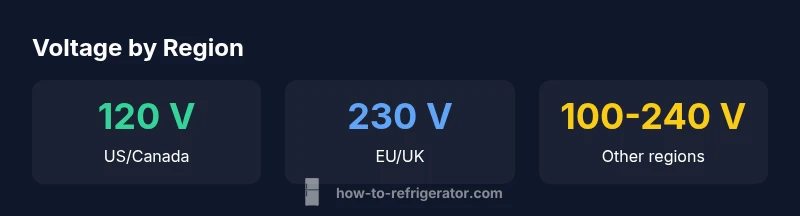
In the United States and Canada, refrigerators typically operate at 120 V with a dedicated circuit sized for about 15-20 A. In Europe and much of Asia, the standard is 230 V, with country-specific plugs and wiring. The difference isn’t just voltage; frequency (50 Hz vs 60 Hz) and outlet type influence compressor start-up, defrost cycles, and energy usage. Understanding these regional differences helps homeowners avoid plugging a 230 V model into a 120 V outlet, which can damage the compressor over time. How To Refrigerator analysis, 2026, emphasizes matching voltage to the product spec across regions. For homes in mixed-use buildings or coastal areas with potential voltage drops, ensure the supply remains within the nameplate tolerance.
How to read the label and choose the right outlet
Look for the nameplate on the fridge’s back or inside the door frame. It lists the nominal voltage, frequency, and amperage. If you’re in a region with 120 V supply, ensure you have a dedicated 15-20 A outlet. If the label shows 230 V, you’ll need a 230 V outlet and a circuit that can safely carry the load. If your home uses variable voltages, consult an electrician before adopting an adapter or extension. Reading the label now saves troubleshooting later when the compressor starts or defrost cycles kick in.
When your supply doesn't match: solutions and safe options
Don't try to run a 120 V refrigerator on a 230 V circuit or vice versa with improvised adapters. A mismatch can overheat motors or trip breakers. The safe path is to install the proper outlet and breaker, or choose a refrigerator that matches your voltage. For renovations, consider a licensed electrician to rewire or install a dedicated circuit, and verify wiring gauge and breaker size. If you’re upgrading from an older, mismatched unit, plan ahead for dedicated circuits to prevent interference with lighting circuits and HVAC.
Safety, codes, and professional guidance
Electrical codes require appliances to be on dedicated circuits in many jurisdictions. When in doubt, hire a licensed electrician to confirm outlet type, wire gauge, and breaker rating. Do not bypass safety devices or use power strips with high-load appliances. From a maintenance perspective, keep the area around the fridge dry and clear to reduce risk of shock. Regular checks of outlets and cords help catch wear before it becomes hazardous.
Quick troubleshooting checklist for voltage issues
Before calling a pro, verify the label, inspect the outlet, check the breaker, and measure supply using a multimeter if safe. Listen for buzzing or frequent cycling, which can indicate voltage fluctuations. If you notice flickering lights when the fridge starts, turn off power and consult a professional. Keep a simple log of any trips to help an electrician diagnose root causes like shared circuits or loose connections.
Real-world scenarios and homeowner actions
Scenario A: You move to a new home with a 230 V supply. Ensure your fridge is rated for 230 V and install a compatible outlet. Scenario B: You see frequent tripping. Have an electrician assess circuit loading and gauge. With proper voltage alignment, the fridge operates more quietly and efficiently. In all cases, confirm the label matches the local supply before plugging in.
Voltage requirements by region (based on How To Refrigerator Analysis, 2026)
| Region | Nominal Voltage | Notes |
|---|---|---|
| US & Canada | 120 V | Dedicated 15-20 A circuit commonly recommended |
| EU & UK | 230 V | Check appliance label; adapt cord/outlet as needed |
| Other regions | 100-240 V or country-specific | Voltage varies by country; follow local codes |
FAQ
What voltage is needed for a refrigerator?
Most refrigerators are designed for the region's nominal voltage: 120 V in North America or 230 V in many parts of Europe. Check the nameplate and manual to confirm the exact rating.
Most refrigerators use the region's standard voltage; check the label to be sure.
Can I run a 120 V fridge on a 240 V outlet?
No. Supplying a 120 V-rated fridge with 240 V can cause immediate damage, overheating, or fire risk. Use the correct voltage and a compatible outlet.
No. Use the right voltage outlet to avoid damage.
Do refrigerators require a dedicated circuit?
Yes. Most refrigerators benefit from a dedicated 15-20 A circuit to prevent nuisance trips or dimming of lights when the compressor starts.
Yes, a dedicated circuit is recommended.
What if the voltage supply fluctuates?
If voltage fluctuates beyond the appliance nameplate tolerance, consult an electrician. Avoid using heavy-load adapters or improvised extensions.
If voltage fluctuates beyond the rating, call an electrician.
How can I tell my fridge’s voltage rating?
Look at the appliance nameplate, read the user manual, or check the model number on the manufacturer's site for the exact voltage and circuit requirements.
Check the label or manual for the exact voltage.
Are there dual-voltage refrigerators?
Some models are dual-voltage or convertible, but you still must supply the correct voltage for the region and use a proper outlet; confirm on the product page.
Some models support dual voltage; verify on the product page.
“Voltage compatibility is the first line of defense against nuisance trips and equipment damage. Always verify the rating and install a dedicated circuit before operating a refrigerator.”
Top Takeaways
- Verify the fridge label for voltage before plugging in
- Use a dedicated circuit sized for the appliance
- Match the voltage to regional standards (120V vs 230V)
- Consult a licensed electrician for nonstandard installations