Walk-In Freezer Maintenance and Troubleshooting Guide
Discover practical steps to maintain and troubleshoot a walk-in freezer, with safety tips, temperature checks, door seal care, and when to call a pro.


Learn how to safely plan, inspect, and maintain a walk in freezer. This guide covers essential tools, common issues like frost buildup and door seal leaks, and a step-by-step maintenance routine to keep temperatures stable and energy use efficient. It also includes safety notes and when to call a professional.
What is a walk-in freezer and why maintenance matters
A walk-in freezer is a large, insulated chamber that stores frozen goods at controlled temperatures well below freezing. Unlike a standard residential freezer, it relies on heavy-duty insulation, an air-circulating fan, a precise thermostat, a defrost system, and often a remote condenser. Because of the scale and continuous use, small problems can grow into major losses quickly. Regular maintenance helps keep temperatures stable, prevents frost buildup, reduces energy consumption, and prolongs the life of doors, seals, and insulation. According to How To Refrigerator, a disciplined maintenance routine is one of the most cost-effective ways to protect perishable inventory and avoid downtime in a commercial setting. In this guide, you’ll learn how to assess the overall condition, establish a preventive task list, and recognize early signs that a component needs attention. You’ll also see how environmental factors—like humidity, loading patterns, and door usage—affect performance, so you can tailor your checklist to your space. A well-planned maintenance routine minimizes temperature fluctuations, keeps costs predictable, and helps you meet food-safety requirements. Whether you manage a small commercial kitchen or a large warehouse operation, the principles are the same: inspect, clean, calibrate, and document. This section sets the foundation for practical, safe, and repeatable upkeep that you can perform with common tools and minimal downtime.
Top design considerations for walk-in freezers
When planning or evaluating a walk-in freezer, focus on insulation thickness and panel quality, door design (swing vs sliding), gasket integrity, and airflow. High-quality foam insulation reduces heat gain, while properly sized doors minimize cold air leakage. Position the unit to maximize clearance for air circulation and consider remote condensers with appropriate ventilation. Defrost methods (hot gas, electric) should match usage patterns. As the How To Refrigerator team notes, correct placement and robust seals are foundational to efficiency and reliability. Regular checks of coil cleanliness, door alignment, and humidity control help maintain consistent cooling and prevent moisture problems that lead to rust and mold. Tailor your maintenance plan to your load, door traffic, and local climate for best results.
Common issues and quick diagnosis
A walk-in freezer may behave badly for several reasons. Not cooling adequately often points to airflow restrictions, dirty coils, or a failing thermostat. Frost buildup results from moisture entering through gaps or from insufficient defrost cycles. Leaking doors or swollen gaskets cause temperature swings and energy waste. Noise or vibration can indicate fan or motor problems. Start with the simplest fixes: clean evaporator coils, reseal doors, and verify the thermostat readings with a calibrated thermometer. If frost persists after basic cleaning, or if temperatures drift beyond safe ranges, it’s time to escalate to professional service. How To Refrigerator emphasizes documenting symptoms to guide technicians and shorten repair time.
Safety-first checklist before you begin
Before any intervention, prioritize safety. Power down the unit and lock out the disconnect to prevent accidental energizing. Wear PPE appropriate for cold environments and handle sharp edges with care. Keep the area ventilated and avoid working near exposed refrigerant lines. Verify that you do not breach food safety or sanitation policies during maintenance. If the unit is part of a larger ventilation or electrical system, consider coordinated shutdown procedures and inform staff of downtime.
Proactive maintenance practices that save money
Establish a monthly maintenance routine that includes door seal inspection, gasket cleaning, and temperature verification. Clean condenser coils and interior surfaces to maintain optimal heat exchange. Keep a detailed log of readings, repairs, and replacements to spot trends and schedule ahead of failures. Plan periodic professional inspections for critical components like the condenser, compressor, and defrost timer. Remember, consistent maintenance reduces energy use, extends equipment life, and improves food safety outcomes. The How To Refrigerator team recommends treating preventive care as a core operating practice rather than a one-off task, which aligns with best practices in commercial refrigeration.
Authority sources and implementation tips
This guide references standard safety and maintenance practices from reputable sources. For safety guidelines, visit OSHA: https://www.osha.gov. For food safety and maintenance considerations, see FDA: https://www.fda.gov/food. For industry best practices in refrigeration maintenance, consult extension services such as Oregon State Extension: https://extension.oregonstate.edu. Use these resources to inform your maintenance plan and verify compliance with your local regulations. How To Refrigerator’s guidance is designed to help homeowners and professionals implement consistent, practical steps. According to How To Refrigerator, following a structured preventive plan reduces downtime, protects your inventory, and extends equipment life.
Tools & Materials
- Digital thermometer with probe(Place inside freezer to track temps; aim for target around -18°C (0°F).)
- Infrared thermometer(Useful for quick surface checks on seals.)
- Long-reach flashlight(Inspect dark corners and condenser area.)
- Screwdriver set (flathead and Phillips)(For panel screws and hinge adjustments.)
- Caulk, freezer-grade sealant, foam tape(Seal gaps around door frame and panels.)
- Aluminum or foil tape(For minor seam repairs and duct work.)
- Soft brush or microfiber cloth(Dust and clean condenser coils and interior surfaces.)
- Vacuum with crevice tool(Clean condenser and fan area.)
- Notepad and pen(Record temps and maintenance tasks.)
- PPE: gloves and eye protection(Protect hands and eyes during maintenance.)
Steps
Estimated time: 2-4 hours
- 1
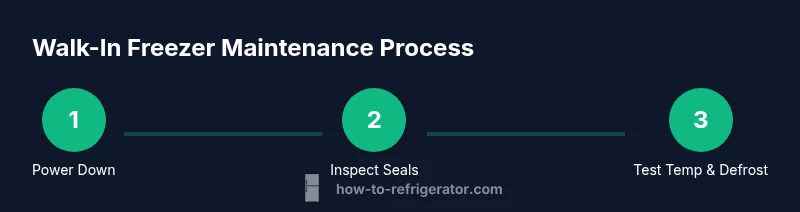
Power down and isolate the system
Shut off power to the walk-in freezer at the main disconnect and lock out if required. Verify no voltage with a tester before starting any work.
Tip: Tag and lock the switch to prevent accidental energizing. - 2
Inspect doors and gaskets
Examine door seals for cracks or tears; clean with mild soap and water. Close the door and test the seal by attempting to slide a thin card or a dollar under the edge to ensure proper closure.
Tip: Replace damaged gaskets promptly to restore airtight seal. - 3
Assess insulation and panels
Look for damp spots, bulges, or softened insulation in panels. Press on panels to detect soft areas. Schedule panel repair if insulation integrity is compromised.
Tip: Avoid piercing insulation; damaged panels will worsen heat gain. - 4
Check evaporator fan and airflow
Listen for the evaporator fan running and feel airflow through vents. Remove frost buildup around coils and clear any debris that blocks air movement.
Tip: A gentle brush keeps coils clean without bending fins. - 5
Test thermostat and defrost system
Compare the thermostat reading with the calibrated thermometer placed inside the cabinet. Confirm the defrost cycle runs on schedule and clears frost from coils.
Tip: Document any drift between setpoint and actual temperature for trend analysis. - 6
Inspect condensers and refrigerant access
Inspect visible refrigerant lines for oil stains or damage; ensure there is adequate clearance for airflow. Do not attempt to repair refrigerant leaks yourself.
Tip: If you suspect refrigerant issues, contact a licensed technician. - 7
Document findings and schedule next check
Record readings, issues, and parts replaced. Schedule the next maintenance window and set calendar reminders.
Tip: A well-kept log helps spot performance drift over time.
FAQ
What is the recommended temperature for a walk-in freezer?
Most walk-in freezers are kept at -18°C (0°F). However, product requirements vary; always follow your organization's standards and food safety guidelines.
Most walk-in freezers aim for -18°C, but check your specific product needs.
How often should I inspect the doors and gaskets?
Inspect monthly and after heavy use or door slamming. Clean gaskets and replace damaged ones promptly.
Inspect monthly and after heavy use.
What causes frost buildup in walk-in freezers?
Moisture intrusion from frequent door openings, poor sealing, and insufficient defrost cycles can cause frost.
Moisture and short defrost cycles lead to frost.
Is door seal replacement a DIY task?
Minor gasket cleaning is DIY; replacing seals is doable but requires precise sizing and could need a pro for best results.
Gaskets can be DIY if comfortable, but replacement may require a pro.
What safety precautions should I follow during maintenance?
Turn off power, wear PPE, and follow lockout-tagout procedures. Avoid working near energized components.
Power down and wear PPE.
How can I verify thermostat accuracy?
Compare the thermostat reading with the calibrated thermometer at multiple points; correct any persistent discrepancy.
Compare ambient temp with thermostat readings.
Watch Video
Top Takeaways
- Regularly inspect door seals and insulation.
- Keep precise temperature logs and calibrations.
- Address frost buildup promptly to prevent damage.
- Schedule preventive maintenance to reduce downtime.
- Consult a licensed technician for refrigerant work.