Walk-In Cooler Maintenance and DIY Troubleshooting
Step-by-step guide to troubleshoot, diagnose, and maintain a walk-in cooler for reliable cooling and food safety. Learn practical checks, maintenance routines, and when to call a professional.


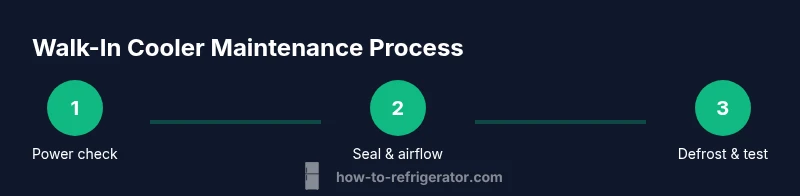
Goal: Restore safe, consistent cooling in your walk-in cooler by checking seals, airflow, and controls. You will need a flashlight, a multimeter, a service manual, and basic hand tools. Start by confirming the unit is powered, verify the thermostat setpoint, inspect door gaskets, clean condenser coils, and check defrost drainage.
What a walk-in cooler does and why temperature stability matters
A walk-in cooler is a large, insulated refrigeration enclosure designed to store perishable foods, beverages, and pharmaceuticals at controlled temperatures. For commercial kitchens and home-based setups, maintaining a steady temperature prevents spoilage, slows bacterial growth, and preserves quality. In this guide we discuss practical, safe ways to diagnose and fix common issues with walk-in cooler units, focusing on homeowner-friendly steps. According to How To Refrigerator, maintaining the right temperature reduces food safety risks and extends product shelf life, especially when door usage is frequent. Start by verifying basic power and temperature setpoints, then inspect seals and airflow as the two most common failure points.
Key components and how they work together
A walk-in cooler relies on a few core components working in harmony: the compressor and condenser to reject heat, the evaporator to absorb heat inside the box, a thermostat or sensor to regulate temperature, and fans that move air across coils. Door gaskets, insulation, and shelf arrangement influence airflow and heat intrusion. Understanding how these parts interact helps homeowners spot issues quickly. Regular maintenance prevents small problems from becoming big failures, and it also helps extend equipment life. The How To Refrigerator team emphasizes that consistency in temperature is not just about comfort but about food safety and energy efficiency over time.
Common causes of temperature fluctuations
Fluctuations often stem from air leaks, dirty condenser coils, improper load balance, or a failing defrost system. Overloaded shelves can impede airflow, while a door left ajar or a misaligned gasket lets warm room air creep in. Dirty condenser coils increase head pressure, reducing cooling efficiency and causing the compressor to work harder, which shortens its life. Another frequent culprit is humidity or improper drainage that leads to frost buildup and blocked airflow. Recognizing patterns—hot spots near doors, or ice along the evaporator—helps narrow down the root cause quickly.
Diagnostic checklist for quick wins
This section gives homeowners a practical, non-technical checklist to pinpoint obvious issues. First, confirm the unit is powered and that the thermostat is set to a safe operating range. Inspect door gaskets for tears, cracks, or stiff, crushed areas and replace if needed. Check the evaporator and condenser coils for dust, grease, or frost and clean them with appropriate tools. Verify that fans spin freely and that there is no debris obstructing airflow. Finally, check the defrost drain for clogs and ensure the defrost timer is cycling correctly. Regularly recording temperature over 24 hours can reveal patterns you can address.
Maintenance routines that protect performance
Create a simple maintenance calendar to keep a walk-in cooler running efficiently. Weekly: wipe down door seals, inspect gaskets, and remove any obvious debris near vents. Monthly: vacuum condenser coils, clean the evaporator area, and verify airflow return paths. Quarterly: calibrate temperature sensors, inspect insulation for damage, and check door hinges for proper alignment. Implement a routine for defrost drainage, ensuring there are no obstructions and that drainage lines are clear. By combining quick daily checks with deeper periodic service, you minimize downtime and reduce the chance of costly breakdowns.
Testing defrost and airflow integrity
A functioning defrost system prevents frost buildup that blocks airflow. If frost appears on the evaporator or coils, you may need to inspect the defrost heater, timer, and thermostat. Ensure airflow is not blocked by items placed too close to coils or by ice buildup. Confirm that fans spin smoothly and aren’t obstructed by ice or debris. Airflow testing should include checking the velocity of air leaving vents and measuring temperatures at several points inside the box to ensure even cooling.
Sensors, calibration, and control tuning
Modern walk-in coolers rely on sensors to regulate temperature accurately. Sensors can drift over time due to age, moisture, or exposure to temperature swings. If readings don’t match the ambient inside the unit, recalibration or sensor replacement may be necessary. When calibrating, compare the internal temperature reading to an accurate external thermometer placed at the center of the storage space. Small misalignments can cause the controller to overcompensate, leading to cycling inefficiencies and energy waste.
Safety considerations and when to call a professional
Always power down the unit before inspecting electrical components. If you notice buzzing, arcing, strong electrical smells, or visual damage to wiring or refrigerant lines, stop work and contact a licensed technician. Do not attempt to cut refrigerant lines or bypass safety switches. If you’re uncomfortable with electric components or refrigerants, the How To Refrigerator team recommends scheduling professional service to avoid personal injury and further equipment damage.
Budgeting, parts, and long-term planning
When selecting replacement parts, choose OEM or high-quality aftermarket components compatible with your model. Parts like door gaskets, temperature sensors, fans, and defrost components vary in price; plan for a maintenance fund that accounts for potential coil cleaning, gasket replacement, and sensor calibration. Building a preventive maintenance plan helps you catch issues early, reducing the total cost of ownership and downtime for your operation.
Tools & Materials
- Flashlight(Bright LED flashlight for inspecting seals and coils in dim cabinet spaces)
- Multimeter(Low-impedance setting for checking electrical connections and sensors)
- Screwdrivers (Phillips and flathead)(For panel access and gasket adjustments)
- Nut drivers or socket set(Useful for accessing electrical terminals and mounting hardware)
- Soft brush or coil cleaning brush(Gently removes dust from coils without bending fins)
- Non-abrasive cleaner(Use on metal surfaces; prevent residue buildup)
- Cloth rags and towels(For cleaning and moisture control)
- Replacement gaskets(Only if you find tears or stiff seals)
- Thermometer or data logger(Helps verify temperature consistency across zones)
Steps
Estimated time: 2-4 hours
- 1
Power down and verify safety
Turn off power to the walk-in cooler at the main disconnect. Verify that there is no voltage at exposed terminals before touching any components. This protects you from electric shock while you inspect gaskets and coils.
Tip: Double-check that the unit is unplugged or the breakers are off before opening any panels. - 2
Check the thermostat setpoint and door seals
Confirm the thermostat is set within the recommended range for your stored items. Inspect door gaskets for cracks, tears, or stiffness; a poor seal lets warm room air in and worsens temperature drift.
Tip: Press and gently flex seals to feel for air leaks; replace if air can be felt moving through joints. - 3
Inspect coils and airflow
Look for dust, grease, or ice buildup on condenser and evaporator coils. Clean coils carefully with a soft brush or cloth; ensure fans rotate freely and air can flow from intake to exhaust without obstruction.
Tip: Use a gentle, sweeping motion to avoid bending coil fins; do not spray water directly into electrical components. - 4
Test the defrost system and drainage
Check that the defrost timer or control initiates a defrost cycle and that the defrost drain is clear. Ice buildup around the evaporator can block airflow and trigger temperature swings.
Tip: If you see persistent frost, the defrost heater or timer may be faulty and require professional service. - 5
Calibrate sensors and verify zones
Compare internal readings with an accurate thermometer placed in the middle of the box. If discrepancies exist, recalibrate or replace non-responding sensors.
Tip: Document readings across multiple spots to identify hot or cold pockets. - 6
Inspect electrical connections
Check wire nuts and terminals for looseness, corrosion, or damage. A loose connection can cause intermittent cooling and unsafe arcing risk.
Tip: Tighten connections to manufacturer torque specs and replace damaged wiring. - 7
Document findings and plan next steps
Record setpoints, temperatures, and any parts replaced. Decide whether further troubleshooting is needed or if a professional should be scheduled.
Tip: Keep a maintenance log so future visits are faster and more efficient. - 8
Implement a preventive maintenance routine
Set a calendar for regular checks of gaskets, coils, sensors, and airflow. A proactive plan reduces downtime and extends the life of the cooler.
Tip: Share the plan with the kitchen staff so everyone understands how to keep edges sealed and doors clean.
FAQ
What is a walk-in cooler and what does it do?
A walk-in cooler is a large insulated refrigeration space used to store perishable items at controlled, typically low, temperatures. It combines insulation, a refrigerant system, and airflow management to maintain consistent conditions for food safety and quality.
A walk-in cooler is a large refrigerated room used to store perishables at a steady temperature, with insulation and airflow keeping things safe and fresh.
Why isn’t my walk-in cooler cooling evenly?
Common causes include air leaks at doors, obstructed airflow from blocked shelves, dirty condenser or evaporator coils, or a malfunctioning defrost system. Fixing leaks, cleaning coils, and correcting airflow often restores even temps.
Uneven cooling usually means air leaks, dirty coils, or a bad defrost cycle. Fix leaks, clean coils, and straighten airflow to restore balance.
How often should I clean the condenser coils?
Condenser coils should be cleaned regularly, typically monthly or quarterly depending on usage and environment. Clean coils improve efficiency and prevent overworking the compressor.
Clean the condenser coils every month or quarter, depending on how hard your unit works and how dusty the area is.
Can I calibrate the temperature sensors myself?
Yes, you can calibrate using a known reference thermometer placed inside the cooler. If readings deviate, follow the manufacturer’s instructions for recalibration or replace faulty sensors.
You can calibrate with a reference thermometer inside the cooler, and replace sensors if readings don’t align.
When should I call a professional?
Call a professional if you suspect refrigerant issues, electrical hazards, significant frost buildup not responsive to defrost, or if the unit continues to underperform after basic troubleshooting.
Call a pro if you suspect refrigerant problems or big electrical risks, or if basic fixes don’t help.
Is it safe to operate a walk-in cooler with a damaged gasket?
Operate with a damaged gasket only temporarily. Replacing the gasket promptly prevents warm air intrusion and protects food safety, but avoid forcing doors closed or using tape as a long-term solution.
No—don’t run with a damaged gasket. Replace it soon to keep cold air in and warm air out.
Watch Video
Top Takeaways
- Inspect seals and airflow first to stop heat intrusion
- Regular coil cleaning improves efficiency and lowers energy use
- Calibrate sensors for accurate temperature control
- Defrost system health is essential for steady cooling