Industrial Refrigerator Repair and Maintenance: A Homeowner's Guide
How To Refrigerator offers a practical guide for diagnosing and fixing common issues with an industrial refrigerator, plus safety tips and maintenance steps.


If your industrial refrigerator isn’t cooling, start with a quick triage: verify temperatures with a log, inspect door seals for leaks, check condenser coils for dust, and test the defrost timer. Gather a digital thermometer, multimeter, and basic hand tools, then follow the step-by-step procedure to identify the most likely fault and verify repair results.
What is an industrial refrigerator?
An industrial refrigerator is built for heavy-duty duty cycles in commercial settings such as kitchens, supermarkets, laboratories, and medical facilities. These units offer larger capacities, tighter temperature tolerances, and more robust components than consumer models. According to How To Refrigerator, reliability is mission-critical for operations that depend on consistent cold storage. Industrial refrigerators come in several configurations, including reach-in, walk-in, and blast chillers, each designed for different workflow and space constraints. When a failure occurs, downtime can translate to spoiled inventory, safety concerns, and lost revenue. This guide provides practical, non-technical steps homeowners or facility managers can take to diagnose common issues, perform safe maintenance, and decide when a professional repair is warranted. By following expert guidance from the How To Refrigerator Team, you’ll gain confidence in handling routine tasks and reducing downtime.
Common failure modes and symptoms
Industrial refrigeration systems face a few recurring issues that show up as symptoms in daily operation. The most common are not cooling enough, excessive frost buildup, warm compartments despite a running compressor, and unusual frost/ice at the evaporator. Temperature drift can occur if sensors are dirty or failing, regulators are out of calibration, or fans are obstructed. Leaks at doors, seals, or hoses can also cause temperature inconsistencies and increased energy use. In many cases, simple maintenance—like cleaning coils, replacing worn door gaskets, or tightening electrical connections—resolves the problem. The How To Refrigerator Team emphasizes documenting symptoms with timestamps to guide a repair and prevent unnecessary parts replacement. In industrial environments, even small inefficiencies stack up, so timely triage matters.
Safety considerations when working with industrial refrigeration
Working on industrial refrigeration requires respect for high-voltage components, moving parts, and cooling systems that often operate under pressure. Always disconnect power before opening panels or touching wiring. Use PPE such as gloves and safety glasses, and never bypass safety interlocks or pressure relief devices. Be cautious around low-temperature liquids or air blasts and avoid touching hot condensate lines. When in doubt, consult the unit’s service manual or contact a licensed technician. The goal is safe, incremental troubleshooting that prevents injury and avoids making the problem worse. This aligns with best practices recommended by industry guides and reinforced by How To Refrigerator’s safety emphasis.
Diagnosing problems: a systematic approach
Adopt a methodical, data-driven workflow to identify root causes. Start by confirming the problem with a temperature log and visual inspection of the unit’s exterior and access panels. Check the evaporator fan for obstructions, verify the condenser is free of dust, and ensure air can circulate around the coils. Test the thermostat and sensors with a multimeter, and inspect the defrost timer and heater for continuity. If there’s ice buildup, comprehension of cycle timing will help decide whether defrost components or control boards are failing. Keep a written checklist and compare current readings to the unit’s specifications. A deliberate, record-based approach helps avoid unnecessary part replacements and speeds up resolution.
Maintenance routines that prevent breakdowns
Preventive maintenance is the best defense against costly outages. Clean condenser coils every few months, or more often in dusty environments, and vacuum dust from the fan blades. Inspect door gaskets for cracks or tears and replace them as needed to prevent cold air leakage. Schedule regular defrost cycles and test the defrost timer periodically. Wipe interior surfaces, check drainage pans for clogs, and ensure drains are clear to prevent standing water. Keep the surroundings well-ventilated, and ensure the unit is level for proper operation. A proactive maintenance calendar reduces downtime and extends the life of the industrial refrigerator, a principle highlighted by How To Refrigerator’s ongoing guidance.
Troubleshooting airflow and cooling performance
Efficient airflow is essential for uniform cooling. Check that supply ducts and fans are unobstructed, and verify that grilles are clean and unobstructed. Ice formation on the evaporator can impede air circulation, so inspect the evaporator coil for frost and perform a controlled defrost if needed. If the unit runs continuously without reaching the setpoint, compare actual temperatures against the controller’s setpoint and sensor readings. Inadequate refrigerant levels are difficult to diagnose on your own; if you suspect a leak, call a qualified technician. Regularly confirming airflow and temperature stability helps maintain product safety and energy efficiency.
When to DIY vs. calling a professional
Basic cleaning, gasket replacement, and sensor checks are usually suitable for DIY maintenance if you have basic mechanical aptitude. More complex issues—such as suspected refrigerant leaks, compressor problems, or electrical control failures—are best handled by licensed technicians. Do not attempt to recharge a system or remove pressure-containing components unless you are trained. The How To Refrigerator Team recommends escalating to a pro for non-trivial faults or when specialized tools are required. A clear plan for what you’ll attempt and what you’ll defer helps protect you and the equipment.
Energy efficiency and operating costs
Energy efficiency is a practical consideration for any industrial refrigerator. Regular coil cleaning, tightened door seals, proper loading, and correct temperature setpoints all contribute to lower energy use and reduced wear. If a unit is older or frequently needs repairs, evaluate total cost of ownership and potential efficiency gains from replacement with a newer model. In addition, ensure fans and compressors operate smoothly and that insulation remains intact. By focusing on performance and efficiency, you can minimize energy costs and extend the life of the system, aligning with best practices advocated by How To Refrigerator.
Tools & Materials
- Digital thermometer or temperature logger(Record temps at evaporator, cabinet air, and condenser. Use multiple probes if possible.)
- Multimeter(Test sensors, contactors, and electrical connections.)
- Screwdriver set (Phillips and flat-head)(Access control panels and service compartments.)
- Nut drivers(Open unit panels and secure hardware.)
- Gloves(Protect hands from sharp edges and cold surfaces.)
- Coil cleaning brush(Remove dust from condenser and evaporator coils without bending fins.)
- Soft brush and microfiber cloth(Clean interior surfaces and wipe condensation areas.)
- Mild detergent or alkaline cleaner(Use on interior surfaces; avoid harsh solvents that could damage seals.)
- Bucket and towels(Contain spills and collect condensate during cleaning.)
- Replacement door gasket(Only if you identify tears or cracks in the existing seal.)
- Replacement fuses or circuit tester(For electrical troubleshooting as needed.)
Steps
Estimated time: 45-90 minutes
- 1
Identify symptoms and log data
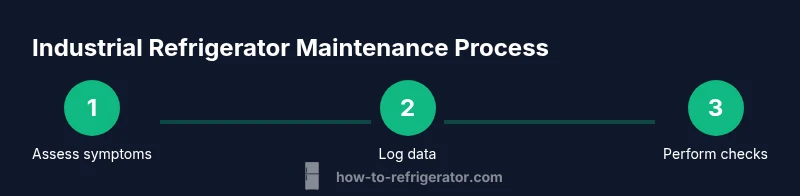
Begin by noting the exact symptoms observed (temperature drift, frost buildup, periodic cycling). Use a temperature log to capture readings over 24 hours if possible. This establishes a baseline for diagnosing faults and tracking improvement after any fix.
Tip: Keep a simple notebook or digital log with timestamps and location of sensors. - 2
Isolate the unit and check airflow
Ensure the refrigeration area is well-ventilated and the unit is not blocked by walls or stored goods. Verify that fans operate and there are no obvious obstructions to airflow around the condenser or evaporator.
Tip: Round up a flashlight to inspect behind coils if panels are accessible. - 3
Check door seals and gaskets
Inspect door gaskets for cracks, tears, or warping. A poor seal can cause cold air leaks and increased energy use. Clean gasket surfaces and replace if necessary.
Tip: Test seal by closing door on a sheet of paper; if you can pull the paper out easily, the seal needs attention. - 4
Inspect condenser coils and airflow
Look for dust and debris on condenser coils. Clean with a coil brush or vacuum, keeping fins intact. Poor coil cleanliness reduces heat rejection and hurts cooling performance.
Tip: Do not use high-pressure water directly on coils; it can damage fins. - 5
Test thermostat, sensors, and defrost path
Use a multimeter to check thermostat readings and sensor continuity. Inspect the defrost timer and heater for proper operation; frost buildup suggests a defrost control fault.
Tip: Document readings and compare against the unit’s specification values. - 6
Run a controlled test and verify performance
After any adjustment or part replacement, allow the unit to stabilize and re-check temperatures. Confirm that the setpoint is reached within expected timeframes and observe for abnormal cycling.
Tip: Allow at least one full cycle to confirm consistent operation before final assessment.
FAQ
What are the most common reasons an industrial refrigerator stops cooling?
Not cooling can result from dirty condenser coils, failing sensors or thermostat, door leaks, blocked airflow, or defective defrost components. Start with a symptom checklist and non-invasive checks before moving to component tests.
The most common cooling issues are dirty coils, failed sensors, and door leaks. Start with a simple symptom checklist.
Can I clean coils and replace door gaskets myself?
Yes, basic coil cleaning and gasket replacement are feasible for many owners with basic tools. Follow safety steps, power off the unit, and avoid bent fins or torn gaskets. If the system contains refrigerant lines, consider professional help for leaks.
Yes, you can clean coils and replace gaskets if you follow safety steps and avoid damaging fins.
How often should door gaskets be inspected?
Inspect door gaskets during routine maintenance and replace if cracks, tears, or warping are observed. This helps preserve energy efficiency and consistent cooling.
Inspect gaskets regularly and replace worn ones to maintain efficiency.
What is the defrost timer and why does it matter?
The defrost timer controls periodic heating to melt frost buildup. If it fails, frost can block airflow and impair cooling, leading to higher energy use and degraded performance.
The defrost timer prevents frost buildup; a faulty timer can cause performance issues.
Should I fix refrigerant leaks myself?
No. Refrigerant leaks require licensed technicians and proper recovery equipment. Attempting DIY refrigerant work is dangerous and illegal in many regions.
Do not fix refrigerant leaks yourself; call a licensed technician.
When should I replace instead of repair?
Consider replacement when repair costs rise and reliability declines, or the unit is outdated relative to needs. A professional assessment can help determine total cost of ownership.
If repairs are frequent and costly, replacement may be more economical.
Watch Video
Top Takeaways
- Log symptoms and temperatures before attempting fixes
- Inspect seals and coils to prevent cold air loss
- Follow safety protocols at all times
- Know when to engage a professional