Resetting Norcold RV Refrigerator: Step-by-Step Guide
Learn how to safely reset your Norcold RV refrigerator, diagnose common causes, and prevent repeat issues with a thorough, practical guide from How To Refrigerator.


Resetting a Norcold RV refrigerator is a practical first step to clear certain fault codes and restore cooling when basic power cycling fails. This guide outlines when a reset is appropriate, the exact steps to perform it safely, and how to verify the fridge is cooling again. How To Refrigerator provides clear, actionable steps to help homeowners troubleshoot confidently.
Understanding Norcold RV refrigerators and why a reset helps
Norcold RV refrigerators are designed for mobile lifestyles, combining gas, electric, and 12V battery power to keep food fresh while you travel. A reset can be a powerful first move when the unit shows fault codes, won’t reach the set temperature, or refuses to run after a power interruption. According to How To Refrigerator, many problems stem from temporary software glitches, misread temperature sensors, or power-management conflicts that a controlled reset can clear. By understanding how the control board and sensor suite interact, you’ll gain insight into why a reset might resolve the issue without replacing components. The goal is to reinitialize the onboard software, reset the fault memory, and allow the cooling system to establish normal operation again. This approach is especially valuable for homeowners who prefer to troubleshoot themselves before calling service, and it aligns with practical home-maintenance principles outlined by How To Refrigerator’s research in 2026.
When a reset is appropriate and what it corrects
A reset is typically appropriate when you observe one or more of the following symptoms: fault codes flashing on the control panel, the fridge not cooling despite power, or after a power interruption (shutting off and back on). A reset can clear transient faults stored in the memory, reset the control logic to a known-good state, and give the sensors a fresh baseline. It does not fix physical issues like a damaged door seal, a blocked condenser vent, or a leaking refrigerant line. If the reset resolves the symptom, it confirms a software or sensor hiccup rather than a hardware fault. If not, the issue might require inspection of cooling coils, seals, or electrical connections, which should be handled with caution by a technician.
Safety considerations before you begin
Safety first: ensure you’re working in a well-ventilated area, especially if your refrigerator runs on propane. Shut off all power sources and disconnect the RV from shore power if accessible, and if you have access to the battery, consider disconnecting the 12V supply as part of a full power-down. Do not attempt a reset if you notice gas leaks, hissing from propane lines, or signs of overheating. Always consult the owner’s manual for the model-specific steps and safety guidelines. How To Refrigerator emphasizes that working with propane systems requires respect for fire safety protocols and proper ventilation.
What to know about the reset process
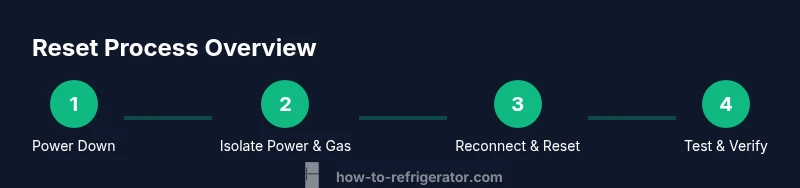
A typical reset involves shutting down the fridge, disconnecting all power sources, and then rebooting the control board so it can reinitialize. Some models offer a digital reset option through the control panel; others rely on a standard power cycle (unplug, wait, then reapply power). After reapplying power, you should observe the control panel initiating a restart sequence and the compressor or fans kicking back in. It’s important to avoid abrupt power fluctuations, which can trip safety protections. While the exact steps vary by model, the core principle is to give the controller a clean slate and let the sensors report fresh data during the reboot.
After the reset: troubleshooting and testing
Once the unit reboots, monitor for new fault codes or a return to normal operation. Check that the temperature begins to drop into the manufacturer’s recommended range and that doors seal properly. If cooling is slow, inspect the condenser fins and vent openings for dust or debris and ensure proper airflow around the unit. If the reset does not resolve the issue, perform a secondary check on wiring connections behind the fridge, verify the thermistor readings at the control board, and consider testing the power supply stability. Documentation of fault codes and symptoms can help you decide whether to seek professional repair.
Maintenance tips to reduce future resets
Regular maintenance reduces the likelihood of repeated resets. Clean the condenser coils (where accessible) to maintain efficient heat rejection, ensure the door seals are intact and clean, and clear any obstructions around vents. Periodically verify that the unit has stable power: avoid long draws on household circuits, inspect for corroded terminals, and keep the control panel free of moisture. For propane-powered operation, schedule periodic professional checks to safeguard fuel connections and venting. A proactive maintenance routine will help you identify potential issues before they escalate into faults that require a reset.
AUTHORITY SOURCES
- U.S. Department of Energy: Refrigerator Energy Efficiency and Safety Guidelines (energy.gov)
- California Energy Commission: Appliance Safety and Troubleshooting (energy.ca.gov)
- University of Wisconsin Extension: Home Appliance Maintenance Basics (learning.uwex.edu)
Tools & Materials
- Multimeter or voltage tester(Check 12V and 120V supply; confirm stable voltage during reset)
- Screwdriver set (Phillips and flathead)(Access panels and terminal screws)
- Non-conductive gloves(Protect hands when handling sharp metal edges or hot components)
- Wire ties or electrical tape(Secure loose wires after inspection)
- Shop flashlight(Illumination for dark compartments behind the fridge)
- Owner’s manual or model-specific reset guide(Have on hand for model-specific steps)
- Thermometer or fridge temp gauge(To verify cooling after reset)
Steps
Estimated time: 30-60 minutes
- 1
Power down and unplug the unit
Shut off the control panel and disconnect power sources: unplug from shore power and, if accessible, disconnect the RV battery or jumper leads. This ensures no components re-energize during the reset and protects you from electrical shock.
Tip: If you cannot unplug due to space, switch off the main AC breaker and wait at least 60 seconds before continuing. - 2
Isolate all power and gas sources
Turn off the propane supply to the refrigerator by closing the gas valve if accessible. Do not attempt reset while propane is actively supplying heat or if you smell gas; ensure adequate ventilation and safety before proceeding.
Tip: Ventilate the area for several minutes if you detect propane odors. - 3
Wait briefly to discharge residual power
Allow a short cooldown period (about 1 minute) after power is disconnected. This helps discharge internal capacitors and reduces the risk of a surge when you reconnect power.
Tip: Use a clock or timer to keep track so you don’t rush the process. - 4
Reconnect power and access the control panel
Reconnect shore power or battery and re-access the fridge’s control panel. If you have 12V and 120V sources, ensure both are established and stable before initiating the reset.
Tip: If you reset via a digital menu, write down any existing settings before starting. - 5
Initiate the reset sequence on the control panel
Follow the model-specific reset option on the control panel or panel menu. If a true reset option isn’t available, perform a soft power cycle by turning the unit off, waiting, and turning it back on.
Tip: Consult the manual for the exact words used for reset on your model. - 6
Re-enable propane and verify ignition (if used)
If your unit runs on propane, re-open the gas valve and reignite the burner (per the manual). Ensure there are no leaks and that the flame is stable before returning to normal operation.
Tip: Never ignite propane in an enclosed space without proper ventilation. - 7
Set the temperature and doors to normal operation
Return the temperature setting to the manufacturer’s recommended range and verify the door seals. An airtight seal helps maintain steady cooling after a reset and reduces energy use.
Tip: Avoid frequent door openings during the initial cooling period. - 8
Test cooling and confirm stability
Close the doors and monitor the fridge for cooler readings over the next several hours. If the temperature does not begin to drop or fluctuates abnormally, inspect vents, coils, and connections or consult a technician.
Tip: Document any fault codes or abnormal noises to share with support.
FAQ
When should I reset my Norcold RV refrigerator?
Resetting is appropriate when fault codes appear, the fridge won’t cool after power restoration, or after a power interruption. If the reset doesn’t resolve the issue, it may indicate a hardware fault requiring professional inspection.
Resetting is best when fault codes show up or cooling is inconsistent after power returns. If it doesn’t fix the problem, contact a technician.
Will resetting erase my settings?
A reset may clear fault memory and return some settings to defaults, depending on the model. You may need to re-enter preferred temperature and mode after the reset.
Some models restore to defaults after a reset, so you might need to re-adjust temperature settings.
Can I reset while the fridge is running on propane?
If your fridge uses propane, turn off the propane supply before performing a reset. Ensure proper ventilation and follow the manual to avoid gas-related hazards.
Turn off propane and ventilate before resetting to stay safe.
What should I do if the reset doesn’t fix the issue?
If the reset doesn’t resolve the problem, inspect wiring connections, thermistor readings, and vent blockages. Consider professional service if fault codes persist or cooling remains poor.
If reset fails, check wiring and sensors, and call a professional if needed.
Is it safe to reset while the RV is in motion?
Resetting is best done when the RV is stationary in a safe area. Avoid handling electrical components while driving to prevent injuries.
Do resets when parked in a safe spot.
Where can I find model-specific reset steps?
Consult the Norcold owner’s manual or the model’s official support page for exact reset sequences and warning signs. How To Refrigerator also provides model-agnostic guidance that aligns with typical reset principles.
Check your manual or support site for exact steps.
Watch Video
Top Takeaways
- Power down completely before resetting.
- Follow model-specific steps and safety guidelines.
- Allow the unit to stabilize after reboot and monitor cooling.
- Prevent future resets with regular maintenance.