Replace LG Refrigerator Compressor: A Homeowner's Step-by-Step Guide
Learn how to replace an LG refrigerator compressor with a safe, step-by-step guide, essential tools, safety tips, and troubleshooting from How To Refrigerator.


Replacing an LG refrigerator compressor is a high-skill repair that may require a licensed refrigerant technician. This guide walks experienced homeowners through planning, safety, removal, and installation considerations, plus sourcing a compatible LG compressor and verifying proper operation. Always weigh the cost and risk versus a full unit replacement before proceeding.
Why replacing LG compressor is sometimes necessary
When an LG refrigerator struggles to cool, cycles irregularly, or makes unusual noises, a compressor failure is often the culprit. Replacing the compressor can restore cooling performance and extend the life of the appliance, but it is a complex repair that involves refrigerant handling, sealed-system integrity, and precise oil charges. The How To Refrigerator team has observed that homeowners who attempt a compressor replacement must be prepared for documentation, safety checks, and the potential need to source a compatible model. If the compressor is beyond repair, a replacement is usually more cost-effective than a full unit. Remember that proper safety protocols and local regulations govern refrigerant work, so evaluate your skill and jurisdiction before proceeding.
"According to How To Refrigerator, planning and safety are the foundation of any refrigeration repair, especially when the sealed system is involved."
Safety and legality considerations before you begin
Working on a refrigerator’s sealed refrigerant system can be hazardous and is regulated in many areas. Before you start, confirm local rules about refrigerant recovery and disposal. If you are not a licensed technician, refrigerant recovery should be handled by a professional with proper equipment. PPE is non-negotiable: safety goggles, chemical-resistant gloves, and long sleeves. Keep children and pets away from the workspace, and ensure proper ventilation. If your unit is under warranty, check the terms, as DIY compressor work can void coverage. Always disconnect power and lockout the circuit to prevent shock during any service.
Tools, parts, and safety gear you’ll need
Before touching the appliance, gather essential tools and replacement parts:
- Replacement LG compressor compatible with your model (verified part number)
- Refrigerant recovery machine (required for proper handling in many regions)
- Vacuum pump and manifold gauge set
- Wrench set, nut drivers, and screwdrivers
- Torque wrench and thread sealant or O-rings as specified by the compressor vendor
- New oil for the compressor (if the model requires it) and fresh O-rings/gaskets
- Safety gear: goggles, insulated gloves, and appropriate clothing
- Containers and absorbent rags for spills
Pro tip: Take clear photos of the existing connections before disassembly to aid reassembly and labeling.
Understanding compressor compatibility and sourcing
Finding the correct compressor for an LG refrigerator means matching the exact model and refrigerant type originally used by the appliance. Start by locating the model and serial numbers on the rating plate inside the fridge or on the back panel. Use these identifiers to cross-reference compatible compressor options from LG-approved distributors or reputable HVAC suppliers. If an exact match isn’t available, your technician may propose an equivalent compressor from a compatible brand, but compatibility with the sealed system is critical for performance and warranty. Always verify oil type, capacity, mounting pattern, and valve arrangement before purchasing.
Planning the replacement: a high-level workflow
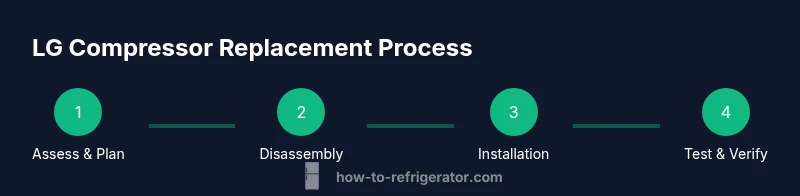
This section outlines the safe, orderly sequence for a compressor swap when you have the appropriate training and equipment:
- Confirm the job scope and decide whether you will do the work or hire a technician
- Prepare the workspace and disconnect power completely
- Schedule refrigerant recovery with a licensed professional if required by local law
- Access the compressor by removing the interior panel or back cover, noting component positions
- Remove the old compressor and any seized hardware, then inspect mounting hardware for wear and corrosion
- Install the new compressor, ensuring correct orientation, mounting torque, and seal integrity
- Reconnect refrigerant lines with new O-rings, and verify there are no cross-threaded connections
- Evacuate the system and recharge using proper equipment and refrigerant, following manufacturer specs
- Run initial tests to verify cooling, pressures, and leak-free operation
- Reassemble the cabinet and perform a final functional check
Note: This is a high-skill repair; if you lack credentials or equipment, hire a pro to protect your safety and the appliance.
Disassembly considerations and refrigerant handling (highly technical portion)
Disassembly involves exposing the sealed refrigeration circuit, which is sensitive to moisture and air. Do not vent refrigerant into the room; refrigerant release is illegal in many areas and dangerous. A licensed technician should perform refrigerant recovery and system evacuation. When removing the compressor, carefully detach the mounting hardware and disconnect service lines in a sequence that preserves gasket surfaces. Keep track of screws and small parts, and label lines to prevent misconnection during reassembly. If you notice oil contamination or burnt smells on the old compressor, note this for the technician as it can indicate broader system issues.
Installation basics for a new LG compressor
Install the new compressor with the same mounting orientation as the old unit and replace all gaskets and seals. Reconnect service lines, ensuring copper lines are not kinked and that fittings are clean. If your model requires oil pre-charge, add the prescribed amount before final connections. Tighten mounting bolts to the manufacturer’s specifications, and check all electrical connections for secure contact. After assembly, do not start the compressor immediately; verify that the wiring and controls are correct, and perform a leak test if possible with a calibrated detector. Proper oil charge and sealing prevent premature failure.
Evacuation, recharge, and final checks
A proper vacuum must be created to remove moisture and air from the system before charging. This step is critical for system performance and longevity. Once a deep vacuum is achieved, charge the system with the appropriate refrigerant according to the LG model’s specifications and follow the manufacturer’s charge weight. After charging, run the compressor and monitor pressures and temperatures at multiple points to ensure balanced operation. Look for signs of leaks around joints, seals, and fittings. If leaks are detected, stop and recheck connections before concluding the repair. Finally, reinstall panels and confirm cooling performance in normal operating conditions.
Post-repair checks and long-term maintenance
After the compressor replacement, keep a close eye on the unit for the first 24-48 hours. Listen for unusual noises, monitor temperature consistency, and verify that the evaporator cools evenly. Schedule an annual checkup if you rely on your fridge for critical storage, and replace any worn components such as door seals or fan motors if you observe inefficiencies. Regular dusting and cleaning of coils helps with heat exchange and energy efficiency. If the unit fails to perform after replacement, recheck the wiring and verify that the right refrigerant type and charge were used.
Tools & Materials
- Replacement LG compressor (model-specific)(Must match LG model and refrigerant type)
- Refrigerant recovery machine(Required where legally mandated; do not vent refrigerant)
- Vacuum pump(For system evacuation prior to recharge)
- Manifold gauge set(To monitor pressures during charging)
- Wrench set(Open-end and box wrenches for fittings and mounting)
- Nut drivers(For clamp and line fittings)
- Screwdrivers(Flat and Philips, for panel removal)
- Torque wrench(To specified mounting torque)
- Refrigerant oil(As specified by compressor manufacturer)
- O-rings and gaskets(New seals for all service connections)
- Safety gear (goggles, gloves)(Personal protective equipment)
- Drain pan / absorbent rags(Capture small spills)
- Marker and labels(Label hoses to aid reassembly)
Steps
Estimated time: 4-8 hours
- 1
Assess feasibility and safety
Evaluate your training, tools, and local regulations. If refrigerant handling requires certification, plan to involve a licensed technician. Decide whether replacement is practical or if a full unit replacement is more cost-effective.
Tip: Document plan and obtain necessary permissions before starting. - 2
Disconnect power and access the compressor
Unplug the fridge and shut off the circuit breaker. Remove interior panels and access the back or rear panel to locate the compressor and line connections.
Tip: Take photos of connections before disconnecting anything. - 3
Coordinate refrigerant recovery
If required by code, schedule recovery with a licensed technician. Do not attempt to vent refrigerant. This keeps the system compliant and avoids safety risks.
Tip: Keep recovery paperwork on hand for inspections. - 4
Detach lines and remove old compressor
Carefully detach inlet/outlet lines, noting orientation. Remove mounting bolts and lift the old compressor clear from the cabinet.
Tip: Inspect mounting surface for corrosion and clean as needed. - 5
Prepare and install new compressor
Install the new compressor, align mounting, and attach lines with new seals. Add recommended oil if required by the model and torque bolts to specification.
Tip: Always verify that seals are seated to prevent leaks. - 6
Evacuate and recharge the system
Connect the vacuum pump and establish a deep vacuum, then recharge with the proper refrigerant per LG’s spec. Monitor pressures during charging.
Tip: Double-check for air and moisture removal before charging. - 7
Test operation and verify leaks
Reconnect power, run the system, and check for consistent cooling and leaks using an appropriate detector or dye test if applicable.
Tip: Observe the first start for any abnormal noises or overheating. - 8
Reassemble and finalize
Replace panels, fasteners, and any trim. Run the fridge through a full cycle to ensure stability and performance.
Tip: Label components and store extra screws for future service. - 9
Post-repair maintenance
Schedule periodic checks of seals, coils, and fans. Keep the condenser clean and ensure proper door alignment to maximize efficiency.
Tip: Keep a maintenance log for future reference.
FAQ
Do I need to recover refrigerant before replacing LG refrigerator compressor?
Yes. Refrigerant must be recovered and the system evacuated according to local regulations. A licensed technician typically performs this step to ensure safety and compliance.
Yes. Refrigerant recovery is required by law in many areas, and a licensed technician should handle it.
Can I replace an LG compressor myself?
Only if you have the proper training, tools, and certifications for refrigerant handling. Without them, hire a qualified HVAC technician to avoid safety and warranty issues.
Only if you’re trained and equipped for refrigerant work; otherwise hire a professional.
How do I know which compressor model to buy?
Check the fridge model and rating plate to confirm the exact compressor model and refrigerant type. Source from LG-approved distributors or reputable HVAC suppliers to ensure compatibility.
Check the model number and source from approved distributors to ensure compatibility.
What are common signs the compressor is failing?
Symptoms include poor cooling, frequent cycling, unusual noises, and excessive warmth around the back of the fridge. If these persist after changes, seek professional assessment.
Signs include poor cooling and unusual noises; seek a professional if unsure.
Will replacing the compressor fix not-cooling problems?
Replacing the compressor can fix not-cooling issues caused by compressor failure, but other components like fans, coils, or thermostats may also cause cooling problems.
It can fix compressor-related cooling issues, but other parts might also cause problems.
Is there a risk to warranty or future service when DIYing this repair?
DIY compressor work can void warranty coverage if the manufacturer or retailer requires professional service for sealed-system repairs. Check your warranty terms before proceeding.
DIY repairs can void warranties, so verify terms before starting.
Watch Video
Top Takeaways
- Assess feasibility before starting and consult a pro if needed
- Use compatible compressor with correct oil and seals
- Follow legal refrigerant recovery rules and safety protocols
- Verify system vacuum and leak-free operation after replacement
- Document and maintain the appliance after repair