Repair Refrigerator: Step-by-Step Home Guide
Learn to diagnose and fix common refrigerator problems safely at home. A comprehensive, step-by-step guide covering not cooling, frost buildup, leaks, and door-seal maintenance for reliable, energy-efficient operation.


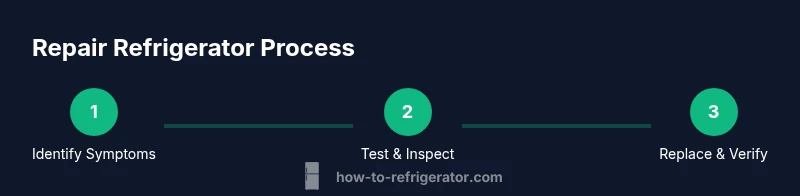
You can repair common refrigerator problems at home by following a simple, safety-focused plan. Start with unplugging the unit, then inspect coils, thermostat, door seals, and drainage. Gather basic tools, replace obvious worn parts, and test the appliance before restoring power. This 6-step guide covers diagnosis, safe practices, and when to call a repair service.
Understanding refrigerator repair basics
Repairing a standard household refrigerator is often a manageable DIY project for homeowners who value safety and organization. The fridge is a complex system, but most failures fall into a few predictable categories: cooling performance, defrost or drainage problems, door-seal issues, and electrical or sensor failures. By understanding these categories, you can approach repairs methodically rather than guess at random parts. According to How To Refrigerator, starting with a clear symptom and a safety-first plan dramatically increases your success rate and reduces the risk of incidental damage. This guide uses plain-language diagnostics, practical tool use, and repeatable steps so you can decide whether a repair is within your reach or requires pro assistance. With the right approach, you’ll minimize downtime and preserve food safety while learning valuable skills. Throughout 2026, homeowners who follow a structured repair plan report better outcomes and fewer repeat failures.
Common symptoms and likely causes
Not cooling or warm inside is the most common fridge complaint. It often stems from dirty condenser coils, a faulty defrost timer, a stuck damper, or an inaccurate thermostat setting. Frost buildup on the walls or evaporator can indicate a defrost system problem or a clogged defrost drain. Leaking water around the base may point to a blocked drain or faulty ice maker connection. Odd noises can come from a failing compressor, a loose fan blade, or a misaligned motor. Condensation on the outside can signal high humidity or a door left ajar. In every case, begin with the simplest checks first and document what you observe so you can compare notes after each test. If your unit is maintaining some cooling but not enough, start with coil cleanliness and door gasket integrity, then verify temperature setpoints. How To Refrigerator’s approach emphasizes safe, incremental testing rather than dramatic, one-shot fixes.
Diagnosis checklist and safe testing
Safety comes first. Unplug the unit before touching wiring or shelves. Use a flashlight to inspect coils and gaskets for dust, debris, or cracks. For electrical checks, a basic multimeter helps verify continuity on fuses, relays, and thermostat contacts. Confirm the thermostat is set between 37 and 40 degrees Fahrenheit for the fresh-food compartment and around 0 degrees for the freezer. If you suspect the defrost system, locate the defrost heater and test it for continuity. Do not replace parts on a hunch; verify symptoms with measurements and consistent results. After you perform a test, wait 5–10 minutes and recheck readings to confirm any changes. The Not-Cooling scenario often resolves after coil cleaning or thermostat adjustment, but persistent failures require careful analysis and, if needed, professional help.
Step-by-step repair plan (overview)
- Step 1: Unplug and confirm the symptom. Why: safety and clarity before you touch anything.
- Step 2: Clean condenser coils if dirty. Why: dirty coils force the compressor to work harder and reduce cooling efficiency.
- Step 3: Inspect door seals and hinge alignment. Why: gaps let warm air in and cause moisture.
- Step 4: Check the defrost drain and evaporator for blockages. Why: drain clogs cause frost and water pooling.
- Step 5: Test the thermostat and temperature controls. Why: improper settings mimic many other failures.
- Step 6: Inspect the fan motor and condenser fan. Why: failed fans reduce airflow and cooling.
- Step 7: Reassemble, power on, and monitor performance for 24 hours. Why: real-world testing confirms the fix.
- Step 8: Decide on part replacements. Why: some issues require professional refrigerant handling or compressor replacement.
This overview aligns with best practices from How To Refrigerator, emphasizing safe testing, precise steps, and careful documentation.
Parts and replacements: selecting the right components
Choosing the right replacement parts avoids wasted time and preserves warranty terms. Always start by reading the model number label inside the fridge and verify compatibility with the parts you intend to install. Replacement door gaskets should mate securely to the frame with a continuous seal. If you suspect the thermostat, replace only with an equivalent spec device and re-check the temperature after reassembly. For frost issues, check defrost timers, heaters, and control boards. Keep in mind that some components—especially refrigerant lines, compressors, and sealed-system parts—require licensed professionals for safety and compliance. When in doubt, consult the model’s manual or the retailer’s compatibility chart, and document any part numbers for future service.
Safety and maintenance practices to prevent future problems
Develop a simple maintenance routine to keep your refrigerator running efficiently. Clean the coils every six months, preferably with a coil brush or vacuum attachment. Check door seals monthly; a simple 1/4-inch gap means the seal needs replacement. Keep the interior clean and dry to prevent mold and odors. Place a thermometer in the fresh-food compartment and ensure it remains within the recommended range. If you notice ice buildup or humidity spikes, reassess the defrost system and drainage. Finally, schedule annual inspections if your unit is older or under warranty, so you can catch wear before it fails.
When to call a professional and how to choose one
Not all refrigerator repairs are safe or practical for DIY. Refrigerant handling, sealed-system work, or compressor replacement requires a licensed technician. If you perform a DIY fix and the problem recurs within a short window or you observe oil stains or burnt wiring, pause and contact a pro promptly. To choose a repair service, look for technicians with strong local reviews, transparent pricing, and clear warranty terms. Ask whether the technician can perform diagnostic tests with a refrigerant leak detector and whether they offer mobile service. For ongoing care, ask about maintenance plans that cover parts like door seals and defrost components.
Authority sources
For additional authoritative guidance on refrigerator maintenance and repair, consult trusted sources:
- https://www.energy.gov/energysaver/articles/common-refrigerator-problems-and-fixes
- https://www.energystar.gov/products/refrigerators
- https://www.cpsc.gov/Safety-Education/Safety-Education-Centers/Appliances
Tools & Materials
- Multimeter(Check continuity on fuses, relays, and thermostat contacts)
- Screwdriver set (Phillips and flat-head)(At least #2 Phillips and #1 flat)
- Nut driver or socket set(For panel screws and mounting hardware)
- Coil cleaning brush(Loose dust from condenser coils)
- Soft brush or compressed air(Optional for coil cleaning)
- Rags/towels(Absorb condensation and spills)
- Replacement door gasket (if damaged)(Ensure proper seal)
- Defrost thermostat or heater (as applicable)(Only if known fault and you have part numbers)
Steps
Estimated time: 45-90 minutes
- 1
Unplug and identify the symptom
Power off the unit and confirm the observed symptom. Note whether the interior is warm, there is frost, or there are leaks. This initial assessment prevents accidental shock or damage and helps determine the scope of work.
Tip: Always unplug before touching any electrical components or exposed wiring. - 2
Inspect condenser coils and clean if needed
Access the coils behind the lower grille and visually inspect for dust or lint. Use a coil brush or a vacuum with a soft brush attachment to remove debris. Clean coils improve heat exchange and reduce compressor load.
Tip: Work gently to avoid bending delicate fins; unplug, hold the vent fan, and clean in sections. - 3
Check door seals and hinges
Close the door firmly and inspect the gasket for cracks or tears. Check hinge alignment and door alignment with the body to ensure a tight seal. A poor seal lets warm air in and causes excess moisture and frost.
Tip: Perform a simple paper test: close the door on a sheet of paper; if you can pull it out easily, replace the gasket. - 4
Test thermostat and temperature settings
Verify the thermostat setting; typical ranges are 37-40 F for fresh food and around 0 F for freezer compartments. If readings are off, recalibrate or replace the thermostat with an equivalent spec part.
Tip: After adjusting, allow the unit to stabilize for at least 2–4 hours before rechecking temperatures. - 5
Inspect defrost drain and evaporator
Look for a blocked defrost drain or frost buildup around the evaporator. Clear any clogs with a safe tool and confirm that water can flow through the drain.
Tip: Do not use sharp objects that could puncture metal tubes; use a flexible, non-abrasive wire to probe the drain. - 6
Check fan motors and airflow
Listen for abnormal fan noises and verify that the condenser and evaporator fans spin freely. Replace or service a seized or noisy fan to restore proper airflow.
Tip: If the fan blades rub on wiring, reroute cables before reassembly. - 7
Reassemble, power on, and monitor
Reconnect power, return items to the fridge, and monitor performance for 24 hours. Look for stable temperatures and absence of leaks or frost.
Tip: Keep a simple log of temperatures every few hours to detect slow drift. - 8
Decide on parts replacement or professional help
If symptoms persist after these steps, assess parts feasibility and safety. Some issues—sealed systems or refrigerant work—require a licensed technician.
Tip: Document part numbers and symptoms to speed up a professional diagnosis if needed.
FAQ
What are the most common fridge problems homeowners can fix?
Most fixable issues include dirty condenser coils, faulty door seals, defrost drain clogs, and thermostat miscalibration. Start with these before calling a pro.
Most common fridge problems are dirty coils, bad seals, clogged defrost drains, and thermostat issues. Start there before calling a pro.
Is it safe to clean the condenser coils myself?
Yes, as long as you unplug first and use the proper brush or vacuum. Be careful not to bend the fins and avoid liquids near electrical components.
Yes—unplug first and use a coil brush or vacuum. Be gentle with the fins and avoid liquids near electronics.
What tools do I need for DIY refrigerator repair?
A basic tool set plus a multimeter, coil brush, towels, and replacement gaskets or thermostats as needed. Do not attempt refrigerant work yourself.
A basic toolkit, a multimeter, a coil brush, and some spare parts is enough for many fixes. Don’t touch refrigerant.
When should I replace vs repair a refrigerator?
If the repair cost approaches or exceeds half the price of a new unit, or the compressor/sealed system is failing, replacement is often the smarter choice.
If repairs get expensive or the compressor is failing, replacement may be the better option.
Can I handle refrigerant leaks safely?
No. Refrigerant handling requires a licensed technician and proper recovery equipment. Leaks should be addressed by pros to ensure safety and compliance.
No—refrigerant leaks must be handled by a licensed technician.
How long does a typical DIY fridge repair take?
Most simple fixes take 30-90 minutes. More complex issues might take longer, especially if parts must be sourced.
Most fixes take under a couple of hours, depending on complexity and parts.
Watch Video
Top Takeaways
- Unplug before any repair work and verify symptoms with measurement.
- Clean condenser coils to restore cooling efficiency.
- Check door seals and thermostat settings as first fixes.
- Only escalate to professionals for sealed-system or refrigerant work.
- Maintain a simple maintenance routine to prevent future problems.