Refrigerator Parts Replacement: A Homeowner's Guide
Step-by-step guide for diagnosing fridge issues and safely replacing common refrigerator parts. Tools, safety tips, and maintenance advice for homeowners.


This guide helps homeowners diagnose common fridge problems and perform refrigerator parts replacement safely. You’ll learn how to identify symptoms, confirm faulty parts, choose compatible replacements, assemble the required tools, and follow a clear step-by-step process. It also covers essential safety precautions, testing after installation, and deciding when professional service is needed.
Why replacing refrigerator parts matters
Dairy and fresh foods rely on a refrigerator that stays in good working order. When a component fails, you may lose cooling efficiency, run up energy bills, or risk food spoilage. Replacing a faulty part can restore performance without buying a new unit. According to How To Refrigerator, a careful diagnosis and correct part selection are the two pillars of a lasting repair. Start by confirming the symptom, then check the model number on the inside wall or door frame to find compatible parts. In most cases, you can identify the likely culprit by looking for visible wear, listening for unusual noises, or noticing uneven cooling. Remember: not every malfunction requires replacement—some systems respond to simple maintenance, cleaning, or reseating connections. This guide focuses on parts that most homeowners can replace safely with basic tools, keeping your fridge running and reducing waste. By understanding the common failure points and the replacement process, you’ll save money and extend the life of a trusted appliance.
Common fridge parts that fail and signs they need replacement
Several components routinely wear out in household refrigerators. The condenser coils can clog or overheat, raising energy use and reducing cooling. The door gaskets seal in cold air, and worn seals cause frost and wasting energy. The ice maker and water dispenser modules can jam or fail to fill. The defrost timer or heater can cause frost buildup or uneven cooling. The evaporator fan motor can stop circulating air, leading to warm spots. The thermostat or temperature sensor may drift, making the interior too warm or too cold. Finally, the compressor and start relay handle the primary compression; when these fail, cooling collapses altogether. These issues manifest as noisy operation, frost or ice buildup, inconsistent temperatures, or leaky water. Replacing a component generally restores the system to its designed operating range, but you must ensure you’re matching part numbers and using proper DIY practices. Always consult your model’s parts list and install instructions.
How to diagnose before replacing parts
Begin with symptoms: is the fridge too warm, producing frost, or leaking water? Check the door seals for cracks and test temperature with a thermometer placed in the middle shelf. Listen for unusual fans or compressor noise that persists after the door closes. Inspect visible components; burnt wires, discoloration, or melted insulation indicate replacement is needed. Verify the model number and the exact part number from the owner’s manual or the manufacturer’s website. Compare the new part to the old one, noting connectors, screw locations, and mounting brackets. If you’re unsure, perform an in-situ test by reseating connections and cleaning the coil or fan—many failures are caused by loose connections or debris. Use a multimeter if you’re comfortable with electrical checks to test continuity on switches and thermostats. In most cases, a correct part match resolves the issue rather than a guess. The goal is to confirm that the part is the root cause before paying for a replacement.
Safety first: unplugging, hazards, and handling refrigerant
Before touching any fridge components, unplug the unit and switch off any power strips. Never work on live electrical circuits, and keep liquids away from exposed electrical parts. For frost-free systems, avoid breaking sealed cooling lines or attempting refrigerant handling unless you are a licensed technician; improper handling can be illegal and dangerous. Wear safety glasses and gloves to protect against sharp metal edges and refrigerant residue. Use a non-slip tray to collect condensation and protect your floors. When removing panels, lay them in a labeled order so you can reassemble them easily. If you encounter a part that seems welded, corroded, or hot to the touch, stop and reassess. Finally, disconnect the water line and place a towel to catch any residual water before removing an ice-maker or water-dispenser module. These precautions lower the risk of injury and damage during replacement.
Tools and replacement parts: choosing the right fit
Locating your fridge’s model number and consulting the official parts list is essential. OEM parts are usually dependable but may cost more; aftermarket parts can be cheaper but quality varies. Ensure the replacement matches the exact part number, connectors, and mounting points. Check the warranty status; some models require OEM parts to maintain coverage. Gather essential tools: a screwdriver set (PH2 and flat-head), a nut driver, a multi-meter for electrical tests, a temperature sensor if independent replacement is needed, protective gloves, and a soft cloth for cleaning. Have a service manual or reputable online guide on hand for torque specs and wiring diagrams. If you’re unsure about the correct part, consult a professional or the manufacturer’s parts lookup to confirm compatibility. By pre-checking compatibility and having the right tools, you’ll reduce returns and downtime. Lastly, order a spare belt or fan blade if the design uses replaceable wear components.
Replacement workflow: planning, removal, and installation
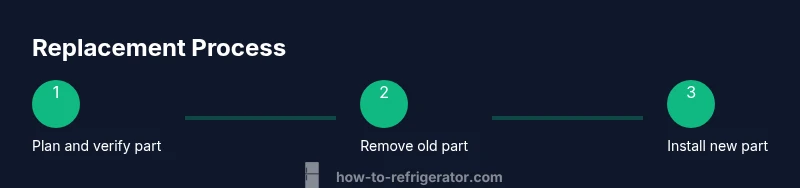
A successful replacement follows a simple workflow: plan the replacement around your fridge’s cycle (avoid peak use times), verify the exact part number, and gather the right tools. Power off the appliance, then remove outer panels to access internal components. Document or photograph wiring and connector locations before disconnecting anything. Remove the old part carefully, noting screw positions and mounting points. Install the new part by aligning connectors and brackets, then reattach wiring and panels in the reverse order. Reconnect power and run the appliance to verify operation. If you encounter resistance, double-check the alignment and torque specs from the manual. This approach minimizes errors and preserves safety while delivering a durable repair.
Testing and verification after replacement
Allow the fridge to stabilize after installation—airflow and sensor readings can take a few hours to settle. Check for correct temperatures in both the fresh food and freezer compartments using a thermometer. Listen for unusual noises and inspect for frost buildup in the freezer. Run the ice-maker (if equipped) and verify water lines, confirming there are no leaks. Recheck door seals by closing gently and verifying that air doesn’t escape. If the temperature remains off after several hours, re-confirm part compatibility and connections. Finally, document the replacement date and any maintenance notes for future reference.
Maintenance to prevent future failures
Regular coil cleaning is essential; unplug the unit and carefully vacuum debris from the condenser coils every 6–12 months. Inspect door seals for cracks and clean the gasket with a mild soap solution to maintain a tight seal. Replace the water filter according to the manufacturer’s schedule and check the ice-maker mechanism for jams. Avoid overloading shelves, which can disrupt airflow. Keep the area around the fridge clear for ventilation and ensure the unit sits level. If you hear new noises after a repair, perform a quick diagnostic sweep again to spot loose connections or misaligned parts. Routine maintenance reduces the likelihood of repeated failures and extends the life of your compressor.
When to call a professional
If you suspect a refrigerant leak, a failed compressor, or a malfunction that involves sealed systems, contact a licensed technician. Do not attempt refrigerant handling yourself, as improper procedures can be dangerous and illegal. If you lack the necessary tools or confidence to safely disconnect components or identify accurate part numbers, professional service is the fastest way to restore performance and preserve warranty coverage. Even for experienced homeowners, some repairs are best left to pros to ensure safety and compliance with local regulations.
Tools & Materials
- Owner's manual and model number label(Model and part numbers printed inside the fridge near the hinge or on a side panel.)
- Phillips-head screwdriver (PH2)(For most appliance screws and panels.)
- Flat-head screwdriver(Useful for prying covers and prying connectors gently.)
- Nut driver set (various sizes)(Attach and secure brackets or fasteners.)
- Multimeter (for electrical tests)(Check continuity on switches, thermostats, and sensors if you’re comfortable.)
- Replacement part compatible with model(Match exact part number, connectors, and mounting points.)
- Gloves and safety glasses(Protect hands from sharp edges and debris.)
- Soft cloth and mild cleaner(Clean surfaces before reinstalling components.)
- Towel or tray(Catch condensate or minor spills to protect the floor.)
Steps
Estimated time: 60-90 minutes
- 1
Power down and access the part
Unplug the fridge and remove the interior panels to expose the faulty component. Take a photo of wiring before disconnecting anything so you can reassemble accurately.
Tip: Label connectors with tape as you disconnect to avoid mis-wiring. - 2
Verify part compatibility
Double-check the exact model number and the replacement part's number. Compare connectors, mounting points, and screw holes to ensure a perfect fit.
Tip: If uncertain, consult official parts lookup or customer support before ordering. - 3
Remove the faulty part
Loosen mounting screws and detach the faulty component, keeping any spacers or brackets in order. Set the part aside gently to avoid damage.
Tip: Use a magnetic tray to prevent losing small fasteners. - 4
Install the new part
Place the new part in position, align connectors, and reattach mounting screws. Reconnect wires exactly as documented or photographed.
Tip: Tug-test a light connection to confirm it’s seated before tightening. - 5
Reassemble and power up
Reinstall panels, plug the unit back in, and switch on. Ensure the door seals are intact and the airflow is unobstructed.
Tip: Run a quick check by listening for normal fan operation within minutes of power restoration. - 6
Test functionality
Allow the fridge to stabilize and verify cooling in both compartments. Check for leaks and confirm that ice-maker or water lines operate correctly if applicable.
Tip: Keep notes of observed performance for future reference.
FAQ
Can I replace a refrigerator part myself, or should I hire a pro?
Many common parts are replaceable by homeowners with the right tools and careful safety practices. Complex issues or sealed systems often require a licensed technician.
You can replace many parts yourself if you have the right tools, but for complex fixes, call a licensed pro.
How do I know which part to replace?
Start with the symptom, verify model numbers, and consult the manufacturer’s parts list. Matching the exact part number avoids compatibility issues.
Identify the symptom, then double-check the model number and part number to ensure a perfect fit.
Are replacement parts inexpensive?
Prices vary by part type and brand. Budget for core parts and potential specialty items when planning repairs.
Costs vary—typical replacements depend on the part and brand you choose.
What safety gear should I use?
Wear gloves and safety glasses, unplug the unit, and keep liquids away from electrical components.
Always unplug and wear gloves and safety glasses.
Do I need to handle refrigerant?
Refrigerant handling requires a licensed technician. Do not attempt to recover or release refrigerants yourself.
Don’t handle refrigerant yourself; it requires licensed expertise.
How long does replacement take?
Time varies by part and experience; expect roughly one to a few hours depending on access and complexity.
It can take from an hour to a few hours, depending on the part and your experience.
Watch Video
Top Takeaways
- Identify root cause before ordering parts.
- Match part numbers precisely.
- Always unplug before work and wear protection.
- Test thoroughly after installation.
- Know when to call a professional.