Refrigerator Not Making Ice: Quick Troubleshooting Guide
Is your refrigerator not making ice? This urgent, step-by-step guide helps homeowners diagnose and fix ice-maker issues safely, with practical checks, fixes, and prevention tips.


Most often, a refrigerator is not making ice due to a disabled ice maker switch, a full or misaligned ice tray, a blocked water line, or a faulty defrost timer. Check the ice maker power, inspect the water supply line, and verify the freezer temperature. If necessary, thaw ice buildup and reset the ice maker. Use the diagnostic flow for faster results.
Why the Ice Maker Stops: Common Causes
If your refrigerator is not making ice, you’re not alone. In many homes, the culprit is a simple misconfiguration or a jam in the ice system. The How To Refrigerator team notes that the first step is to systematically check power and basic settings before diving into components. Common causes include a disabled ice maker switch, a full or misaligned ice tray, a blocked water line, or a malfunctioning defrost timer. By walking through these items in order, you often restore ice production without tools. Remember to verify the freezer is at the correct temperature and that the ice bin is properly seated. Rushed repairs lead to repeated failures, so take your time and document what you find for future prevention. The goal is to resolve the issue quickly and safely, with minimal disruption to your kitchen routine.
Quick Checks You Can Do Right Now
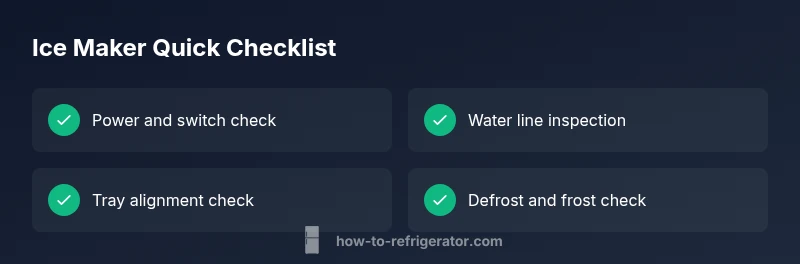
Before you dive into component-level fixes, run through the simplest checks. Ensure the ice maker is enabled and that the freezer door is fully closed; door gaps can cause temperature swings that hinder ice production. Verify the freezer temperature is appropriate for ice making (often around 0°F / -18°C, but follow your model’s spec). Inspect the ice tray for blockages and confirm it’s properly aligned to drop ice into the bin. Check the water supply line for kinks, leaks, or frost that could restrict flow. If your model uses a water filter, replace it if overdue. Melt any frost around the ice maker housing, and reset the ice maker by powering the unit off for a minute and back on. These steps catch most quick ice issues in homes and reduce the need for service calls.
Diagnostic Flow You Can Follow
A structured flow helps you avoid guessing. Start with symptom: no ice or irregular ice. Causes with likelihood levels include power issues (high), water line blockages (medium), frozen line or defrost timer (medium), and a faulty ice maker module (low). For each cause, apply a fix: verify power and switch (easy); inspect water line and filter (easy); thaw ice buildup and ensure proper drainage (easy); if unresolved, consider replacing the ice maker or seeking professional service (hard). As you test, keep notes of what you observed and what you tried. This approach minimizes risk and gives you a clear path forward. If you’re uneasy at any point, stop and contact a professional.
Safety, Tips, and Common Mistakes
Always unplug the refrigerator before touching electrical components or water lines. Use a flashlight to inspect hard-to-see areas rather than forcing components. Never use metal tools on frozen lines; they can puncture hoses. Avoid over-tightening fittings or applying heat directly to plastic parts. Document the model and serial number before you call for service, as this information speeds up repairs. Finally, avoid leaning on the doors during ice production, as weight can stress the hinges and sensors.
Prevention: Keep Ice Flowing
Once you’ve fixed the issue, adopt a quick maintenance routine to prevent future ice problems. Regularly inspect the water line for kinks, clean the ice maker housing to prevent frost buildup, and replace the water filter as recommended by the manufacturer. Keep the freezer temperature stable and avoid frequent door openings during peak ice production times. If you notice recurring frost or ice jams behind the ice maker, investigate airflow and vent paths to ensure consistent cooling.
When to Call a Pro
If none of the above steps resolve the issue, or you hear buzzing, chattering, or see leaking water, it’s time to call a technician. Ice maker modules, defrost timers, and water inlet valves can fail in ways that require specialized tools and components. A professional can perform a safe diagnosis, test electrical circuits, and replace faulty parts with manufacturer-approved replacements. Until then, minimize use of the ice maker to avoid further damage.
Steps
Estimated time: 45-60 minutes
- 1
Power and switch check
Power down the unit for 60 seconds, then restore power. This reset clears many small electronic glitches that halt ice production.
Tip: If you use a surge protector, unplug the fridge from that outlet as well and retry. - 2
Verify ice maker switch and wiring
Ensure the ice maker lever is engaged and that any connectors are snug. A loose wire can prevent ice cycles from starting.
Tip: Gently reseat connectors with the power off to avoid bending pins. - 3
Check water supply line and valve
Locate the water line behind the fridge, confirm the shutoff valve is open, and inspect the line for kinks or frost. Run water gently to test flow.
Tip: If you have a filter, replace it if overdue; restricted flow can mimic other issues. - 4
Thaw frost buildup
If you see frost around the ice maker or line, thaw it safely using a hair dryer on low from a distance while keeping the area dry.
Tip: Never use metal objects to remove ice; they can damage tubing. - 5
Test the ice maker cycle
Power the unit back and run an ice production cycle to observe whether ice drops as expected.
Tip: Listen for the clunk of the ejector; lack of sound may indicate a gear or motor issue. - 6
Evaluate next steps
If you still don’t get ice after steps above, consider replacement of the ice maker module or scheduling professional service.
Tip: Document model number for faster service and check warranty coverage.
Diagnosis: Ice maker not producing ice or ice not dropping
Possible Causes
- highPower issue or ice maker switch off
- mediumWater supply line kinked, blocked, or frozen
- mediumFrozen line or defective defrost timer affecting ice cycle
- lowIce maker module fault or sensor failure
Fixes
- easyCheck that the ice maker is powered and the switch is on; reset if needed
- easyInspect water line for kinks; test water flow from the valve
- easyThaw any frost around the water line or ice maker housing; ensure correct drainage
- hardIf all basics fail, consider replacing the ice maker module or calling a technician
FAQ
Why is my refrigerator not making ice?
Common causes include a turned-off switch, full or jammed ice tray, blocked water line, or a defrost timer issue. Start with power and water checks, then move to temperature and tray alignment.
If your ice maker isn’t producing ice, check the switch, water line, and freezer temperature first, then inspect the tray alignment.
How do I reset the ice maker?
Unplug the refrigerator for about a minute, then plug it back in. This resets most ice maker modules; wait a few cycles to see if ice returns.
Try a quick reset by unplugging for a minute and plugging back in, then monitor ice production.
What temperature should the freezer be for ice production?
Most models operate best around 0°F (-18°C). Always refer to your owner’s manual for the recommended setting for your unit.
Aim for about zero degrees Fahrenheit in the freezer, but check your model’s manual for the exact spec.
When should I call a technician?
If you’ve performed basic checks and still see no ice, or you hear abnormal noises or see leaks, a qualified technician should inspect the ice maker module and water inlet valve.
If basic checks don’t fix it or you hear strange noises, it’s time to call a pro.
Can a dirty water filter affect ice production?
Yes. A clogged filter can restrict water flow to the ice maker, preventing ice from forming. Replace the filter according to the manufacturer’s schedule.
A clogged water filter can stop ice from forming; replace it as recommended.
Watch Video
Top Takeaways
- Start with power and switch checks to rule out simple fixes.
- Inspect water supply and freezer temperature before deeper inspection.
- Follow a defined diagnostic flow to avoid guesswork.
- The How To Refrigerator team recommends seeking a pro if issues persist.