Why Did Refrigerator Stop Making Ice? A Homeowner’s Troubleshooting Guide
Struggling with ice production? This urgent guide walks homeowners through common causes, safe fixes, and clear steps to get your ice maker back to work—plus when to call a professional.


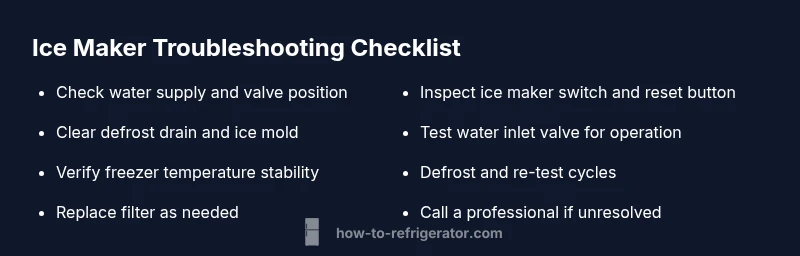
If your ice maker stopped producing ice, the most likely causes are a blocked defrost drain or a frozen ice mold, or a water-supply issue. Quick fixes: 1) verify the water line and valve are fully open; 2) reset the ice maker by unplugging for 60 seconds or using the reset button; 3) clear the defrost drain and melt any ice around the tray.
Common Causes of Ice Maker Failure
Ice makers are built for reliability, but several issues can stop ice production. The most frequent culprits are related to water supply, the defrost system, and ice mold blocks. According to How To Refrigerator analysis, the leading causes fall into three buckets: water delivery problems (valves, filters, kinks), a clogged defrost drain leading to a blocked ice tray, and a frozen ice mold in the tray. Less common but possible problems include a faulty ice maker motor, a mis-set freezer temperature, or a malfunctioning ice maker control module. Before you panic, start with simple checks that require no tools. Often the problem is a simple reset, a partially closed water valve, or temporary temperature fluctuations after a door was left ajar. Keep notes on patterns to help narrow the cause.
Check Your Water Supply and Ice Maker Switch
Start with the water supply. Ensure the water line is connected and the shut-off valve behind the fridge is fully open. A kinked or crushed line can restrict flow, causing no ice. If your model has an ice-maker switch, make sure it’s set to the 'on' position; some units have a separate 'ice maker' toggle that can be accidentally turned off. Check the water filter; a clogged filter reduces flow and can prevent ice from forming. If you recently replaced the filter, re-seat it correctly. After these checks, listen for the sound of water entering the ice maker; if you don’t hear a faint hum, the valve may be stuck or the solenoid failed.
Inspect the Defrost Drain and Ice Mold
A blocked defrost drain is a common hidden culprit. If the drain is frozen, melt it and clear any ice from the tray and the ice mold. To do this safely, unplug the unit, remove the ice bin, and gently warm the back panel area with a warm cloth or sponge. Use a flexible pipe cleaner or a non-metallic tool to clear the drain tube—never force a sharp object into the tube. After clearing, run a short cycle to see if new ice forms. If ice continues to form abnormally, the issue may be a sensor or controller problem.
Examine the Water Inlet Valve and Line
The inlet valve controls water flow into the ice maker. A defective valve can prevent water from reaching the ice tray, resulting in no ice. Inspect the valve for debris or mineral buildup and test for proper operation with a multimeter if you have one. Also check the water line for kinks, bends, or cracks that could restrict flow. If you suspect a faulty valve, replacement is often straightforward and improves overall ice production.
Resetting the Ice Maker and System
Many ice maker problems resolve with a full reset. Disconnect power for at least one minute, then reconnect and allow the system to reboot. On models with a reset button, press and hold it until you hear a chime or see the indicator light change. After resetting, wait 2–3 ice cycles to determine if production resumes. If not, proceed to the next diagnostics steps rather than repeating the reset.
Check Freezer Temperature and Door Seals
If the freezer is too warm, ice won’t form correctly. Ensure the freezer is maintaining a stable temperature that’s cold enough for ice production, and check that the door seals are intact and sealing properly. A frequently opened door or a loose gasket can cause temperature fluctuations that disrupt ice making. If you notice frost buildup along the back wall or door seal wear, address these issues to stabilize operation.
How to Defrost Safely and Prevent Blockages
When defrost drain blocks recur, perform a controlled defrost. Empty the freezer, unplug the unit, and allow ice to melt gradually. Use towels to absorb water and a warm, damp cloth to wipe away residue. After defrosting, re-connect power and run an empty cycle to clear any remaining ice fragments. Regularly inspecting the drain line and keeping the freezer organized helps prevent recurring blockages.
Preventive Maintenance for Long-Term Ice Maker Health
Schedule quarterly checks: replace or clean water filters as recommended by the manufacturer, inspect water lines for leaks, and listen for unusual noises that suggest motor or valve issues. Keeping coils clean improves cold efficiency and reduces frost buildup around the evaporator. Record any resets or service calls to help track recurring patterns that could indicate a larger problem.
When to Call a Professional
If you’ve tried the basic checks and the ice maker still won’t produce ice, it’s time to involve a professional. Electrical components like the ice maker motor, control module, or valve solenoids may require specialized testing. A licensed technician can safely diagnose refrigerant-related issues or internal sensor faults and ensure your warranty remains valid if applicable.
Steps
Estimated time: 45-90 minutes
- 1
Check water supply and valve
Inspect the supply line for kinks, ensure the shut-off valve is fully open, and confirm the water line isn’t frozen. If you notice low or no water flow, fix the valve position or replace the line as needed.
Tip: If you recently replaced a filter, make sure it’s correctly seated. - 2
Reset the ice maker
Disconnect power for 60 seconds, then reconnect. If your model has a reset button, press and hold until the indicator changes. Observe for a few ice cycles to confirm improvement.
Tip: Avoid unplugging the unit during a defrost cycle to prevent further issues. - 3
Unblock the defrost drain
Unplug, remove the ice bin, and locate the drain tube. Use warm water and a flexible tool to clear any blockage. Refill and run a cycle to test drainage.
Tip: Never use sharp objects that could puncture the drain tube. - 4
Check freezer temperature and door seals
Ensure the freezer isn’t too warm and that gaskets seal properly. Replace worn seals and re-check temperature stability after a few hours.
Tip: A door left ajar can cause frost and temperature swings that affect ice production. - 5
Test ice production again
Return the ice bin and let several cycles run. If ice production resumes, monitor for several hours to ensure consistency.
Tip: Keep notes of any repeated failures to share with a technician.
Diagnosis: Ice maker not producing ice
Possible Causes
- highWater supply issue (valve, line, or filter)
- highDefrost drain blocked or frozen
- mediumWrong freezer temperature or door left open
- lowIce maker motor/controller fault
Fixes
- easyVerify water line is connected and valve is fully open; check for kinks or leaks; replace clogged filter if needed
- easyUnblock or defrost the defrost drain; melt ice around the tray and clear the ice mold
- easyReset the ice maker and the freezer system; ensure proper reboot timing
- mediumConsult a professional if valve or motor/controller is suspected; avoid DIY electrical testing
FAQ
Why did my ice maker suddenly stop making ice?
Most often it’s a water-supply issue, a clogged defrost drain, or a frozen ice mold. Start by checking the water line and valve, then reset the ice maker before inspecting the drain. If these steps don’t help, seek professional service.
Your ice maker stopping suddenly is usually due to water flow problems or a blocked drain. Try checking the water line, reset the unit, and clear any ice blockages first. If it still won’t work, call a technician.
What should I do first if there’s no ice?
Begin with basic checks: confirm the water valve is open, ensure the ice maker is enabled, and verify the water filter isn’t clogged. If there’s still no ice, reset the ice maker and inspect for drainage blockages.
Start by checking the water valve and reset the ice maker, then inspect drainage for blockages.
Can a clogged defrost drain affect other freezer functions?
Yes. A clogged defrost drain can cause frost buildup and temperature instability that affects overall freezer performance. Clearing the drain and ensuring proper defrost flow helps stabilize operation.
A clogged drain can cause frost and temperature swings that affect the whole freezer, not just ice making.
Is it safe to defrost the ice maker manually?
Manual defrost is safe when done carefully. Unplug the unit, remove ice, and use warm (not hot) water to melt the blockage. Dry thoroughly before powering back on.
Manual defrost is okay if you unplug first and melt the ice with warm water.
How often should I replace the water filter for the ice maker?
Follow the manufacturer’s recommended schedule, typically every 6–12 months, depending on usage and water quality. Replacing the filter can restore water flow and improve ice quality.
Check your owner’s manual for timing; replacing the filter usually helps keep ice maker functioning smoothly.
Watch Video
Top Takeaways
- Identify whether the issue is water or drainage related.
- Reset and test in small diagnostic steps.
- Defrost drains and ice molds are common culprits.
- Safety and caution are essential; call a pro if needed.
- Regular maintenance prevents future ice-maker failures.