How to Fix a Refrigerator Cooler: A DIY Troubleshooting Guide
Practical, actionable guide for homeowners troubleshooting a refrigerator cooler that isn’t cooling. Learn quick diagnostics, safe fixes, and when to call a professional with step-by-step instructions.


Goal: diagnose and fix common refrigerator cooler cooling issues without specialized tools. Expect to check door seals, airflow vents, condenser coils, and the thermostat. Safety comes first—unplug before any inspection—and if you’re unsure, stop and call a professional. This approach covers not-cooling, temperature fluctuations, and frost buildup in the cooler compartment.
Understanding how the refrigerator cooler maintains temperature\n\
Common causes of poor cooling in the refrigerator cooler\n\
Diagnostic approach: how to pinpoint the issue\n\
Safe, practical fixes you can perform\n\
When to call a professional and what to expect\n\
Tools & Materials
- Screwdriver (Phillips #2)(For access panels and securing hardware)
- Multimeter(Test electrical components safely)
- Digital thermometer(Verify fridge and freezer temps)
- Vacuum or coil brush(Clean condenser coils)
- Soft cloth and mild detergent(Clean door gaskets and surfaces)
- Gloves and safety glasses(Personal protection during inspection)
Steps
Estimated time: 60-120 minutes
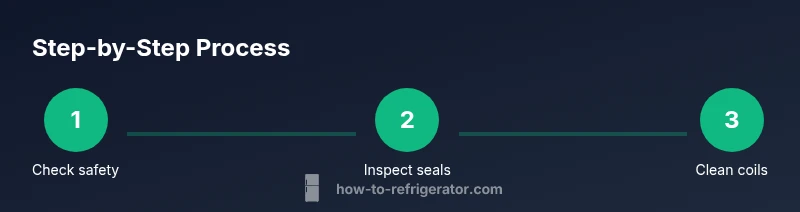
- 1
Power down and verify safety
Unplug the refrigerator and wait 60 seconds. Confirm no power is flowing before touching any internal components.
Tip: Always unplug before inspecting electrical parts to avoid shock. - 2
Inspect door seals and alignment
Close a dollar bill at the door edge and try to pull it out gently; if the bill slides easily, replace the gasket and ensure a tight seal.
Tip: A fresh seal can dramatically reduce warm air intrusion. - 3
Check condenser coils and airflow
Locate coils (back or bottom) and remove dust with a vacuum or brush. Ensure the fridge has clear space around it for proper heat dissipation.
Tip: Dirty coils can force the compressor to work harder and raise temperatures. - 4
Test thermostat and defrost components
Measuring the thermostat resistance with a multimeter helps verify accuracy; look for stuck defrost timers or melted frost suggesting defrost issues.
Tip: Do not bypass safety controls or remove refrigerant lines. - 5
Check interior vents and airflow
Ensure interior vents are open and not blocked by food or containers; reorganize to promote even cooling.
Tip: Air should circulate freely from the freezer to the fridge. - 6
Reassemble and monitor temps
Plug the unit back in and wait 24–48 hours while monitoring temperatures, noting any fluctuations or unusual noises.
Tip: Document temp readings for reference if you call a pro.
FAQ
Why is my refrigerator cooler not cooling as it should?
Most often the culprit is a door seal, blocked vents, or dusty condenser coils. A faulty thermostat or defrost timer can also disrupt cooling. Start with seals and coil cleaning, then test temperatures to confirm.
Most often it's the door seals, vents, or dusty coils. If these aren’t the cause, check the thermostat and defrost timer.
How do I test the door gasket effectively?
Use the dollar bill test: close the door on a bill and try to pull it out gently; if the bill slides out easily, replace the gasket to restore a proper seal.
Try the dollar bill test to check the seal. If it slides out, replace the gasket.
Can dirty coils cause the not-cooling issue?
Yes. Dust and dirt trap heat and force the compressor to run longer. Clean coils using a vacuum or coil brush with the unit unplugged.
Dirty coils can make cooling worse. Clean them with the unit unplugged.
Is it safe to clean coils and components myself?
Yes, with the unit unplugged and following basic safety guidelines. Avoid touching refrigerant lines and never bypass safety switches.
Yes, as long as you unplug first and avoid dangerous parts.
How often should I service the condenser coils?
Clean coils every 6–12 months depending on usage and environment. More frequent cleaning benefits appliances in dusty or humid settings.
Clean the coils every 6 to 12 months if you use it a lot or have dust nearby.
When is professional repair required?
If DIY fixes don’t restore stable temps, or you suspect an electrical or sealed-system fault, contact a licensed technician promptly to prevent food spoilage and further damage.
If temps won’t stabilize after DIY fixes, call a professional.
Watch Video
Top Takeaways
- Check door seals first to stop warm air intrusion.
- Dirty condenser coils are a common but fixable cause.
- Proper airflow is essential for even cooling.
- Use a thermometer to track temps and document changes.