RV Refrigerator Guide: Fixes, Maintenance, and On-the-Road Cooling
Learn how to choose, install, and maintain an RV refrigerator, with practical troubleshooting tips to keep your r v refrigerator cooling reliably on the road. How To Refrigerator provides expert guidance for homeowners to fix common fridge issues safely.


This guide helps RV owners choose and maintain r v refrigerator, ensuring safe operation, energy efficiency, and reliable cooling on the road. You'll learn common RV fridge types, where to place it for ventilation, how to troubleshoot cooling issues, and maintenance routines that prevent costly repairs on trips.
RV Refrigerator Basics and Why It Matters
According to How To Refrigerator, the 'r v refrigerator' in an RV is a compact cooling system designed for mobile living. It must endure movement, variable power sources, and limited space. Most RV fridges fall into two broad families: absorption and compressor. Absorption fridges heat a solution to produce cooling and can run on propane, battery, or AC; they are popular for off-grid camping because they don't require a continuous power draw once lit. Compressor fridges rely on a sealed refrigerant cycle and typically run on 12V DC in travel trailers or 120V AC in motorhomes. They offer faster cooling and better efficiency in many climates, but they draw more energy and need a stable power source. When selecting a model for your RV, consider your typical trips, available power, and climate. A fridge that struggles in hot weather or with a full load comes down to sizing and airflow around the unit. Placement matters: keep it away from heat sources, ensure proper ventilation, and avoid obstructing intake and exhaust grills. In practice, many owners report reliable operation when they install a dedicated vent near the exterior wall and use a shade tarp to reduce ambient heat. Regular checks help catch issues before they become failures, which aligns with How To Refrigerator's guidance for proactive maintenance.
Common RV Refrigerator Types
Absorption vs compressor: Absorption fridges operate on heat, using propane or electric power, and are known for low voltage draw when off-grid. They tend to be slower to cool but are forgiving if your power supply fluctuates. Compressor fridges use a refrigerant cycle and run on 12V DC or 120V AC. They cool faster, perform better in hot climates, and are common in many newer RVs, but they require a reliable power source and efficient ventilation. There are hybrid models that combine elements of both designs. When choosing, assess where you travel, whether you’ll have steady access to propane, and your battery or shore power capacity. For most full-time RVers, a compressor fridge provides the most predictable performance, while occasional travelers may prefer the simplicity of absorption for boondocking. Consider noise, weight, and energy consumption as you compare models. The key is ensuring the refrigerator is properly ventilated and wired to support its chosen power source. The How To Refrigerator team encourages homeowners to list their priorities—fuel availability, noise tolerance, and climate—and select an option that meets those needs.
Location, Ventilation, and Space Requirements
RV fridges require space around the unit for air to circulate and ensure efficient cooling. Place the fridge away from heat sources like direct sun, exhaust vents, or hot appliances. Leave several inches of clearance on all sides and provide an exterior vent with a dedicated intake/exhaust path if installing a new unit. Leveling is important, especially for absorption fridges; an uneven floor can reduce cooling efficiency or cause fluid flow problems. In mobile settings, secure the fridge and related wiring to prevent movement during travel. If your RV has a slide-out kitchen, plan the vent paths so they don't get blocked when the slide is in. Keep the exterior vent clean and free of debris. Use insulating curtains or window shades to reduce interior heat load when parked; this helps the fridge maintain stable temperatures and reduces generator or battery drain. The goal is consistent airflow, stable temperature, and safe operation while you drive.
Installation, Startup, and First Run
Before any install or startup, disconnect power and gas supply following safety guidelines. Install the fridge in a permanent location with reliable ventilation and access to service panels. Connect to the appropriate power source (propane, 12V, or 120V) based on your model, and ensure the gas line and electrical connections meet local codes. When you first run, allow the fridge to reach its target temperature before loading contents. If the unit is propane-powered, verify that the flame is lit and the venting is clear. For compressor fridges, ensure the compressor has a clean, stable power source and monitor voltage to avoid brownouts that can harm cooling efficiency. After starting, check interior temp with a thermometer and adjust the thermostat slowly to the recommended range. Document the startup procedure so you can repeat it consistently during moves.
Troubleshooting Not Cooling or Poor Cooling
Start by verifying power: check fuses, battery condition, shore power, and circuit breakers. If your fridge has a propane option, confirm gas supply, regulator, and that the flame lights and stays lit. Inspect door seals; a loose gasket allows warm air to leak, causing frost buildup and longer cooling times. Check airflow around the coils or condenser fins; dust can impede heat transfer. In frost-free models, defrost or check the defrost drain for clogs. If the interior remains warm, test thermostat settings and adjust a few degrees; monitor for 24 hours. In many cases, turning off for several minutes then restarting can reset sensors, but avoid frequent cycling. If problems persist, consult a qualified service technician. The How To Refrigerator approach emphasizes safety and systematic checks to prevent misdiagnosis.
Maintenance Schedule and Cleaning
Create a simple maintenance log and schedule routine tasks: monthly visual inspection, quarterly interior wipe-down, and biannual deep clean. Wipe seals with warm water and mild soap, and lubricate hinges if recommended by manufacturer. Clean interior surfaces and shelves to prevent odors and bacteria. Inspect condenser coils (if present) and remove dust with a soft brush or vacuum. Check vent openings for debris and ensure they aren't blocked by storage items. If your unit uses a defrost drain, inspect and clear it during defrost cycles. Replace worn door seals promptly to maintain efficiency. For propane models, have the system checked by a licensed professional at least once a year; for electric models, monitor temperature stability and battery health. The key is consistency; a simple log helps you notice gradual performance changes before they become noticeable issues.
Energy Efficiency and Monitoring On the Road
Maximize efficiency by matching load to capacity and avoiding frequent door openings. Consider a solar or larger battery bank if you boondock and rely on 12V operation; monitor voltage to protect the compressor. Use a digital thermometer to verify interior temps and prevent overcooling, which wastes energy. Keep the door seals clean and aligned and use energy-efficient lighting in the RV to reduce heat inside. When possible, place the fridge where ambient heat is lowest, and shade the exterior vent area. Keep records of power consumption and maintenance to improve future trips. The How To Refrigerator guidance emphasizes that small changes in placement, power source selection, and routine care add up to reliable cooling and lower operating costs.
Tools & Materials
- Multimeter(Check voltage, continuity, and fuses.)
- Screwdriver set (Phillips and flathead)(Access panels and vent covers.)
- Level(Ensure proper fridge leveling on final install.)
- Thermometer (fridge interior)(Verify temperature; target 35-40°F (2-4°C).)
- Cleaning cloths and mild detergent(Interior and door seals.)
- Vacuum or brush for vent fins(Clear dust from fins and coils.)
- Spare fuses and replacement door seals(Keep on hand for quick fixes.)
- Propane leak detector(Safety check for propane systems.)
Steps
Estimated time: 60-90 minutes
- 1
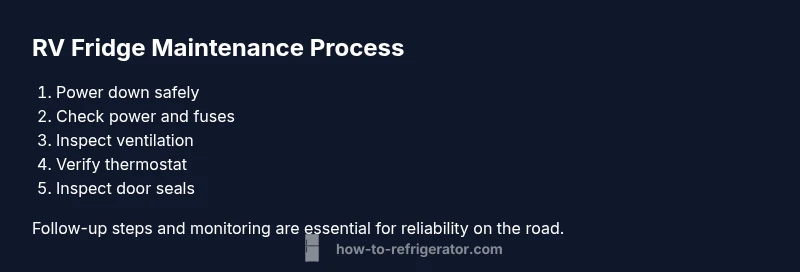
Power down and secure safety
Unplug the RV from shore power or disconnect the battery; turn off propane supply if necessary; ensure area is safe before touching components.
Tip: Lock out power and gas to prevent accidental startups while inspecting. - 2
Inspect power supply and fuses
Check 12V and AC circuits, inspect fuses, and verify converter function. Look for any signs of overheating or corrosion.
Tip: Use a multimeter to confirm voltage at the fridge terminals before touching wiring. - 3
Check venting and airflow
Inspect exterior and interior vents for dust, debris, and blockages. Clear obstructions to maintain proper air exchange around coils or fins.
Tip: Use a vent brush or compressed air to safely remove dust. - 4
Check thermostat and temperature settings
Set the thermostat to the recommended range and observe how quickly the interior cools after adjustments.
Tip: Make small adjustments and monitor for at least 30 minutes between changes. - 5
Inspect door seals and gasket
Look for cracks or gaps in door seals; clean seals with warm soapy water and replace if needed to prevent warm air leaks.
Tip: Close the door softly and listen for air leaks around the gasket. - 6
Inspect defrost drain and coils
For frost-free models, ensure the defrost drain is clear and coils/coils fins are dust-free to maximize heat exchange.
Tip: Be careful with coils; avoid bending delicate fins. - 7
Test run and monitor performance
Reload contents, power the unit back on, and monitor interior temperatures for 24 hours. Adjust as needed and keep a simple log.
Tip: Track temperatures and power usage to catch gradual changes.
FAQ
What are the main types of RV refrigerators and how do they differ?
RV refrigerators mainly fall into absorption and compressor categories. Absorption models run on heat (often propane) and light loads, while compressor models use a sealed refrigerant cycle and run on 12V or 120V for faster cooling and greater efficiency. Your choice depends on travel style, power access, and climate; both require proper ventilation and periodic maintenance to perform well.
RV fridges come in absorption and compressor types. Absorption runs on heat and is common for off-grid use, while compressors run on electricity for faster cooling. Proper ventilation and regular checks are essential for both.
Is it safe to run propane-powered RV refrigerators while driving?
Propane operation involves gas lines and combustion vents; safety rules vary. Many manufacturers advise using propane only when the vehicle is parked and the ventilation is adequate. Always follow the appliance manual and vehicle guidelines, and never modify gas connections without a licensed professional.
Propane fridges should be used with proper ventilation and safety, typically when parked. Follow maker instructions and don’t modify gas lines while driving.
How often should I defrost or clean my RV fridge?
Defrosting isn’t required for most modern frost-free models, but you should clean the interior, seals, and exterior vents every few months. Schedule a deeper clean every 6–12 months depending on usage. Keeping coils dust-free improves cooling efficiency.
Clean the fridge every few months and defrost only if your model requires it; do a deeper clean yearly or as needed.
What should I do if the fridge isn’t cooling in hot weather?
First verify power and gas supply, then check ventilation and door seals. In hot climates, ensure the unit is properly leveled and placed away from direct sun. If the problem persists, reduce door openings and allow the fridge extra time to stabilize before loading it.
Check power, gas, ventilation, and seals; in heat, ensure proper placement and leveling. If it still struggles, give it time to stabilize after adjustments.
Where can I find replacement parts or service for my RV fridge?
Replacement parts are usually available from the manufacturer or RV service centers. If your model is older, consider contacting authorized dealers or RV repair shops that stock common components like door seals, gaskets, and control boards.
Look for parts through the manufacturer or authorized RV service centers; reputable repair shops can source common components.
Watch Video
Top Takeaways
- Know your RV fridge type (absorption vs compressor).
- Ensure ample ventilation and proper leveling for reliable cooling.
- Regular maintenance prevents costly failures and energy waste.
- Track maintenance and temperature logs for long-term reliability.