Problem with LG Refrigerator: Troubleshooting Guide
Urgent, step-by-step troubleshooting for a problem with LG refrigerator. Learn common causes, safe fixes, and when to call a pro to restore cooling and prevent spoilage.


According to How To Refrigerator, not cooling is most often caused by a dirty condenser coil, a faulty thermostat, or a jammed defrost timer. Start with simple checks: unplug to reset, clean the condenser coils, inspect door gaskets for gaps, and verify the thermostat setting. If the problem continues, contact a professional for a deeper diagnostic.
Understanding the problem and why LG refrigerators fail
If you’re dealing with a problem with LG refrigerator, it’s understandable to feel overwhelmed. The good news is that many issues are caused by a few easy-to-check factors. According to How To Refrigerator, not cooling or warm compartments are among the most frequent symptoms homeowners report. In most cases, the root causes are related to airflow, temperature control, and drainage. When you identify which symptom matches your unit, you can apply a targeted fix rather than a wholesale replacement. The LG line encompasses multiple configurations—from counter-depth models to side-by-side designs—so some symptoms vary by model, but the underlying physics stay the same: refrigerant circulates, a fan moves air, and coils shed heat to the room.
Effective troubleshooting starts with understanding the symptom you’re seeing. Not every LG refrigerator problem mirrors another model, but the core principles—airflow, seals, defrost, and drainage—remain consistent across most units. This guide prioritizes practical, hands-on checks you can perform safely, followed by escalation steps if the issue persists. After all, addressing the simplest causes first saves time and prevents unnecessary part replacements.
Quick, safe checks you can start today
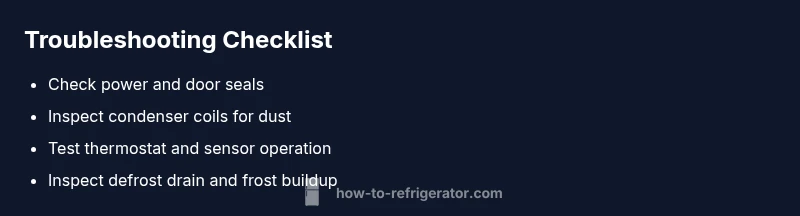
Start with the simplest checks to rule out quick fixes. Unplug the unit to reset electronics, verify the power outlet is functioning, and ensure the fridge isn’t tilted so doors seal properly. Inspect the door gaskets for cracks or gaps and test the door switch to confirm it latches correctly. Clean the condenser coils if accessible—dust and lint impede heat dissipation and reduce efficiency. Finally, confirm the temperature control is set according to the manufacturer’s guidelines. If the model has an ice maker or water dispenser, make sure their lines aren’t kinked or blocked. This family of checks targets the most common failure points without specialized tools, making them ideal first steps when addressing a problem with LG refrigerator.
Steps
Estimated time: 1 hour 30 minutes
- 1
Power down and prep the area
Unplug the fridge and clear the area around it. Move it slightly if needed to access the back panel. Gather a flashlight, soft brush, and a vacuum; these tools help you inspect safely without damaging components.
Tip: Always start with unplugging to avoid electrical shock. - 2
Check symptom and perform a quick reset
Note the exact symptom (not cooling, frost, leaks) and perform a brief reset by plugging back in and allowing 5–10 minutes to observe. Listen for the fans; a silent system may indicate a power or control issue.
Tip: If you hear unusual buzzing, stop and proceed to safety checks. - 3
Inspect and clean condenser coils
If the back or under-panel coils are dusty, gently clean them with a soft brush or vacuum attachment. Remove any heavy grime that obstructs airflow. Ensure there is at least a few inches of clearance behind the unit for heat discharge.
Tip: Be careful not to bend fins; use a comb-style tool if available. - 4
Assess door seals and gaskets
Check for cracks, gaps, or warping in door seals. Wipe the gasket with warm soapy water and dry thoroughly. Misaligned or damaged seals can let warm air in, dramatically reducing cooling efficiency.
Tip: A simple test is to close the door on a sheet of paper; if it pulls out easily, the seal may be failing. - 5
Test the thermostat and control elements
If accessible, verify thermostat readings with a multimeter or the built-in diagnostics for your model. Replace a faulty thermostat or control board as needed, noting that some models require professional service.
Tip: Do not bypass safety features; replacing a control board can involve firmware considerations. - 6
Check the defrost system and drainage
Frost buildup can block air passages. Inspect the defrost timer or heater circuit and ensure the drainage tube is clear. If you see excess frost, manual defrost may be necessary before re-energizing the unit.
Tip: Never use sharp objects in the drain; a plastic rod or hot water flush is safer. - 7
Test operation and plan next steps
Plug the unit back in, set target temperatures, and monitor for 30–60 minutes. If cooling returns to normal, schedule preventive maintenance. If not, escalate to professional service, especially if you suspect sealed-system issues.
Tip: Document symptoms and steps taken to share with a technician.
Diagnosis: Temperature not stable or not cooling properly
Possible Causes
- highDirty condenser coils or restricted airflow
- mediumFaulty thermostat or control board
- mediumDefrost timer or heater circuit failure
- lowClogged defrost drain leading to frost buildup
Fixes
- easyClean condenser coils and ensure air can circulate around the back of the unit
- mediumTest the thermostat and replace if readings are out of spec
- hardInspect/replace defrost timer or heater circuit if frost persists
- easyUnclog defrost drain and remove any ice buildup
FAQ
Why is my LG refrigerator not cooling at all?
Not cooling can result from a dirty condenser, a faulty thermostat, or a defrost timer issue. Start with power reset, coil cleaning, and seal inspection before moving to more complex parts. If the problem persists, professional help may be required.
Not cooling can be caused by several issues. Start with safe, simple checks like resetting, cleaning coils, and inspecting seals.
LG fridge is cold on top but warm on bottom—what gives?
Uneven cooling often points to restricted airflow, blocked vents, or a door-seal problem. Check interior vents, ensure air can circulate, and verify seals around the doors. If airflow is blocked, frost buildup may exacerbate the issue.
If the bottom is warm, check vents and door seals for blockages.
How often should I clean condenser coils?
Condenser coils should be cleaned every 6–12 months, more often in dusty environments. Always unplug the unit before cleaning and avoid bending the fins. Regular cleaning helps maintain cooling efficiency.
Clean coils every 6 to 12 months, more often if dusty.
Is it dangerous to use a fridge that isn’t cooling?
Not immediately dangerous, but spoiled food and potential mold growth are concerns. If you notice strong odors, refrigerant smell, or pooling liquids, unplug and call a pro promptly.
Food spoilage is the main risk; unplug and call a pro if you notice leaks or odors.
When should I call a professional?
Call a professional if basic checks don’t restore cooling, if you hear buzzing near the compressor, or if you suspect refrigerant leaks or sealed-system issues. A licensed tech can diagnose and repair safely.
Call a pro if simple checks fail or you suspect refrigerant or sealed-system problems.
Can a faulty defrost timer cause not cooling?
Yes. A malfunctioning defrost timer can interrupt cooling cycles and cause frost buildup. Diagnosis and replacement typically require a technician.
Yes, a bad defrost timer can stop cooling and cause frost.
Watch Video
Top Takeaways
- Identify the symptom early to pick the right fix
- Condenser coils and door seals are common culprits
- Use a safe, stepwise approach before calling a pro
- Regular maintenance prevents most future LG refrigerator problems