What is Wrong with LG Refrigerator? Troubleshooting Guide
Urgent, practical troubleshooting for homeowners to diagnose and fix common LG refrigerator issues. Follow a clear diagnostic flow, step-by-step fixes, safety tips, and know when to call a pro.


Not cooling properly or ice maker problems top the list when asking what is wrong with lg refrigerator. Start with simple checks—power, door seals, and proper ventilation—before diving into parts. If these basics don’t fix the issue, follow the step-by-step fixes and diagnostic flow to identify the cause and safely restore performance.
Common LG Refrigerator Problems
If you’re wondering what is wrong with lg refrigerator, you’re not alone. According to How To Refrigerator, LG models frequently encounter a handful of repeat issues that frustrate homeowners. The most common problems include poor cooling or warm interior, frost buildup in the freezer, ice maker not producing, water leaks, and unusual noises. These symptoms don’t automatically mean a failing compressor or sealed system; more often they point to maintenance, airflow, or simple component failures. By understanding the typical culprits and applying a logical, escalating troubleshooting path, you can often fix the problem without a costly service call. Always remember safety first: unplug the unit before inspecting internal components, and don’t attempt repairs beyond your comfort level.
Quick Checks You Can Do Before You Dive In
Begin with the easiest steps to rule out the most common culprits. Ensure the fridge is plugged in and receiving power (test the outlet with a lamp). Verify the circuit breaker or fuse hasn’t tripped. Check that the refrigerator and freezer doors seal tightly—dirty gaskets or misalignment allow warm air in and reduce cooling efficiency. Make sure there is enough clearance around the back and sides for proper airflow, and that the condenser coils are clean and dust-free. If the coils are dirty, gently vacuum or brush them to restore heat exchange. Finally, confirm the temperature settings are appropriate (usually around 37-38°F for the fridge and 0°F for the freezer).
Symptom Map: Not Cooling vs Warm Sections vs Frosty Freezers
Not cooling: Start with power, door seals, airflow, and condenser cleanliness. If still warm, test the condenser fan (listen for a steady hum) and check for blocked vents. Warm sections in a multiple-compartment unit often mean air isn't circulating properly due to blocked vents or a failed evaporator fan. Frost buildup is typically a sign of a defrost system issue or a stuck frost-free timer. Collect any error codes displayed on the control panel and compare them to LG troubleshooting guides; codes often point to the specific subsystem needing attention.
Ice Maker and Water Dispenser Troubleshooting
Ice maker issues are a frequent source of frustration. Start by verifying the water supply line is connected and the valve is open. Check for kinks or restrictions in the line and ensure the ice maker arm isn’t stuck in the off position. If the ice maker makes ice slowly or irregularly, inspect the ice mold and heater, and consider a reset of the ice maker module. For water leaks, inspect supply lines at the back of the refrigerator and ensure fittings are tight. A damaged water inlet valve or cracked supply line can cause leaks and reduced ice production.
Noise, Vibration, and Frost Issues
Unusual noises can indicate a failing fan, the motor struggling against heavy frost, or a compressor operating irregularly. If you hear grinding or rattling, locate the source from the back or bottom of the unit and check for loose panels or foreign objects dislodged near the fan. Frost buildup may signify a defrost timer failure, a defective defrost heater, or poor door sealing. In some cases, the evaporator fan may be obstructed by ice or debris; ensure you can safely access the evaporator freezer area to inspect.
Maintenance Plan to Prevent Issues
A proactive maintenance routine reduces the likelihood of LG refrigerator problems. Schedule regular condenser coil cleaning every 6–12 months, depending on usage and dust exposure. Keep door gaskets clean and inspect for cracks or gaps; replace damaged seals promptly. Monitor temperature settings and avoid frequent door openings during peak usage. If your model has a defrost feature, ensure it cycles properly by running a diagnostic test every few months. Finally, keep the area around the unit clean and well-ventilated to improve airflow and cooling efficiency.
Steps
Estimated time: 60-90 minutes
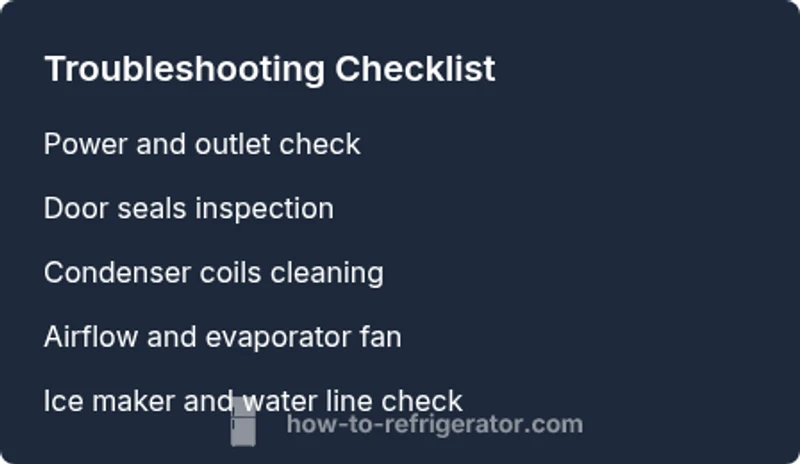
- 1
Power and Reset
Unplug the refrigerator for 60 seconds and plug back in. If the display resets, monitor for normal cooling. Check the outlet with another small appliance to verify power is stable. Avoid power strips.
Tip: Power cycles can reset control boards and clear minor electronics glitches. - 2
Check Doors and Gaskets
Inspect door gaskets for cracks, tears, or debris. Clean with warm, soapy water and dry thoroughly. Ensure doors seal tightly by closing firmly and listening for a solid air-click.
Tip: A worn gasket is a common source of warm air ingress and poor cooling. - 3
Clean Condenser Coils
Locate the condenser coils (usually at the back or beneath the unit). Vacuum away dust and lint, then wipe with a damp cloth. Reposition the fridge so you can maintain ~2 inches of clearance for airflow.
Tip: Dirty coils significantly reduce cooling efficiency and increase energy use. - 4
Verify Airflow and Evaporator Fan
Open the freezer and listen for the evaporator fan. If you don’t hear it, or if ice is blocking the fan, unplug and inspect the fan area for ice buildup. Replace the fan if necessary.
Tip: Restricted airflow is a frequent cause of uneven cooling. - 5
Ice Maker and Water Line Check
Inspect the water line for kinks, leaks, or clogs. Ensure the ice maker valve is open and the unit is receiving water. Reset the ice maker if available on your model.
Tip: A simple valve position issue often resolves ice-maker faults. - 6
Control Panel Reset and Test
If your LG model has a diagnostic mode, run a basic test from the control panel. If the issue persists, document error codes and prepare for service if needed.
Tip: Documenting codes helps a technician diagnose faster if you need professional help.
Diagnosis: LG refrigerator not cooling well or ice maker malfunction
Possible Causes
- highPower supply issues (outlet, circuit breaker)
- mediumDoor gasket leaks or improper sealing
- mediumDusty or blocked condenser coils
- lowEvaporator fan or airflow obstruction
- lowIce maker water line kink or valve closed
Fixes
- easyCheck outlet and circuit breaker; verify the fridge is receiving power
- easyInspect door gaskets for damage; clean or replace as needed
- easyUnplug, clean condenser coils, and ensure airflow around the unit
- mediumListen for evaporator fan operation; clear ice blockages or replace the fan if faulty
- easyInspect water line for kinks/open valve; ensure ice maker connections are correct
FAQ
What is the first thing I should check if my LG refrigerator isn't cooling?
Start with power, confirm the outlet is live, and verify the refrigerator’s temperature setting. Also inspect door seals and ensure proper airflow around the back of the unit.
First check power and the temperature setting, then inspect door seals and airflow.
Why is there frost buildup in the LG freezer?
Frost can form if the defrost system isn’t working, if the door is left ajar, or if there’s a refrigerant-related problem. Check the defrost timer and heater if accessible.
Frost usually means the defrost system or door seal isn’t working properly.
Why isn’t the ice maker producing ice in my LG fridge?
Check the water supply line, valve position, and any ice maker sensor. Reset the ice maker if your model supports it, and look for kinks in the line.
Ice maker problems are often caused by water supply or sensor issues.
Is it safe to clean the condenser coils myself?
Yes, with the unit unplugged. Use a soft brush or vacuum to remove dust; avoid bending delicate fins and never use water to rinse coils.
Yes, but unplug the unit and be gentle with the coils.
When should I replace a compressor or other major parts?
If there’s persistent cooling failure despite fixes, or if a professional confirms a compressor fault, replacement is typically needed.
If the compressor is failing, it’s usually a job for a professional.
Watch Video
Top Takeaways
- Start with basic checks (power, seals, airflow) before major repairs
- Clean condenser coils regularly to maintain efficiency
- Inspect ice maker and water line as common failure points
- Use the diagnostic flow to map symptoms to likely causes
- Call a pro for compressor or sealed-system issues