Whirlpool Mini Refrigerator Troubleshooting & Maintenance
Learn how to diagnose and fix common issues with a Whirlpool mini refrigerator. This DIY guide covers not cooling, frost buildup, leaks, and maintenance strategies for homeowners, with step-by-step instructions and safety tips.


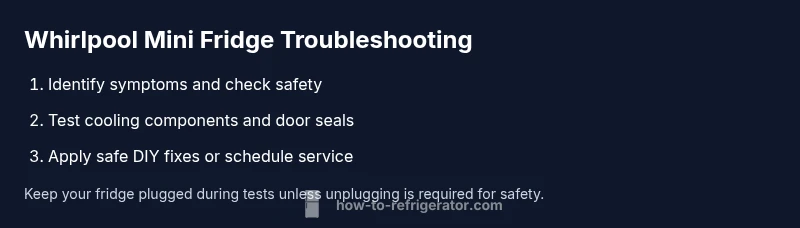
With this guide, you will diagnose and fix common issues for a Whirlpool mini refrigerator. You’ll identify symptoms, perform safe checks, and apply practical DIY steps or know when to call a professional. This steps-focused overview covers not cooling, frost buildup, leaks, and energy-saving maintenance, all tailored for homeowners tackling appliance problems at home.
Understanding the mini refrigerator whirlpool: How these compact fridges work
The term mini refrigerator whirlpool refers to compact, energy-efficient cooling units designed for small spaces. In many households, these units serve as dedicated beverage centers, dorm-room coolers, or compact kitchen backups. According to How To Refrigerator Team, these fridges rely on a sealed refrigeration loop that moves heat from the interior to the condenser coils. Common symptoms include not cooling adequately, unusual frost buildup, and occasional leaks around door gaskets. Understanding the basic components—thermostat, evaporator (cooling) coils, condenser coils, defrost system, and door seals—helps homeowners diagnose problems without immediate professional service. Regular maintenance is the best defense against recurring issues and keeps energy use lower for small kitchens.
Common symptoms and safe first checks
When a Whirlpool mini refrigerator isn’t performing as expected, start with safe, straightforward checks before diving into repairs. Look for frost on the evaporator, unusual noises, or warm air at the vents. Verify the door closes firmly and seals properly; a loose seal can allow warm air to enter and cause frost or poor cooling. Check that the unit is level so the door seals correctly and the drain is not blocked. Ensure the thermostat is set between mid and mid-low settings and that the power cord and outlet aren’t compromised. If you notice persistent frost or condensation on the interior walls, that indicates a defrost or seal issue. How To Refrigerator analysis shows that many issues stem from airflow problems, dirty coils, or degraded door seals rather than more complex component failures.
Diagnostic steps for not cooling, frost, and leaks
A methodical diagnostic approach helps you identify the root cause without guessing. Start by unplugging only when you need to access interior components or defrost the freezer, then replug to test cooling performance for 24 hours. Inspect door seals for cracks or gaps and replace if needed. Locate the thermostat control and verify it sits at a mid-range setting; a misadjusted setting can make the fridge seem warm. If frost is present, perform a careful defrost or use the manual defrost function if available. Finally, check condenser coils (usually at the back or underneath) and clean any dust or lint buildup with a small brush or vacuum; blocked airflow reduces cooling efficiency and increases energy use.
DIY fixes you can attempt safely
Many common Whirlpool mini refrigerator issues are solvable with basic tools and careful steps. Begin by cleaning the door gasket with warm, soapy water to restore a proper seal. If the thermostat seems off, adjust it toward the middle and monitor the temperature. For frost buildup, thorough defrosting is often required; never use sharp objects to remove ice—this can puncture components. Clean condenser coils to improve airflow and cooling capacity. If you notice persistent leaks, inspect the drainage pan and hoses for cracks or overflow and clear any clogs. Remember: unplug before any major interior work and wear gloves for protection. If the problem persists after these steps, consider scheduling service with a trained technician.
Maintenance routines to prevent future problems
Proactive care reduces the likelihood of frequent breakdowns. Clean the condenser coils every 6–12 months, depending on usage and dust exposure. Wipe gaskets and door seals regularly to maintain a tight seal. Keep the interior clean and organized to avoid obstructing airflow around vents. Check the defrost system periodically if your unit has a frost issue, and listen for unusual noises that could indicate loose components. For energy efficiency, ensure the fridge is away from heat sources, and avoid overloading it so airflow remains unobstructed. Regular maintenance not only extends the life of the appliance but also reduces repair costs over time.
When to replace vs repair and how to decide
If multiple major components fail—compressor, defrost timer, thermostat, or sealed refrigerant leaks—replacement may be more cost-effective than ongoing repairs. Use a cost-benefit approach: estimate repair costs (parts + labor) and compare to the price of a new unit with similar capacity. If your Whirlpool mini refrigerator is older than 8–10 years and demonstrates frequent issues despite maintenance, replacing it may be prudent. Always check warranty coverage and service eligibility before making a decision. In all cases, document symptoms, steps taken, and test results to guide future decisions or to provide to a technician.
Troubleshooting flow for quick decisions
When you face a refrigeration issue, follow this quick decision flow: (1) Is the unit plugged in and powered? (2) Are seals intact and level? (3) Has there been frost or unusual condensation? (4) Are condenser coils clean? (5) If cooling remains poor, test thermostat settings and defrost timer. If you’re unable to identify or fix the root cause after these checks, schedule professional service rather than risking further damage. This flow helps homeowners stay systematic and avoid costly misdiagnoses.
Tools & Materials
- Phillips head screwdriver(Philips #2 preferred for most panels and screws)
- Flathead screwdriver(Useful for prying gaskets or adjusting small components)
- Multimeter(Only if you need to test electrical components like the thermostat or fans)
- Coil brush / small vacuum(Clear dust from condenser coils and vents)
- Soft cloths and towels(For interior cleaning and delicate surfaces)
- Mild dish soap(Mixed with warm water to clean gaskets and interior)
- Replacement door gasket(Only if the existing gasket is cracked or torn)
- Gloves(For protection while handling sharp edges)
Steps
Estimated time: 60-90 minutes
- 1
Power down and prep
Unplug the unit and remove any items from inside. Allow a moment for any stored ice to melt before inspecting components. Gather your tools and work in a dry area to avoid electrical hazards.
Tip: Always unplug before accessing interior parts to prevent shock. - 2
Inspect door seals
Check the door gasket for cracks, tears, or gaps. A poor seal lets warm air in and causes frost or inadequate cooling. Clean with mild soap and warm water and dry thoroughly.
Tip: A tight seal is often the cheapest fix with immediate impact. - 3
Check thermostat settings
Ensure the thermostat is set to a mid-range setting. If the fridge runs continuously or never reaches cooling, adjust and monitor for several hours to observe changes.
Tip: Note the exact setting before changing it, so you can revert if needed. - 4
Clean condenser coils
Locate coils (back or bottom). Use a coil brush or small vacuum to remove dust and lint. Restricted airflow reduces cooling efficiency dramatically.
Tip: Do not bend or damage delicate coils; work gently. - 5
Defrost if frost buildup exists
If frost covers evaporator surfaces, perform defrosting according to user manual. Do not use sharp objects to scrape ice.
Tip: Allow 24 hours to fully defrost if possible, then re-test. - 6
Test performance
Plug back in and load items after a brief stabilization period. Monitor temperature and airflow for 24 hours to verify improvement.
Tip: Record temperatures at 6, 12, and 24 hours to track stability.
FAQ
Why won't my Whirlpool mini refrigerator cool?
Common causes include a faulty thermostat, a defective defrost timer, dirty condenser coils, or degraded door seals. Start with basic checks—power, seals, and airflow—before moving to more involved repairs.
Common causes include a faulty thermostat, a defective defrost timer, dirty coils, or worn door seals. Start with power and seal checks, then airflow.
Where is the model number on a Whirlpool mini fridge?
Model numbers are usually located on a data plate inside the fridge, often on the side wall or near the bottom. Check the interior walls, behind crisper drawers, or on the back of the unit.
Look for a data plate inside the fridge on the side wall, behind drawers, or on the back.
Can I safely defrost a frosted freezer myself?
Yes, you can defrost manually by unplugging the unit and letting ice melt at room temperature. Do not use sharp tools or heat sources to speed up the process.
Unplug the unit and let the ice melt naturally. Avoid sharp tools or heat.
How long does a defrost cycle take?
Defrost duration varies by freezer design, but expect several hours to complete. Plan for a defrost window and avoid running the unit during the process if advised by your manual.
Defrost can take several hours; follow the manual’s guidance for timing.
When should I replace the compressor vs repair?
Compressors are expensive and often indicate a major failure. If multiple components fail or the price of repair nears replacement cost, replacement may be more cost-effective.
If several parts fail or repair costs approach replacement price, it may be wiser to replace.
Watch Video
Top Takeaways
- Diagnose issues methodically for safe DIY fixes.
- Keep safety first; unplug and avoid exposed wiring.
- Regular maintenance prevents frost and cooling problems.
- Know when to call a professional for major component failures.