Maytag Refrigerator Repair Guide: DIY Troubleshooting and Maintenance
A practical, step-by-step guide to diagnosing and fixing common Maytag refrigerator issues at home. Learn safe DIY checks, maintenance tips, and when to call a pro to restore cooling efficiency.


Goal: diagnose and fix common cooling and maintenance issues on a maytag refrigerator using safe DIY steps. Before you begin, unplug the unit, relocate food, and gather basic tools. This guide covers practical checks, cleaning, and step-by-step fixes to restore reliable cooling without costly service calls.
Why Maytag Refrigerator problems occur and how to approach them
A Maytag refrigerator can develop cooling and efficiency issues for several reasons, from dusty coils to worn door seals. Understanding the root cause saves time and money. According to How To Refrigerator, most failures share a simple pattern: power is fine, but airflow or temperature control is off. In this section we break down the common failure modes, how they present themselves, and what a homeowner can do to verify or rule them out.
First, not cooling at all or insufficient cooling is often due to a dirty condenser coil, a blocked airflow path, or a failed evaporator fan. If the interior stays warm but the freezer fails to freeze correctly, frost buildup on the evaporator or a faulty defrost system may be the culprit. Temperature fluctuations can also be caused by a miscalibrated thermostat or door seals that leak ambient air. A loose door gasket around the fresh-food compartment is another frequent offender, especially in homes with high humidity. By focusing on symptoms rather than guesses, you will save energy and extend the life of your appliance. The How To Refrigerator Team emphasizes safe, methodical checks rather than shotgun replacements, so you can fix problems you encounter with confidence.
Not sure where to start? Look for these early indicators
• Uneven cooling between the refrigerator and freezer compartments
• Visible frost buildup on the rear wall or coils
• Condensation or water pooling inside or under the unit
• Frequent cycling or unusual noises that weren’t present before
How you respond to these signs determines whether you can DIY safely or should call a pro. Remember: a calm, systematic approach beats random tinkering every time. Based on How To Refrigerator analysis, you’ll gain more predictable results when you document symptoms, test one variable at a time, and verify results before moving on to the next step.
Tools & Materials
- Multimeter(to test electrical components and thermistors)
- Phillips head screwdriver(fits #2 screws)
- Nut driver set(sizes vary for mounting screws)
- Flathead screwdriver(optional for prying or prying fins)
- LED flashlight(to inspect inside panels and coils)
- Soft cloths(for wipe-downs and coil cleaning)
- Vacuum with brush attachment(clean coils and evaporator area)
- Replacement door gasket(optional if seals are worn or bent)
Steps
Estimated time: 60-120 minutes
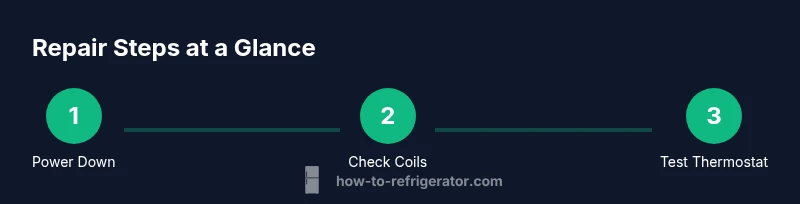
- 1
Power down and prepare
Unplug the refrigerator, move perishables to a temporary cooler, and set a thermometer to monitor temperature. This protects you from electric shock and gives you a baseline for performance later.
Tip: Use a non-metallic tool to avoid denting panels. - 2
Check door seals and gaps
Inspect all door gaskets for cracks, warping, or sagging. A poor seal lets warm room air in, causing compressor run time to increase and performance to drop.
Tip: Close the door on a dollar bill test; if you can pull it out easily, the seal needs replacement. - 3
Inspect condenser coils
Locate the coils (usually at the back or beneath the unit) and remove dust with a brush or vacuum. Clean coils can restore cooling efficiency and reduce energy use.
Tip: Do this step with the unit unplugged and avoid bending nearby wiring. - 4
Check evaporator fan and airflow
Access the evaporator compartment and listen for the fan. If you hear grinding or no airflow, the fan may be faulty or obstructed by frost.
Tip: Record a quick video of the fan operation to show a technician if needed. - 5
Test defrost drainage
Look for a blocked defrost drain or frost buildup near the evaporator. Clear any obstruction with a flexible wire or warm water and flush with a small amount of vinegar rinse.
Tip: Avoid pouring hot water into plastic components to prevent warping. - 6
Evaluate thermostat settings
Ensure the thermostat is set to the manufacturer’s recommended range. A miscalibrated setting can cause frost or improper cooling.
Tip: If possible, verify actual cabinet temperature with an independent thermometer to confirm accuracy. - 7
Reassemble and test
Reconnect power, wait 1–2 hours, and monitor temperatures. If performance improves, sustain maintenance intervals; if not, proceed to professional service or part replacement.
Tip: Document your tests and observations to share with a technician if required.
FAQ
Why isn't my Maytag refrigerator cooling?
Common causes include a dirty condenser coil, a faulty door seal, or a failing evaporator fan. Start with safety steps, inspect seals, and test airflow before replacing components.
If your Maytag fridge isn’t cooling, check the seal and coils first, then test the fan and thermostat.
What causes frost buildup in a Maytag refrigerator?
Frost typically results from a defrost system issue or a recurring door leak. Defrost the evaporator if needed and check the defrost heater and timer.
Frost is often a sign of a defrost problem or a door leak that needs attention.
Is it safe to DIY Maytag refrigerator repairs?
DIY repairs can be safe for basic maintenance and non‑refrigerant tasks, but avoid handling refrigerants or high‑voltage components without proper training.
DIY work is okay for simple tasks, but avoid refrigerants or high‑voltage parts.
How often should I clean the condenser coils on a Maytag refrigerator?
Clean coils during seasonal maintenance or whenever you notice reduced cooling efficiency or visible dust buildup.
Clean the coils when you see dust or every few months during heavy use.
When should I replace a Maytag refrigerator rather than repair it?
If the unit is old, repairs become costly, or refrigerant issues arise, replacement is often more economical in the long run.
If repairs pile up or the fridge is aging, replacement is often wiser.
Watch Video
Top Takeaways
- Safety first: unplug and relocate food.
- Regularly clean condenser coils to improve efficiency.
- Test thermostat and seals before replacing parts.
- Document symptoms to avoid unnecessary replacements.
- When in doubt, contact a professional for refrigerant handling and electrical work.