Kenmore Elite Refrigerator Parts: DIY Troubleshooting Guide
Learn to diagnose and fix common issues in Kenmore Elite refrigerator models with practical, safety-first steps. This How To Refrigerator guide covers parts, tools, step-by-step processes, and maintenance tips for DIY repairs.


You’ll learn how to diagnose and fix common issues in kenmore elite refrigerator models. This guide covers identifying symptoms, testing critical components, selecting the right replacement parts, and following a safe, step-by-step process. With basic tools and careful safety practices, you can handle many common maintenance tasks yourself.
Understanding kenmore elite parts refrigerator Diagnostics
A kenmore elite parts refrigerator can experience a range of failure modes, from not cooling to excessive frost, unusual noises, or water leaks. When diagnosing, start with symptoms and work backward to likely components. According to How To Refrigerator, a careful, methodical approach reduces wasted time and helps you identify root causes quickly. This guide uses plain-language steps homeowners can follow to verify common issues before ordering parts. In many cases, the problem is not a single failed piece but a chain of minor faults that compound over time. Focus on three pillars: airflow and seals, refrigerant and temperature control, and defrost functions. Visual checks are often enough to spot cracked door gaskets, ice buildup, or blocked vents. Listen for unusual fan or compressor noises, and observe frosting patterns near the evaporator coils. Maintaining a calm, organized workspace is essential: unplug the unit before touching any electrical components, and never bypass safety interlocks. Keeping a flashlight handy and taking photos during disassembly helps you reassemble correctly. By documenting model-specific quirks, you’ll be able to source replacements faster, especially for older Kenmore Elite generations that used a wider variety of part numbers. Finally, save the serial number and model code; this information is invaluable for matching the exact replacement parts you need.
note_idempotent_only_for_engineering_purposes_only_expansion_removed
Tools & Materials
- Phillips head screwdriver (size #2)(for most Kenmore Elite panels and screws)
- Flathead screwdriver (medium)(for prying gently or prying panels)
- Torx driver set(needed for some model-specific fasteners)
- Nut driver set(for accessing hardware in tight spaces)
- Digital multimeter(for testing electrical components like defrost heater or thermostat)
- Flashlight / headlamp(to inspect condenser coils and behind panels)
- Gloves and safety glasses(protect hands and eyes during repairs)
- Replacement parts (door seals, defrost heater, thermostat)(only if you identify worn parts)
Steps
Estimated time: 1-2 hours
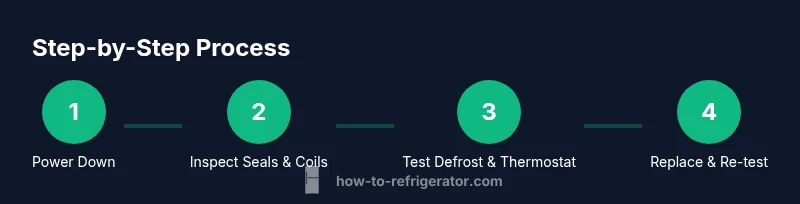
- 1
Power down and prepare workspace
Unplug the refrigerator at the wall outlet and pull it away from the wall to access the back. Remove any items from shelves and lay a soft mat to protect the floor. This initial safety step prevents electrical shock and makes all panels accessible for inspection.
Tip: Label or photograph fasteners as you remove panels to ease reassembly. - 2
Inspect door seals and gasket condition
Check for cracks, tears, or compressed gaskets around the doors. A bad seal can cause frost, temperature fluctuations, and uneven cooling. If you find damage, replace the gasket or apply a compatible seal cleaner if the seal is simply dirty.
Tip: Clean the seal edges with a mild soap solution before deciding on replacement. - 3
Clean condenser coils and air pathways
Dust and hair blocking condenser coils reduce cooling efficiency. Use a soft brush or a gentle vacuum to remove debris from the back or underneath the unit. Ensure air can flow freely around the coils and vents for proper heat rejection.
Tip: Do not use high-pressure air that could bend coil fins. - 4
Check evaporator fan operation
Listen for the evaporator fan when the freezer is running. If the fan is silent or makes grinding noises, it may need replacement or lubrication. A clogged frost pattern around the evaporator also indicates airflow issues.
Tip: Be careful around the fan blades; turn off power before inspecting. - 5
Test the defrost system components
Use your multimeter to test the defrost heater, defrost thermostat, and timer/controls according to your model’s wiring diagram. Frost buildup or intermittent cooling often points to a defrost issue. If a component tests faulty, replace it with the correct part.
Tip: Only perform electrical tests with the unit unplugged. - 6
Verify temperature control and sensors
Check the temperature sensor or thermostat for proper resistance values and placement. A faulty sensor can cause the fridge to overcool or undercool. Adjust or replace based on your model’s specifications.
Tip: Calibrate the thermostat to the recommended range after replacement. - 7
Check water inlet and ice-maker components
If your model has an ice maker or water dispenser, inspect the inlet valve, water line, filter, and dispensing mechanism for leaks or blockages. A stuck or slow valve can manifest as frost, leaking, or inconsistent ice production.
Tip: Bleed air from lines if you recently replaced the filter. - 8
Reassemble and test the system
Replace all panels, reconnect power, and run a diagnostic cycle. Monitor performance for at least 24–48 hours to confirm stability in temperature and humidity. Note any recurring symptoms and plan part replacements if necessary.
Tip: Document all readings and keep a log for future maintenance.
FAQ
What are the most common Kenmore Elite issues that require parts replacement?
The most frequent problems involve worn door seals, defective defrost components, and temperature control sensor failures. These issues often lead to frost buildup, improper cooling, or water leaks. Proper diagnosis helps you source the right part and avoid unnecessary replacements.
Common issues are worn seals, defrost component failures, and sensor problems, which can cause frost, poor cooling, or leaks.
Can I fix defrost problems at home safely?
Defrost problems can be addressed at home if you can access the defrost heater, timer, and thermostat safely. Ensure the unit is unplugged, use a multimeter to test components, and replace faulty parts with OEM equivalents. If frost remains after replacement, check for airflow blockages.
You can test defrost components safely if you unplug the unit and use a multimeter, but replace faulty parts carefully.
How do I know which parts to order for my Kenmore Elite model?
Check the model and serial numbers on the appliance, then use the manufacturer’s parts catalog or a reputable supplier’s lookup tool to confirm exact part numbers. Some models share compatible parts across generations, but mismatches are common—double-check.
Match the model and serial numbers to the parts catalog to ensure you order the correct pieces.
Is it worth repairing or should I replace the fridge?
If the repair involves high-cost components or frequent failures, compare the repair cost to a replacement with equal or better energy efficiency. In many cases, a mid-range repair plus a maintenance schedule extends life for several years.
Weigh repair costs against a new unit’s efficiency and long-term savings.
What safety precautions should I follow during DIY repairs?
Always unplug the unit before any disassembly, avoid touching live wires, and wear eye protection. Use insulated tools, work in a well-ventilated area, and follow manufacturer guidelines for high-voltage components.
Unplug first, wear protection, and use insulated tools for safety.
How long should I test after a replacement part?
Run a cooling cycle and monitor temperatures for at least 24–48 hours to confirm stability. Log readings to detect any fluctuations that indicate additional issues.
Test for a day or two and watch temperature readings closely.
Watch Video
Top Takeaways
- Identify symptoms early to target components.
- Regularly inspect seals, coils, and vents for efficiency.
- Test components with proper tools before replacing parts.
- When in doubt, consult a professional to avoid safety risks.