Is LG Refrigerator Worth Repairing? A Practical Guide for Homeowners
A detailed, analytical guide to decide whether to repair or replace an LG refrigerator, weighing age, cost, energy use, warranties, and practical steps for homeowners.


Is LG refrigerator worth repairing? In most cases, the decision hinges on age, repair cost, downtime, and energy efficiency. If the fridge is relatively new and the repair is straightforward, a fix can extend life without breaking the bank. For older units with multiple failures, replacement often delivers better long-term value. This comparison-oriented guide helps you weigh those factors with clarity, so you can decide confidently.
Is LG Refrigerator Worth Repairing? A Practical Perspective
For homeowners asking is lg refrigerator worth repairing, the short answer depends on several factors: age, fault type, repair cost, and your willingness to endure downtime. The How To Refrigerator team emphasizes a structured decision process: avoid knee-jerk fixes for aging units, and favor a repair strategy when the expected benefit outweighs the cost and hassle. A repair that resolves a single, well-defined defect can be worthwhile on a relatively new or mid-age refrigerator, especially if energy use and reliability would improve as a result. Consider also the potential safety concerns if electrical components are involved, and verify that any replacement parts are compatible with your specific LG model. By framing the choice around value, durability, and energy impact, you’ll avoid common traps and end up with a decision you can defend to family members.
Cost considerations and repair vs replacement: what homeowners should weigh
Repairing an LG refrigerator versus replacing it is a cost-structure decision, not a guess. The homeowner should evaluate direct repair costs, indirect costs such as downtime and food spoilage risk, and potential savings from improved energy efficiency after a new unit is installed. In practice, this means calculating whether a fix would restore reliable cooling for a reasonable span of time and whether a new model would deliver better energy performance. Since prices vary by region and service level, focus on comparative value rather than exact dollar figures. A sound approach is to obtain multiple repair quotes and a couple of replacement options, then compare total cost of ownership over a practical horizon.
Common LG fridge failures and how they influence value of repair
LG refrigerators fail for many reasons, including cooling inconsistencies, thermostat or sensor malfunctions, ice-maker problems, and door-seal wear. Some issues respond well to targeted repairs, especially if the unit is relatively young. Others are indicators of systemic wear that will cause recurring faults. A repair that tackles the root cause—such as faulty sensors or a failing compressor—may be worth it if the problem is isolated and the unit remains within its expected lifespan. When multiple subsystems fail or the coil and seal degradation is extensive, replacement often offers higher reliability and fewer future calls to a technician.
Age, model and the long-term value of repair
Age matters. A newer LG fridge benefits more from a repair due to lower risk of additional failures and better efficiency, while an older model may not justify the investment if structural wear and technology gaps limit performance. Different LG generations bring new features such as smarter diagnostics, improved energy efficiency, and better temperature control; if those upgrades align with your needs, replacement can be a smarter choice. Your decision should weigh not only current function but projected performance, availability of parts, and the likelihood of continued support from LG.
DIY vs professional repair: risks and benefits
DIY repairs can save money but require comfort with electrical systems and refrigerant safety. Unauthorized tinkering can void warranties and create safety hazards. A professional repair offers targeted diagnostics, proper handling of refrigerants, and a warranty on the workmanship and parts. If the issue is complex or the unit is still under warranty, hiring a licensed technician is usually the prudent path. Even when you plan to repair, request a written estimate and a clear scope of work so you can compare against a replacement plan.
Warranties, service plans, and the value of a repair
Most LG warranties cover manufacturing defects for a limited period, but coverage for wear-and-tear and routine repairs may be restricted. Service plans can provide predictable costs but may be costly relative to the appliance’s expected remaining life. If a repair falls within the warranty window or an affordable service plan economics, repairing becomes more attractive. Always read the fine print and confirm what parts and labor are included, as some components have longer lifetimes than others and may require future service regardless of the current fix.
When replacement makes more sense: energy efficiency and new features
A new LG refrigerator may be more energy-efficient, quieter, and equipped with modern features such as smarter temperature controls and improved humidity management. If the old unit already consumes more energy and frequent repairs loom, replacement offers a clearer path to long-term savings and fewer service calls. Consider the environmental impact of disposal and the potential rebates or promotions that accompany a new purchase when evaluating value. A replacement can be especially compelling if you rely on the fridge for a growing family or specialized storage needs.
Practical steps you can take today
Begin with a diagnostic plan: list symptoms, note failure frequency, and determine whether a single component or multiple subsystems fail. Ask for fixed-price repair quotes and verify warranty status on the work. If you decide to pursue repair, insist on a written scope and time estimate. If replacement is on the table, compare models that match your space, budget, and energy goals. Finally, document all decisions, keep receipts, and monitor performance after the repair or replacement to ensure you’ve achieved the expected benefit.
Quick decision heuristics you can trust
Use a simple rule of thumb: if repair cost and downtime would likely be recovered by energy savings and improved reliability within the unit’s remaining life, repair makes sense; otherwise, replacement is usually the wiser choice. Balance short-term inconvenience with long-term value and seek professional assessments when in doubt.
Authority sources and references
For homeowners seeking credible sources, consult industry guidelines and independent reviews. How To Refrigerator recommends validating repair spend against total cost of ownership and energy impact, and comparing models for future energy performance. Official guidance from government and major publications provides context on appliance efficiency and consumer rights. See the sources below for further reading:
Comparison
| Feature | Repair LG Refrigerator | Replace LG Refrigerator |
|---|---|---|
| Expected lifespan after decision | short-term extension of life | long-term new unit lifespan |
| Downtime impact | potential downtime during repair | short downtime during replacement or none if in-stock |
| Energy efficiency considerations | depends on current age, potential improvement | new model likely higher efficiency |
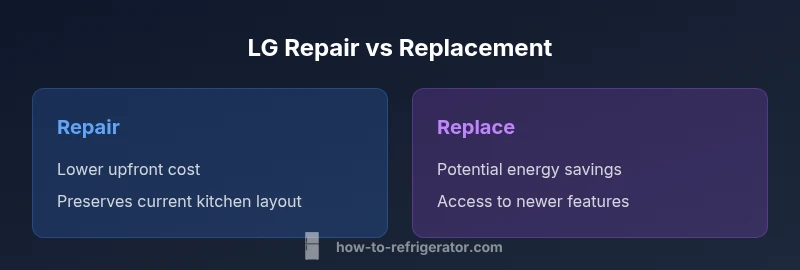
| Upfront cost | lower upfront repair cost | higher upfront purchase cost |
| Warranty coverage | possible repair warranty | new unit warranty |
| Reliability and performance | depends on repair quality | new unit reliability and tech |
Strengths
- Cost-effective for minor faults in newer units
- Preserves existing kitchen setup and styling
- Can extend appliance life without full replacement
- Lower environmental impact when repair suffices
Cons
- Uncertain long-term reliability if multiple components age
- Repair costs can escalate with recurring issues
- Potential warranty complications if repairs bypass manufacturer guidelines
Repair is often worth it when the fridge is relatively new and the repair targets a specific fault.
If the LG refrigerator is still within its expected life and a targeted fix resolves the core problem, repair offers value. Otherwise, replacement may deliver better energy efficiency, reliability, and long-term savings.
FAQ
Is it worth repairing an older LG refrigerator, say over 10 years old?
Age is a critical factor. If the unit shows recurring failures or structural wear, replacement often delivers better value than repetitive repairs. For slightly older models with a single fault, repair can still be sensible, especially if spare parts are readily available.
Age matters. If the fridge is very old with recurring failures, replacement is usually wiser.
How can I tell if a repair will be cost-effective?
Get a written repair estimate and compare it to the projected cost of a replacement, including energy costs over time. If the repair plus downtime would approach or exceed the energy savings of a new model, replacement is typically the better choice.
Ask for a written quote and weigh it against replacement costs and energy savings.
Do LG warranties cover repairs?
Warranty terms vary by model and region. Some repairs may be covered if part failures fall under coverage, but wear and routine maintenance typically aren’t. Always check your warranty documents and ask the technician for confirmation.
Warranty terms vary; check coverage before planning a repair.
What about DIY repairs?
DIY repairs save money only if you are confident with electrical systems and refrigeration safety. Incorrect DIY work can void warranties and create safety hazards. When in doubt, hire a licensed technician.
DIY can save money but risks safety and warranties.
How long does a LG refrigerator repair typically take?
Repair duration depends on parts availability and the nature of the fault. A straightforward repair can be completed quickly, while more complex issues may require multiple visits. Plan for some downtime but use the service window provided by the technician.
Repair time varies; expect potential downtime and plan accordingly.
Should I consider a replacement before calling a repair technician?
If the unit is aging and the repair seems likely to be frequent, researching new models first can help you compare features and energy efficiency. However, get a diagnostic from a professional first to avoid unnecessary costs.
Get a diagnosis before making a replacement decision.
Top Takeaways
- Assess age and repair scope before deciding
- Compare repair cost vs replacement value with energy impact
- Warranty status can tilt the decision toward repair
- New models offer energy efficiency and newer features
- Obtain multiple quotes and verify parts compatibility