Ice Maker in a Small Refrigerator: Fixes and Maintenance for Homeowners
A practical, expert guide for homeowners to diagnose, repair, and maintain ice makers in compact refrigerators, with step-by-step instructions, safety tips, and maintenance strategies.


With this guide, homeowners learn how to diagnose, repair, and maintain an ice maker in a small refrigerator. You’ll identify common causes—such as clogged fill tubes, frozen molds, or faulty sensors—then perform safe resets, cleaning, and part checks. The steps cover when to repair versus replace and how to optimize ice production in compact fridges.
Understanding the ice maker in a compact fridge
The term ice maker in a small refrigerator usually refers to a compact, integrated unit or a countertop-style system designed to fit limited kitchen spaces. In modern apartments and micro-kitchens, these units are prized for delivering ice without occupying valuable freezer real estate. The key is recognizing the two common configurations: (1) a fully integrated ice maker built into the freezer compartment, which dispenses ice through a door or bin; and (2) a compact, add-on kit that uses a small water line and a molded ice tray. For homeowners, the distinction matters because the repair steps, parts, and maintenance access can differ. According to How To Refrigerator, compact ice makers require attention to venting, clearances around the freezer, and stable electrical supply to avoid scale buildup and inconsistent ice production. This guide centers on practical fixes that apply broadly to most small-fridge setups and keeps safety front-and-center.
In both configurations, the ice maker relies on a few basic subsystems: water supply lines, a mold or tray with an ejector mechanism, a fill valve and sensor assembly, and a thermostat or timer that cycles ice production. When all parts work in harmony, you’ll enjoy a steady stream of ice without sacrificing fridge efficiency. If you’re unsure about your model, check the user manual for part names and typical service intervals. The guidance here emphasizes general, repeatable steps you can perform with common tools, without needing specialized equipment.
Common failure modes in ice makers for small refrigerators
Ice maker issues in compact fridges tend to cluster around a few recurring problems. A jammed ice mold or a stuck ejector blade is a frequent culprit that prevents new ice from forming or releasing properly. A partial or complete stoppage can also occur when the water line is blocked, kinked, or frozen, which stops ice production at the source. Sensor or thermostat failures are another common source of melt-and-refreeze cycles that produce oddly shaped ice or inconsistent quantities. Mineral buildup from hard water can clog the fill valve and ice mold, reducing water flow and ice production.
In many cases, a lack of power to the ice maker is the simplest explanation: a loose connector, a blown fuse, or a failed safety switch (like a door switch) may cut the signal that activates ice production. Condensation and humidity in the freezer can also cause ice to clump together, slow the ejector, or encourage frost buildup around the mold. By understanding these failure modes, you can triage more quickly and decide whether you can fix it yourself or need professional help. How To Refrigerator Analysis, 2026 indicates that clogged fill tubes and mineral deposits are among the most frequent causes in compact units, underscoring why cleaning and simple part checks often resolve many issues.
Safety basics before you begin any repair
Before attempting any repair on an ice maker, safety should be your top priority. Unplug the refrigerator to cut power, and if you’ll be working near the water line, shut off any accessible valves to prevent leaks. Have towels or a shallow pan ready in case water releases from the line. Wear safety gloves to protect your hands from sharp metal edges or molded plastic parts. If you must deal with a frozen or blocked water line, avoid using open flames or metal tools that could damage fittings. Keep children and pets away from the work area. When reassembling components, make sure all connections are clean and dry to prevent electrical shorts or corrosion. Finally, consult your model’s manual for any special cautions related to your ice maker design. These precautions help ensure a safe, frustration-free repair process.
Diagnostic checklist for ice maker problems
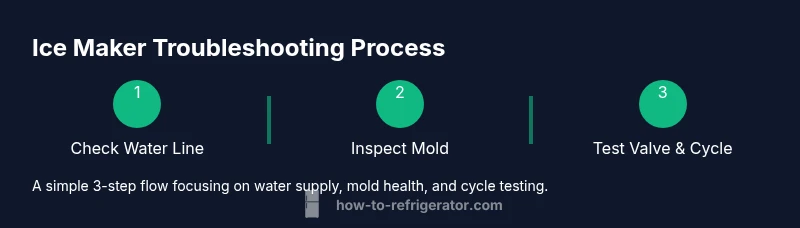
To methodically diagnose issues with a small-fridge ice maker, use this quick checklist:
- Check the ice mold for cracks, warping, or frost buildup that could impede ice release.
- Inspect the water supply line for kinks, blockages, or low water pressure; verify the valve opens fully when commanded.
- Test the fill valve and solenoid with a multimeter if you have electrical knowledge; look for continuity and correct resistance.
- Verify the thermostat or control timer is signaling correctly to begin a cycle and stop when ice is formed.
- Look for frost or ice buildup on sensors or the evaporator coil that could affect temperature readings.
- Confirm the door switch and any control modules are functioning; a failed switch can disable ice production.
Document what you test and what you observe, so you can reproduce steps if you need professional service later. This structured approach aligns with the recommended diagnostic flow used by the How To Refrigerator team.
Cleaning, sanitizing, and preventing jams
A clean ice maker produces better ice and reduces clogs. Start by unplugging and removing the ice bin. Use a solution of one part white vinegar to three parts water to flush the mold and melt mineral scale; allow it to sit for several minutes, then rinse with distilled water. Gently scrub the mold with a soft brush or cloth, avoiding harsh abrasives that could damage the surface. After cleaning, run a few cycles with only water to flush out any residue before making ice again. Sanitize the ice bin with a mild, food-safe sanitizer and dry thoroughly. Regular cleaning, at least every 1–3 months depending on water hardness, helps prevent jams, mold growth, and odor transfer to ice. Pre-fill the ice maker with clean water only to minimize mineral buildup.
Replacing components: when and how
Replacing a failed ice maker component is a practical option when tests show electrical faults, a cracked mold, or a stubborn valve leak. Common replacement targets include the water inlet valve, the ice mold assembly, and the ejector mechanism. Before replacing parts, confirm compatibility with your model by consulting the user manual or manufacturer’s parts guide. If you’re comfortable, you can swap components using standard tools and a wiring diagram, but if you’re unsure about electrical connections, it’s wise to seek professional assistance. Take care to disconnect power and water lines, label any wires, and test all connections after replacement. By sticking to safe procedures and using quality, manufacturer-approved parts, you can extend the life of a compact ice maker without triggering warranty issues.
Maintenance habits for small refrigerators with ice makers
Proactive maintenance often prevents most ice-maker issues. Schedule a monthly quick check for kinks in water lines and frost around the mold. For hard water areas, consider installing a basic inline water filter to minimize mineral buildup. Keep the freezer compartment temperature stable and avoid overloading the door shelves, which can affect airflow and overall defrost cycles. Periodically run the ice maker through a cleaning cycle and replace filters per the manufacturer’s guidance. Small changes, like keeping the back panel clean and ensuring adequate clearance for air circulation, can yield more consistent ice production and longer-lasting components. By adopting these routines, you reduce the likelihood of mid-cycle jams and surprise outages.
When to call a professional and warranty considerations
If you’ve followed the diagnostic and cleaning steps but ice production remains inconsistent or water leaks persist, it’s time to call a professional. A certified technician can diagnose electrical faults, complex valve issues, or sealed-system problems that aren’t safe to handle at home. Always check your warranty terms before performing non-trivial repairs; some warranties require professional service for voiding. If your unit is under warranty, document the issue, note the steps you’ve performed, and contact the manufacturer or authorized service provider. For complex or high-risk fixes, professional service is the recommended path to avoid further damage and to protect any warranty protections. The How To Refrigerator team recommends prioritizing safety and professional guidance when uncertain.
Tools & Materials
- Screwdrivers set (Phillips and flat)(Include 4- and 6-inch handles; use precision bits for small screws)
- Needle-nose pliers(Useful for disconnecting small hoses or clips)
- Multimeter(Check continuity and resistance on valve/thermostat wiring)
- Towels or absorbent mat(Place under connections to catch spills)
- Bucket or shallow pan(Collect water from lines during valve tests)
- Cleaning solution (white vinegar or mild detergent)(Vinegar works well for mineral buildup; rinse thoroughly)
- Distilled water(Use for final rinse to prevent mineral deposits)
- Gloves (rubber or nitrile)(Protect hands from sharp edges and cleaning solutions)
- Replacement ice-maker parts kit (generic)(Only if you’ve identified a faulty mold or valve; verify compatibility)
Steps
Estimated time: 60-90 minutes
- 1
Power down and access ice maker
Unplug the refrigerator and remove any ice bin to access the ice maker housing. If necessary, open the back panel or freezer wall panel to reach control boards or the valve. This initial step reduces the risk of electric shock and gives you a clear view of the components.
Tip: Keep track of screws by placing them in a labeled container. - 2
Inspect water line and connections
Trace the water supply line from the valve to the ice mold. Look for kinks, bends, leaks, or frost that indicates a freeze. If you see a kink, gently straighten it; if there is a leak, prepare to disconnect and reseat fittings.
Tip: Do not force fittings; use a small amount of plumber’s tape on threads if needed. - 3
Clear jams and clean the mold
If ice is stuck in the mold, allow a brief thaw, then manually remove ice without prying. Clean the mold and ejector blade with a soft brush and vinegar solution, then rinse with distilled water. Ensure all surfaces are dry before reassembly.
Tip: Avoid sharp tools that could scratch the mold; use a plastic card if needed. - 4
Test valve and fill tube
With the unit unplugged, briefly reconnect the water line and power, then command an ice cycle. If water does not reach the mold, test the water inlet valve with a multimeter for proper resistance and ensure the valve opens when energized.
Tip: If you can hear the valve click but no water arrives, the line may be blocked downstream. - 5
Reset ice maker control
Some models use a reset button or a specific sequence of button presses. If your unit lacks a reset, you can cycle power by unplugging for 5–10 minutes and then plugging back in. This re-synchronizes the cycle timing.
Tip: Document any model-specific steps in your manual for future resets. - 6
Run test cycle and observe
Close the freezer panel, reinsert the ice bin, and run a full ice cycle. Observe whether ice forms, ejects, and dispenses correctly. If issues persist, switch to a test cycle with water only to confirm the ice mold cycles and valve response.
Tip: If ice never forms, there may be a temperature control issue that needs professional evaluation.
FAQ
Why is my ice maker not producing ice in a compact fridge?
Common causes include a blocked water line, a frozen mold, a faulty water inlet valve, or a tripped door switch. Start by inspecting the water supply and mold; follow with valve testing if needed.
Common causes are a blocked water line, a frozen mold, or a faulty valve. Check water supply and mold first, then test the valve if needed.
How do I reset my ice maker?
Unplug the refrigerator for 5–10 minutes, then plug it back in. If your model has a reset button, press and hold it for a few seconds or follow the manual's sequence.
Unplug for a few minutes or press the reset button if your model has one. Then plug back in and test a cycle.
Is it safe to thaw a jammed ice mold manually?
Yes, unplug first, gently remove ice, and allow the mold to thaw. Use warm air or room temperature, not hot water or heat that could warp the plastic.
Yes—unplug, remove ice, and let it thaw with gentle warmth. Avoid heat that could damage the mold.
When should I replace an ice maker part?
If testing reveals a failed valve, cracked mold, or non-recoverable electronics, replacement is sensible. Compare cost and warranty implications before buying.
If the valve or mold is damaged or electronics fail, replacement is sensible. Check your warranty first.
Can I install an ice maker in any small fridge?
Not all compact fridges support ice makers. Some models require integral kits or built-in connections. Check the model’s compatibility and, if needed, consult a professional.
Not every small fridge supports an ice maker. Check compatibility and consider professional help if unsure.
How often should I clean the ice maker?
Clean every 1–3 months for hard water areas; more frequently if you notice odors, clogs, or visible mineral buildup.
Clean every 1–3 months, or more often if you notice buildup or odors.
Watch Video
Top Takeaways
- Diagnose ice maker issues with a structured checklist.
- Regular cleaning prevents clogs and jams.
- Safety and power isolation are essential for DIY repairs.
- Know when to repair vs replace—consult manuals and warranties.
- Document steps for future reference.