How to Roll Out a Refrigerator Safely: A Homeowner's Guide
Learn the safest method to roll out a refrigerator for maintenance, including prep, protective gear, and releveling. This expert How To Refrigerator guide covers planning, utilities, path protection, and post-move checks to protect your appliance and floors.


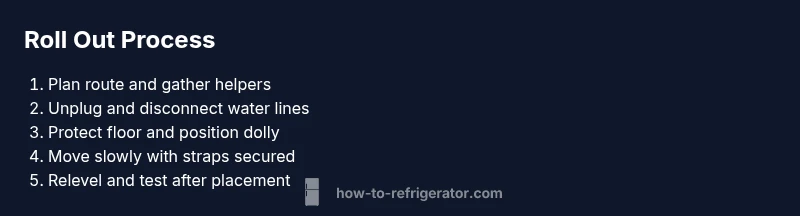
Rolling out a refrigerator safely means planning the route, unplugging and disconnecting any water lines, and using a heavy‑duty appliance dolly with at least one helper. Clear the space, protect the floor, attach straps, and move slowly to avoid tipping. Reconnect, relevel, and test after returning it to its place.
Why Rolling Out a Refrigerator Safely Matters
Moving a refrigerator out from its usual position is not a casual task. Improper rollout can cause personal injury, damage to walls or floors, and even harm to the compressor or cooling system if the unit is tilted or jolted. According to How To Refrigerator, safety begins with planning, the right equipment, and a clear route. How To Refrigerator analysis shows that using proper protection for floors and a stable two-person lift dramatically reduces common risks. A planned rollout also minimizes downtime and the need for costly emergency repairs. By approaching the task with care, homeowners protect both themselves and their appliance, preserving energy efficiency and extending service life.
As you prepare, remember that the goal is to move the fridge without dragging it, lifting only as needed, and keeping the center of gravity low. Rushing a move increases the likelihood of back strain, slips, or catching a toe on a door frame. The How To Refrigerator team emphasizes that thoughtful preparation and controlled movements are the core of a successful rollout. The result should be a secure, clean, and level setup ready for maintenance or repositioning.
Assessing Your Setup and Path
Before touching the fridge, walk through the entire route. Measure doorways, hallway widths, and floor clearances to ensure the unit can pass without scraping or requiring awkward angling. Remove any obstacles—chairs, rugs, cords, and decorative items. Check for floor transitions or thresholds that could snag the dolly. Ensure lighting is adequate so you can see potential tripping hazards. Plan a secondary route in case you encounter an unexpected obstacle. A clear, well-lit plan reduces the risk of sudden shifts that can injure you or damage the appliance.
With careful planning, you minimize the chance of scraping cabinets or walls. The How To Refrigerator approach combines a practical route with protective measures for walls and floors, especially on hard-surface floors. If you’re moving across carpet, think about using a rigid platform to reduce friction and keep the dolly stable. This is the moment to confirm that your helper(s) understand their roles and are ready to assist with guiding, lifting, and controlling the movement. A calm, coordinated effort pays off in a smoother rollout.
Pre-move Safety Checklist: Clearances, Helpers, and Hazards
Put safety first with a pre-move checklist. Confirm you have a dependable helper, a proper appliance dolly (rated for the fridge’s weight), and straps or ropes to stabilize the unit. Clear three to four feet of space on all sides for maneuvering, and ensure pets and children are out of the work area. Wear closed-toe shoes, gloves, and sleeves that won’t snag on door hardware. If the fridge has a water line or ice maker, prepare to disconnect those components safely. The How To Refrigerator team recommends testing your route with an empty cart before attempting the actual move, to confirm there are no hidden hazards along the path. A calm, controlled prep phase reduces last-minute surprises during the rollout.
Tools and Materials You’ll Need (and Why)
Having the right tools in reach makes the rollout safer and faster. A sturdy appliance dolly, moving straps, floor protection (blankets, cardboard, or plywood), gloves, and a tape measure are considered essential. Two capable helpers dramatically reduce risk by distributing weight and guiding the unit. Protective mats or thick moving blankets help shield walls and floors from scuffs. If you anticipate rough transitions, lay down plywood sheets to create smooth, level ramps over thresholds. Finally, keep a flashlight handy for dim corners and a towel to wipe up any spills from defrosting components if needed.
Disconnecting Utilities and Securing the Fridge
If your fridge has a water line or an ice maker, shut off the water valve and disconnect the line before moving. Unplug the unit at the outlet to prevent electrical hazards. If the appliance has rear service panels, consider loosening the back access panel to ease movement, but avoid altering the cooling system. It’s also wise to empty the crisper and ensure liquids are secure to prevent leaks during relocation. The How To Refrigerator guidance stresses that disconnecting utilities before moving reduces the risk of water damage or electrical shock and helps keep the path clean. Keep a sink full of towels nearby to catch any condensation or drips.
Floor Protection and Surface Care During Rollout
Protecting floors and walls is essential. Use moving blankets, heavy-duty cardboard, or plywood under the fridge’s feet and along the transition points. Tape down protective coverings so they don’t shift during movement. Avoid dragging the appliance; instead, push or pull with controlled, even pressure. If you’re moving across thresholds, consider a short ramp or a widened gap to keep the dolly wheels from getting stuck. Maintaining a smooth, well-protected surface reduces damage to tile, hardwood, or laminate and helps preserve the floor finish. The safeguard approach recommended by How To Refrigerator minimizes post-move cleanup and floor repairs.
The Roll-Out Technique: Moving with a Dolly
Approach the rollout with a glide rather than a shove. Slide the dolly under the fridge from the side, ensuring the unit’s weight sits on the dolly’s center. Use straps to secure the fridge and prevent tipping. Keep the handle aligned with your guiding path, and have your helper steady the top while you steer. Move slowly in short, deliberate pushes, staying alert for obstacles or slick patches on the floor. If the unit begins to tilt, stop and reassess your balance before continuing. The How To Refrigerator method emphasizes steady momentum and precise handling to avoid accidents and misalignment.
Repositioning, Cleaning, and Releveling After Return
Once you’ve relocated the fridge, carefully remove the dolly and roll it back into place. Check that the refrigerator is level from side to side and front to back; adjust the leveling feet as needed. Clean any footprints or smudges from the transition areas and inspect door seals for proper compression after the move. Reconnect water lines and test the ice maker, if applicable, ensuring there are no leaks. The How To Refrigerator team recommends waiting a few minutes after powering on to allow the compressor to settle before loading contents back into the shelves, and to re-test energy efficiency after the rollout. A properly leveled, clean installation improves cooling performance and energy use.
Common Mistakes and How to Prevent Them
Common errors include rushing the move, dragging the fridge, and neglecting floor protection. Another frequent misstep is failing to disconnect utilities, which can lead to leaks or electrical hazards. Over-tilting the unit can damage compressors or muting temperature control. To avoid these pitfalls, slow down, maintain an even pace, and use a two-person team to guide the movement. Always recheck clearances after repositioning any furniture or appliances, and verify that the door swings freely without binding. By following best practices, you’ll mitigate damage risk and ensure a smooth, safe rollout.
Final Safety Checklist Before and After Rollout
Before you start: confirm you have a partner, a properly rated dolly, floor protection, and clear path. During the move: move slowly, avoid sharp turns, and verify weight balance. After returning the fridge: relevel, reconnect utilities, and run a short cooling cycle to verify correct operation. The ultimate goal is a safe, efficient rollout with minimal disruption, and a fully functional appliance ready for regular use. The How To Refrigerator guidance emphasizes finishing steps with a tight-wound zone of safety to protect your home and appliance.
Tools & Materials
- Appliance dolly (heavy-duty, 600+ lb rating)(Locking wheels; secure straps for extra stability)
- Moving straps or ratchet straps(At least 2-3 persons; keep weight balanced)
- Floor protection (moving blankets, cardboard, or plywood)(Lay a continuous path to minimize friction)
- Gloves (work gloves)(Provide grip and hand protection)
- Plywood or hardboard sheets(Smooth transitions over thresholds)
- Tape measure(Verify clearance before move)
- Helper(s)(Two people recommended for control and safety)
Steps
Estimated time: 45-60 minutes
- 1
Prepare space and gather helpers
Clear the route, remove obstacles, and confirm at least three feet of clearance on all sides. Assign one person to steer and another to guide the fridge. Make sure all pets and kids are out of the area and that you have protective gear ready.
Tip: Agree on hand signals before starting so communication stays clear. - 2
Unplug and disconnect utilities
Unplug the refrigerator from the wall outlet and, if present, shut off the water valve and disconnect the ice maker line. Verify there is no power at the outlet before touching any cords. Keep towels handy for any condensation leaks.
Tip: If you can’t locate the shut-off valve, stop and consult a professional. - 3
Protect floors and create a smooth path
Lay down protective coverings and, if needed, place plywood or hardboard sheets to bridge thresholds. Ensure coverings won’t bunch or slip during movement. Inspect the route for nails, splinters, or other hazards that could catch on the dolly.
Tip: Avoid moving across loose rugs or slick surfaces. - 4
Attach dolly and secure the fridge
Slide the dolly from the side and slide it under the fridge, centering the weight. Secure with straps but don’t over-tighten. Ensure the fridge is balanced and that there is space to pivot toward the new location.
Tip: Test balance by gently rocking the fridge before moving. - 5
Roll out slowly and stay aligned
Push or pull the fridge along the planned path at a controlled pace. Keep it aligned with the center of the dolly and avoid sharp turns. Have your helper guide the back to prevent catching on walls or door frames.
Tip: Take short, deliberate moves rather than long pushes. - 6
Reposition, relevel, and test
Once in place, remove the dolly, relevel the fridge using the adjustable feet, and recheck door alignment. Reconnect water lines and test the ice maker, if equipped, for leaks. Run a quick cooling cycle before restocking.
Tip: Let the compressor settle for a few minutes before heavy use.
FAQ
Is it safe to roll out a refrigerator by myself?
It’s possible with proper equipment and precautions, but two people are strongly recommended for stability. Always use an appliance dolly and protective gear.
It can be done alone, but two people are much safer. Use the right dolly and protective gear.
What if I don’t have an appliance dolly?
You can improvise with sturdy furniture sliders and a helper, but this increases effort and risk. Avoid dragging the unit and proceed slowly.
If you lack a dolly, use sliders and a helper, but be extra cautious.
Do I need to defrost before moving?
Defrosting is not strictly required just to move the unit, but if you’re relocating for an extended period, a defrost may reduce moisture during shipment.
Defrosting isn’t required to move, but can help if the fridge will stay disconnected for a while.
How long does a rollout take?
For a typical kitchen, budget 45–60 minutes, depending on route complexity and the number of helpers.
Typically about 45 to 60 minutes with two people involved.
Should I relevel after moving?
Yes. Relevel the fridge to ensure doors seal properly and cooling works efficiently. Check for level front-to-back and side-to-side.
Yes—relevel the fridge after moving to ensure proper sealing and cooling.
Are there signs of problems after moving?
If the doors don’t seal, the compressor sounds unusual, or there are leaks, stop and inspect connections or call a pro.
Watch for door sealing issues, unusual noises, or leaks and check connections.
Watch Video
Top Takeaways
- Plan the route before moving the fridge
- Use a dolly with two helpers for stability
- Protect floors and walls with pads or cardboard
- unplug and disconnect water lines before rolling
- Relevel the fridge after relocation and test operation