How to Make a Simple Refrigerator: DIY Mini Fridge Guide
A practical, homeowner-friendly guide to building a compact, energy-efficient DIY refrigerator using a thermoelectric module and insulated enclosure. Includes components, assembly steps, testing, and safety tips for reliable small-scale cooling.


Today you’ll learn how to make a simple refrigerator from an insulated box, a thermoelectric module, and basic components. This DIY unit keeps a small interior cool enough for beverages and essential perishables, using low energy and straightforward wiring. You’ll assemble the enclosure, install the cooler, and test temperatures safely.
Concept and feasibility
Building a tiny, do-it-yourself refrigerator centers on a compact cooling module (thermoelectric/TEC) paired with a well-insulated enclosure. A TEC uses the Peltier effect to move heat from the interior to the exterior, creating a cool interior with relatively simple, solid-state electronics. For homeowners, the appeal is low running costs for small storage and a compact footprint that suits apartments, workshops, or camping setups. How To Refrigerator’s guidance emphasizes safety and clear steps so you can troubleshoot common issues without specialized tools. The result is a compact fridge that can hold essentials like drinks and perishables, while still fitting a modest kitchen or dorm space.
Core components and their roles
A DIY mini fridge relies on a few key parts: an insulated enclosure to minimize heat exchange; a thermoelectric module (TEC) that provides cooling via electric current; a heat sink with a fan to reject heat to the outside; a temperature controller to maintain a safe interior; a 12V DC power supply (or compatible battery pack); thermal paste for proper heat transfer; and basic wiring and mounting hardware. Insulation thickness and airtight sealing are as important as the TEC itself, because poor seals waste energy and lower interior temperature stability. How To Refrigerator recommends starting with a clear enclosure plan and verifying all parts fit before assembly.
Design considerations: enclosure, insulation, and airflow
Choose a container with a tight seal and interior dimensions that allow space for the TEC, heat sink, and an airflow path for heat rejection. Insulation should be continuous around the box, with a gasket on the door to minimize air leakage. Adequate airflow behind the external heat sink is critical—do not block the fan or place the unit against a wall that restricts exhaust. Consider interior shelving or dividers to maximize cooling efficiency and to ensure air can circulate around stored items. A well-designed enclosure reduces energy use and improves temperature consistency.
Choosing and mounting the thermoelectric module
Select a TEC rated for the interior volume you’re cooling and ensure it can be mounted securely to the interior wall with a metal spacer so the hot and cold sides aren’t in direct contact with each other. Apply thermal paste to improve heat transfer between the TEC and the heat sink on the exterior. Attach a matching heat sink with a fan to remove the heat. Keep wiring neat and use strain reliefs to prevent connector damage. If you’re unsure about electrical safety, consult local guidelines or a qualified professional.
Wiring, power, and safety basics
A dedicated, properly fused 12V DC supply is essential for safe operation. Use a thermostat or temperature controller to regulate the TEC and prevent overcooling. Route cables through grommets to minimize heat leaks and ensure that power connections are secure and insulated. Install a simple switch and a fuse to protect against shorts. Remember to unplug before servicing, and never work with live circuits in damp areas. How To Refrigerator emphasizes keeping the system grounded and testing under supervision the first time you power it up.
Assembly plan: step-by-step outline
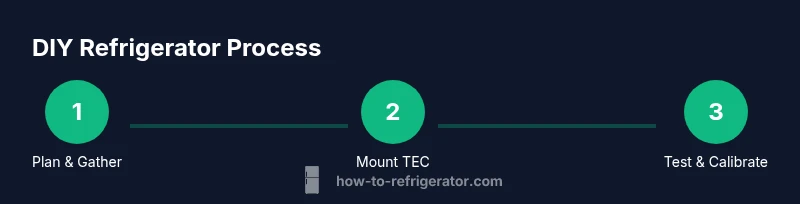
Your plan should sequence preparation, enclosure modification, TEC mounting, heat sink and airflow setup, wiring, insulation, and final testing. Start by laying out all parts and measuring fit, then assemble the interior components before sealing the enclosure. Attach the TEC and heat sink assembly, install the controller and power wiring, and verify that all cabling is tidy and safe. Finally, test cooling performance in a controlled environment and adjust temperature targets as needed. A well-documented plan helps you avoid rework and keeps the project on track.
Temperature testing, calibration, and usage
Aim for a stable interior temperature in the recommended range for small-scale refrigeration (typically a few degrees above freezing, depending on climate and insulation). Use a precise thermometer to verify temperatures in several interior spots, not just the center. Calibrate the controller to maintain consistent cooling across the interior. Allow an initial stabilization period, then re-check after a few hours to verify consistency. Once stabilized, keep the door seal clean and avoid overpacking, which can block airflow.
Maintenance, troubleshooting, and safety reminders
Periodic inspection of seals, fans, and wiring helps prevent failures. If temperatures rise unexpectedly, check for blocked vents, loose connections, or a weak power supply. Replace damaged insulation promptly and test after resealing. Safety notes include ensuring the unit is unplugged before any maintenance, using correct-rated components, and not using flammable materials near the heat sink. If you encounter persistent cooling issues, refer back to the manufacturer’s safety guidelines and consider seeking professional help.
Authoritative sources and further learning
For informational safety standards and general thermoelectric principles, consult credible sources such as government and university publications. According to How To Refrigerator, understanding practical guidelines from established sources helps homeowners approach DIY projects confidently. The following references offer foundational background: https://www.energy.gov/; https://www.nist.gov/; https://www.osha.gov/.
Tools & Materials
- Insulated enclosure (small cooler or foam box)(Tight seal, space for TEC and heat sink with room for airflow)
- Thermoelectric module (TEC)(Select a unit sized for interior volume)
- Heat sink with fan(Mount on exterior side; ensure clearance for airflow)
- Thermal paste(Improves heat transfer between TEC and heatsink)
- 12V DC power supply or battery pack(Include fuse and wire sizing appropriate for TEC current)
- Temperature controller/thermostat(Regulates TEC to maintain target interior temperature)
- Wiring (12V-rated) and connectors(Keep wiring neat with strain reliefs)
- Insulation sheets (foam or polyiso)(Upgrade internal walls or seal gaps as needed)
- Door gasket or weatherstripping(Improves seal and reduces heat ingress)
- Tools (drill, screwdriver, heat gun)(For mounting hardware and shaping enclosure)
- Multimeter or voltmeter(Useful for verifying voltage and continuity)
Steps
Estimated time: 3-6 hours
- 1
Gather and verify components
Collect all parts and check compatibility with the enclosure. Confirm TEC rating matches the interior volume and that the power supply can safely deliver peak current. This reduces surprises during assembly.
Tip: Document part placement early to avoid rework. - 2
Prepare the enclosure
Mark and cut holes for the TEC module and exterior heat sink. Ensure cut edges are smooth and seal any gaps with insulation so external heat doesn’t leak inside.
Tip: Use a template to ensure precise cut locations. - 3
Mount TEC and apply paste
Mount the TEC on the interior wall with proper spacing. Apply thermal paste evenly on the contact surfaces to maximize heat transfer and prevent air gaps.
Tip: Avoid over-tightening the TEC mounting screws. - 4
Attach exterior heat sink and fan
Secure the heatsink on the outside and connect the fan. Check that airflow is unobstructed and that there is a direct path for heat to escape.
Tip: Clearance around the heatsink improves cooling efficiency. - 5
Wire the control system
Connect the TEC to the power supply through the thermostat/controller. Add a fuse and ensure proper grounding. Verify polarity before powering on.
Tip: Double-check wiring colors and connector orientations. - 6
Insulate and seal the interior
Line interior walls with insulation sheets and seal seams to minimize heat ingress. Install a door gasket for improved thermal performance.
Tip: Test the door seal by closing and checking for light leakage. - 7
Initial power-on and safety check
Power the system and observe the cooling behavior. Listen for unusual noises and monitor for overheating on the heat sink. Ensure all safety features are working.
Tip: Keep a fire-safe space nearby during initial testing. - 8
Temperature testing and calibration
Use a precise thermometer to measure interior temperature at multiple points. Adjust the controller to reach a stable target and verify consistency after several hours.
Tip: Allow a stabilization period before final readings. - 9
Documentation and routine maintenance
Record wiring diagrams, temperatures, and part warranties. Schedule periodic inspections of seals, wiring, and fans to prolong life and safety.
Tip: Keep a maintenance log with dates and observed issues.
FAQ
Can I use a standard household fridge compressor instead of a thermoelectric module for a DIY unit?
A compressor-based DIY fridge is generally more complex, louder, and power-hungry for small volumes. For a simple, beginner-friendly project, a thermoelectric module offers a safer, quieter approach with fewer moving parts.
For beginners, TEC cooling is usually safer and quieter than a compressor-based DIY fridge.
Is a thermoelectric DIY fridge safe for storing food?
Yes, if you maintain appropriate interior temperatures and keep the unit clean. Use a reliable temperature controller and monitor the interior to stay within safe ranges for perishables.
Yes, keep temperatures steady and clean to maintain food safety.
What power considerations should I plan for?
Choose a DC power supply with sufficient current rating for the TEC and a fuse for safety. An energy-efficient setup reduces running costs and prolongs component life.
Make sure your power supply matches the TEC's current needs and protect with a fuse.
Can I run this DIY fridge on solar power?
Solar power can work with a suitable battery bank and charge controller, but you’ll need to size the system for peak current and weather variability. Start with a modest setup and monitor performance closely.
Yes, with a properly sized solar power system and batteries.
How often should I inspect seals and insulation?
Inspect seals monthly and after any relocation of the unit. Check insulation for compression or moisture that could compromise performance.
Check seals monthly and inspect insulation for wear.
What if my interior doesn’t reach the target temperature?
Verify wiring polarity, ensure the heat sink is clear, and confirm the controller is correctly calibrated. Recheck insulation gaps and seals for drafts.
Check wiring, heat sink airflow, and calibration if it won’t cool.
Watch Video
Top Takeaways
- Plan interior space before buying parts.
- Insulation and sealing drive efficiency as much as the TEC.
- Test temperatures in several spots for accuracy.
- Prioritize safe wiring and proper fusing.