Mini Cooler: A Practical Guide for Small Spaces
Learn how to select, place, and maintain a mini cooler for compact living spaces. This How To Refrigerator guide covers sizing, energy use, placement, and care tips to keep drinks, snacks, and meds fresh.


A mini cooler is a compact refrigerator designed for small spaces, ideal for snacks, drinks, and medications. It saves counter space while delivering reliable cooling. For a full setup, placement, and maintenance steps, see our detailed guide.
Why a mini cooler is a smart space-saver
In tight living spaces, a mini cooler helps you reclaim countertop real estate without sacrificing fresh snacks and drinks. This compact appliance can be tucked under a countertop or on a narrow shelf, keeping things organized and accessible. According to How To Refrigerator, choosing the right unit reduces clutter and supports healthier, more convenient routines. The How To Refrigerator team found that many households underestimate the value of proper airflow and door swing clearance for these small fridges.
That ongoing problem matters because even a small cooler relies on steady airflow to maintain even temperatures. A well-chosen mini cooler should fit your space, match your daily use, and be easy to access. In this section, we’ll explore how to assess your needs, what features matter, and how to compare models without overpaying. You’ll learn practical steps for measuring, selecting, and setting up a mini cooler that serves as a reliable secondary refrigerator for beverages, snacks, or medicines.
We’ll also discuss common myths—for example, that bigger is always better for cooling speed. In reality, compact units often reach target temperatures quickly but require thoughtful placement and organization. With the right model and setup, a mini cooler becomes a quiet, energy-conscious member of your home. By keeping these units clean and correctly ventilated, you’ll extend their life and protect your stored items.
How to choose the right mini cooler for your space
When selecting a mini cooler, consider dimensions, capacity, and practical features. Start by measuring the intended footprint: width, height, and depth. Leave at least a couple of inches around the back and sides for airflow and heat dissipation. A unit labeled 'compact' should still offer flexible shelves and door storage to maximize organization.
Think about capacity in quarts or liters relative to what you plan to store. If you mainly want beverages, a model with a taller door and adjustable shelves can fit standard bottles; if you plan to store dairy or produce, a wider interior helps. Check temperature control options (manual dial vs digital thermostat), and note any defrost type (manual defrost is cheaper but needs periodic maintenance, while auto defrost reduces frost but costs more). Energy usage matters too: look for the energy-efficiency label and a reputable brand warranty.
Consider noise and placement constraints. If the unit will be in a living area or office, you’ll want a model with low decibel levels. Access is important: a reversible door adds versatility in tight corners. Finally, compare prices and read reviews. How To Refrigerator recently found that budget models often perform well in typical home use, provided you place and maintain them properly.
Energy efficiency and noise considerations
Energy efficiency has a meaningful impact on daily costs and climate impact. For mini coolers, model efficiency varies widely; even among compact fridges, standby power can differ by a noticeable margin. How To Refrigerator analysis shows that the most energy-efficient units often balance insulation quality and compressor design. Look for Energy Star certification and a low-temperature cycling pattern to minimize running time. Noise matters if the device sits near living spaces—aim for units advertised as quiet or with a specified decibel range. If you frequently open the door, choose a model with good insulation and a stable thermostat. Finally, consider placement and ambient conditions: placing a cooler away from heat sources helps it stay efficient.
To test efficiency in practice, compare two models side by side and note how quickly they reach and stabilize a target temperature after opening the door. If a cooler runs continuously, it may indicate poor sealing or overloading. How To Refrigerator analysis shows that a well-insulated cabinet and an efficient compressor can reduce energy use without sacrificing cooling. Use the energy rating as a rough guide, then confirm real-world performance with user reviews and in-home testing.
Note: The occasional defrost cycle adds a tiny energy cost but prevents frost buildup that could hamper efficiency over time. Based on How To Refrigerator Analysis, 2026, the long-term savings come from choosing models with durable seals and efficient cooling cycles, not from chasing the lowest sticker price.
Setup, placement, and organization tips
Getting a mini cooler right the first time saves you hours of rearranging later. Start by choosing a level surface with unobstructed airflow around the back and sides. Avoid placing the unit next to heat sources such as ovens, radiators, or sunny windows, which make cooling more challenging and consume more energy. If you must place it under a countertop, ensure there is at least a couple of inches of clearance for heat dissipation and proper door swing.
Unpack the cooler, install shelves as needed, and verify the door seals are clean and free of gaps. Plug the unit into a dedicated outlet or use a surge-protected power strip to prevent outages from affecting temperature stability. For organization, designate zones: drinks in one section, snacks in another, medicines in a clearly labeled area. Place a small thermometer on a middle shelf to monitor actual temperature and adjust as needed. Finally, allow the unit to run for an hour before loading heavy items to ensure even cooling.
Practical tips: start with a moderate temperature setting and vary only one factor at a time (temperature, airflow, loading) to gauge impact. If space is tight, consider using a slim under-counter model with adjustable shelves. The goal is to create a simple, accessible cooling solution without creating clutter or energy waste.
Maintenance and troubleshooting for longevity
Keeping a mini cooler clean and well-sealed extends its life and keeps contents safer. Regular cleaning includes wiping the interior with a mild soap solution and drying thoroughly to prevent mold or odors. Check door gaskets monthly for cracks or tears; even small gaps can lead to cooling inefficiency and frost. Vacuum or wipe the condenser coils if accessible, especially on older models, to improve airflow.
Defrost regularly if your unit is manual-defrost. Remove frost buildup with a plastic scraper and recheck seals afterward. If frost forms quickly after cleaning, you may be overcooling or the seals may be worn. If temperatures vary widely or items freeze, you may be overcooling or underloading; adjust temperature gradually. If you hear unusual buzzing or humming, ensure nothing is vibrating against the chassis and that items aren’t pressing on the door.
For troubleshooting, start with simple checks: confirm the outlet is live, confirm door is closing fully, and ensure there’s no obstruction blocking vents. If the unit still underperforms, consult the manufacturer’s guide or a repair professional. The key is consistent maintenance and correct use.
Real-world use cases and sizing guide
Different rooms benefit from different mini cooler configurations. In a studio apartment or tiny kitchen, a compact, 1-2 cu ft model fits coffee bar items, small drinks, and snacks. A taller unit with adjustable shelves is ideal for dorm rooms or offices where you want beverage tall bottles and lunch items at eye level. For homes with medications or skincare items that must stay refrigerated, choose a model with a stable, lower temperature range and durable gasket.
The sizing decision depends on expected load: how many people use the space, how often items are opened, and whether you need freezer space for ice packs. If you’re unsure, start with a modestly sized cooler and upgrade only after you’ve observed daily use for a couple of weeks. Remember, a mini cooler is most effective when it complements your existing storage rather than trying to replace a full-size fridge.
In all cases, prioritize proper ventilation, easy access, and periodic maintenance. The right model saves energy, keeps foods fresh longer, and reduces the need for frequent restocking.
Tools & Materials
- Mini cooler(Choose model with appropriate footprint)
- Tape measure(Measure space precisely)
- Level(Ensure unit is perfectly level)
- Power outlet or surge protector(Dedicated outlet preferred)
- Microfiber cloth(For interior cleaning)
- Mild cleaner or soap solution(Non-abrasive cleaner)
- Thermometer (fridge)(Monitor interior temp)
- Shelf liners or mat(Protect shelves and contents)
Steps
Estimated time: 60-90 minutes
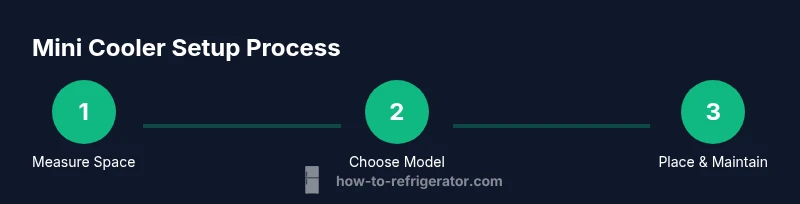
- 1
Measure space
Use a tape measure to capture width, height, and depth of the intended location. Also note the door swing and required ventilation clearance so the unit can open fully without obstruction.
Tip: Write down all measurements and double-check before purchasing to avoid buying a unit that’s too large or too small. - 2
Select model
Compare models that fit your measurements and daily use. Prioritize adjustable shelves, door storage, and a simple thermostat or digital control for reliable cooling.
Tip: Check user reviews for real-world noise levels and reliability after a few weeks of use. - 3
Prepare area
Clear the space, clean the floor, and verify a clean, dry surface. If placing under a counter, ensure air gaps of several inches for airflow.
Tip: Remove packaging and inspect door seals before moving the unit into place. - 4
Place, level, and power
Set the cooler on the chosen spot, use a level to verify evenness, and plug into a stable outlet or surge protector. Leave space around the back and sides for airflow.
Tip: Avoid power strips that can trip during peak cooling cycles. - 5
Set temperature and load
Turn on the unit and set to a moderate cooling level. Start by loading only a few items and monitor temperature stability over the first hour.
Tip: Add items gradually and avoid overloading shelves to maintain airflow.
FAQ
What is a mini cooler?
A mini cooler is a compact refrigeration unit designed for small spaces. It stores beverages, snacks, or medicines while using less floor or counter space than a full-size fridge. With proper placement and maintenance, it provides reliable cooling for everyday needs.
A mini cooler is a small refrigerator for tight spaces that keeps drinks and snacks cold. It’s ideal for apartments, offices, or dorm rooms, especially when a full-size fridge isn’t practical.
What sizes do mini coolers come in?
Mini coolers come in a range of footprints and capacities, from slim under-counter models to taller wine-bar style units. Choose based on your space and intended contents. Always check internal layout options like adjustable shelves and door storage.
Mini coolers range from slim to tall. Pick one that fits your space and what you plan to store.
Are mini coolers energy efficient?
Yes, many mini coolers are energy efficient, especially newer models with improved insulation and compressors. Look for Energy Star certification and user reviews about real-world energy use.
Many mini coolers are energy efficient, especially newer models. Check Energy Star labels and reviews for real-world use.
Can I use a mini cooler in a garage or outdoors?
Some mini coolers are suitable for garages or semi-outdoor spaces, but performance depends on ambient temperatures. If the space gets very hot or freezes, choose a model designed for extreme conditions and ensure proper placement.
Some can be used in garages, but check the unit’s temperature range and protection from the elements.
How do I clean a mini cooler’s interior?
Remove contents, unplug the unit, and wipe shelves with a mild soap solution. Rinse and dry completely before plugging back in. Regular cleaning helps prevent odors and mold.
Unplug it, take out items, clean with mild soap, rinse, and dry well before using again.
What’s the difference between a mini cooler and a mini fridge?
The terms are often used interchangeably. A mini cooler typically emphasizes small footprint and portability, while a mini fridge may offer slightly larger capacity and additional features. Both provide compact cooling for small spaces.
They’re similar; a mini cooler is usually smaller, while a mini fridge might offer a bit more capacity and features.
Watch Video
Top Takeaways
- Measure space and choose a fit-for-purpose model.
- Prioritize energy efficiency and quiet operation.
- Place with ventilation and levelled feet.
- Maintain with regular cleaning and seal checks.