How to Troubleshoot a Refrigerator Ice Maker Not Making Ice
Learn how to fix a refrigerator ice maker not making ice with a practical, step-by-step troubleshooting guide. Quick checks, diagnostic flow, safety tips, and prevention from How To Refrigerator.


Ice maker not producing ice is most often caused by a water supply issue, a jammed ice maker arm, or incorrect freezer temperature. Start with the basics: verify the water valve is open, check for kinks in the line, and ensure the ice maker is switched on. If this doesn’t resolve it, test the defrost drain and reset the ice maker. See the full guide for detailed steps.
Common Causes of an Ice Maker Not Making Ice
When your ice maker stops producing ice, several issues could be at play. The most frequent culprits are problems with the water supply, a jam or misalignment in the ice maker mechanism, or a freezer temperature that’s not cold enough for ice formation. Less common but worth checking are a frozen defrost drain, a faulty ice-maker module, or a tripped circuit. The How To Refrigerator team emphasizes that many ice-maker problems stem from simple maintenance tasks, not a full replacement. Addressing these causes quickly can restore ice production without significant downtime.
Quick Checks You Can Do Safely
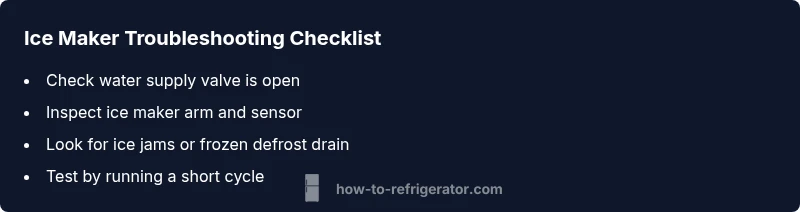
Before diving into more involved troubleshooting, perform these safe, low-effort checks. First, confirm the water supply valve is fully open and that the water line is not kinked or blocked. Next, inspect the ice maker arm or switch; ensure the arm is in the down/front position to signal ice production. Check the freezer temperature to ensure it is cold enough for ice to form, and inspect the ice mold for frost buildup. If you find ice crystals on the mold, allow the unit to defrost briefly or manually defrost if directed by your user manual. Finally, replace the water filter if it’s been a while; a clogged filter can restrict water flow.
Diagnostic Flow Overview
This guide uses a logical diagnostic flow that prioritizes simple fixes first. Start by verifying the water supply and ice maker settings, then test for ice by listening for the motor or looking for a visible ice jam. If there is still no ice, move to the defrost drain and ice mold area to check for frost or blockages. If none of these steps resolve the issue, the problem might be a faulty ice-maker module or sensor, which may require professional service. Throughout, document what you checked so you can communicate clearly with a technician if needed.
Step-by-Step Fix for the Most Common Cause: Water Supply Issue
- Find the back of the refrigerator where the water line enters and locate the shutoff valve. 2) Make sure the valve is fully open; even a partially closed valve can reduce water flow. 3) Inspect the flexible water line for kinks, creases, or leaks; if you see any, carefully reposition or replace the line. 4) With the fridge powered and safe to access, dispense water from the door to confirm flow. 5) If water flows, re-seat the ice-maker connector and run an ice cycle to test. 6) If no ice appears after these steps, proceed to step 2 of the diagnostic flow or consider replacing the ice-maker supply line.
Safety, Warnings, and Common Mistakes
- Always unplug the refrigerator before inspecting electrical connections or the water line to prevent shocks.
- Do not attempt repairs on damaged wires or a frozen defrost drain with metal tools.
- Avoid forcing ice out of the mold, which can bend the mechanism.
- If you smell gas or notice burning, stop and call a professional.
Prevention Tips to Keep Ice Flowing
To minimize future ice-maker issues, schedule regular maintenance, replace water filters as recommended by the manufacturer, and keep the freezer temperature steady. Check door seals for leaks and ensure the ice maker is enabled. Periodically inspect the defrost drain and clear any frost buildup to prevent jams. Keep the ice mold clean and dry before storage.
Steps
Estimated time: 25-40 minutes
- 1
Check ice maker switch/arm
Ensure the ice maker is turned on and that the arm is in the lowered position. If the arm is stuck up, ice production often stops. After confirming, power the unit off and on again to reset the mechanism.
Tip: A quick test is to gently move the arm up and down to see if it re-engages. - 2
Verify water supply and line
Locate the water shutoff valve and confirm it’s fully open. Inspect the line for kinks or blockages and ensure connections are tight. Run a water dispenser cycle to verify there’s adequate flow.
Tip: If you hear no water flow, the valve or line may need replacement. - 3
Inspect defrost drain and ice mold
Check for frost buildup around the mold and drain. If you see frost, manually defrost or run a low-heat cycle as recommended by your manufacturer. After thawing, run an ice cycle to test.
Tip: Avoid using sharp tools; thawing can be done with a warm cloth or a defrost setting. - 4
Test freezer temperature
Verify the freezer is cold enough for ice production. If the temperature is too warm, ice won’t form. Adjust the thermostat and wait for 2-4 hours to re-test.
Tip: Keep the door closed as much as possible while the temperature stabilizes. - 5
Reset the ice maker
If your model has a reset option, use it to recalibrate the ice maker. Disconnect power briefly if a reset isn’t available, then reattach and run a test cycle.
Tip: Document the model steps for future reference; some units require a specific reset sequence. - 6
Evaluate need for professional service
If none of the above steps restore ice production, a frozen module, sensor fault, or water inlet valve failure may be present. A professional can diagnose and replace components as needed.
Tip: Avoid unnecessary part replacements; a qualified technician will verify the root cause.
Diagnosis: Ice maker not producing ice
Possible Causes
- highWater supply valve closed or restricted
- highIce maker arm/switch off or misaligned
- highFrozen defrost drain or ice mold jam
- mediumLow freezer temperature or improper temperature control
- mediumFaulty ice-maker module or sensor
- lowClogged water inlet or kinked inlet line
Fixes
- easyOpen or unclog water supply valve and straighten any kinks in the line
- easyEnsure ice maker switch/arm is engaged and reset the ice maker
- easyDefrost the drain and mold if frost buildup blocks water flow
- easyCheck and adjust freezer temperature to recommended range
- mediumTest or replace the ice-maker module if electrical fault is suspected
- mediumReplace clogged inlet filter or consult a professional for line replacement
FAQ
Why isn't my ice maker making any ice?
Most no-ice situations stem from a shut valve, blocked water line, or an arm left in the off position. Verify water supply, confirm the ice maker is on, and reset if needed. If these steps fail, check for frost in the mold or a defective ice-maker module.
If no ice is forming, start with the water supply and ice maker setting, then reset. If it still won’t work, continue with the diagnostic steps.
Why is my ice maker producing only small or cloudy ice?
Small or cloudy ice often results from a clogged water filter, blocked water line, or improper freezer temperature. Replace the filter, inspect the line for kinks, and ensure the freezer is cold enough for solid ice formation.
Small or cloudy ice usually means water flow issues or temperature settings need adjustment.
How do I reset the ice maker?
Many models have a dedicated reset button. If not, turn the ice maker off, unplug the fridge for a moment, then plug back in and turn it on. Run a test cycle to see if ice starts forming.
Use the reset option or power cycle, then run a test cycle to confirm.
Could a frozen defrost drain cause this issue?
Yes. A frozen defrost drain can block water from reaching the ice mold. Defrost the drain area and mold, then test again. If frost returns, a thermostat or defrost control issue may exist.
A frozen defrost drain can stop ice production; defrost and re-test.
Is it worth calling a professional for this issue?
If basic checks don’t restore ice production or you notice leaks or unusual noises, professional service is advised. A technician can diagnose electrical faults or replace a faulty ice-maker module.
If simple fixes fail, consider a pro for a precise diagnosis.
Can a faulty water inlet valve cause no ice?
Yes. A defective inlet valve can restrict water flow to the ice maker. If you suspect valve failure, a professional should inspect and replace as needed.
Water inlet valve issues can stop ice production; a pro can verify and replace it.
Watch Video
Top Takeaways
- Check basics first: water supply and ice maker arm.
- Defrost drains and ice mold are common blockers.
- Reset and test before calling a pro.
- Regular maintenance prevents future no-ice issues.