Garage Freezer Upright: Repair and Maintenance Guide
Practical, step-by-step guide to diagnose, repair, and maintain a garage freezer upright. Learn safe troubleshooting, defrost tips, and energy-saving habits for reliable cooling in variable garages.


Goal: fix and optimize a garage freezer upright. This guide provides a practical, step-by-step approach to diagnose cooling problems, frost buildup, door-seal leaks, and defrost issues, plus safe maintenance routines for variable garage temperatures. Learn when to DIY and when to call a pro, with clear safety notes and required tools.
Understanding the Garage Freezer Upright Design
A garage freezer upright is built to keep perishables cold in a space that often swings between extreme temperatures. Unlike kitchen models, garage units typically feature heavier insulation, a larger compressor, and a broader operating range. Some are frost-free, while others require manual defrost. Components like evaporator coils and the condenser may be tucked behind the rear panel or under the base, with airflow playing a critical role in even cooling. In garages, ambient humidity and temperature swings can accelerate frost and condensation, so design choices matter for reliability.
Regular maintenance such as coil cleaning, gasket checks, and door alignment can extend life. For a garage freezer upright, consider environmental controls like a temperature shield or a location away from direct heat sources. If frost forms on the interior or door, it may indicate defrost or drainage issues. This section sets the foundation for diagnosing issues you’ll encounter in typical garage environments. How your upright model handles cold starts and warm afternoons affects energy use and performance. According to How To Refrigerator, understanding the interaction between the unit and its surroundings helps homeowners troubleshoot more confidently.
In practical terms, expect occasional temperature drift when doors are opened frequently, or when items are loaded unevenly. Keeping the unit on a level floor and ensuring the condenser has unobstructed airflow are simple steps with a big impact. This awareness helps you interpret symptoms you’ll see in the next sections.
Common Issues Specific to Garage Freezers Upright
Garage freezers upright face distinct stressors from indoor models. Frost buildup on shelves and around the door frame is common in humid garages, especially when doors are left ajar or the seal is worn. Temperature fluctuations happen when the garage temperature swings between cold nights and hot days, causing the compressor to cycle more. Dust and debris accumulate on condenser coils in dusty or garage environments, reducing efficiency and forcing the unit to work harder.
Door seals can deteriorate from exposure to temperature extremes or from frequent opening. A compromised gasket allows warm room air to enter, leading to frost and ice formation along the interior walls. Condenser fins can bend or get clogged with garage dust, restricting heat rejection. In some units, the defrost system may fail, causing ice buildup that shortens freezer life and increases energy consumption. Regular inspection of seals, coils, and drainage paths helps catch issues before major failures occur.
Additionally, garage-specific issues include power supply concerns—outlets in colder spaces can be slower to respond, or a plugged-in space heater nearby can cause fluctuations. The key is to identify whether the symptom is short-term (a rare frost spot) or a persistent pattern (continuous ice, warm compartments). This section highlights frequent failure modes and how to recognize them early.
Diagnosing Temperature Problems and Frost Build-Up
Begin by validating the inside temperature against a calibrated thermometer placed toward the center of the freezer. Record min and max readings over 24 hours to understand cycling patterns. A door gasket test—close the door with a thin sheet of paper at several points; if you can pull the sheet out with little resistance, the seal is weak. Frost buildup on interior walls indicates defrost issues or air ingress; inspect the defrost drain for blockages and verify the defrost heater is working.
Condenser coils should be clean and unobstructed. If you see heavy dust or pet hair, carefully vacuum without bending the fins. Listen for the compressor running too long or too frequently; rapid cycling suggests temperature settings that are too low for the environment or a faulty thermostat. For garage use, ensure airflow around the unit is not impeded by stored items or walls. If you measure consistently warm air at the vents, the issue may be refrigerant-related or a failed relay. Document findings and proceed with targeted fixes from the step-by-step guidance.
Routine Maintenance and Quick Fixes
Maintain performance with a regular schedule: inspect gaskets monthly for cracks or deformation, clean condenser coils every 3–6 months, and vacuum dust from the back every few months. Keep the area around the unit free of clutter to maintain proper airflow. If you suspect frost, perform a light manual defrost (if your model requires it) and drain any standing water. Re-seal doors after cleaning, and ensure shelves do not block the fan. For garage environments, consider elevating the unit slightly on a level platform to improve airflow under the rear panel.
Always unplug before service and use non-conductive tools as a precaution. If the unit sits in direct sunlight or near heat sources, add shading or relocate it to a cooler spot. The combination of clean coils, airtight seals, and proper clearance significantly extends efficiency and reduces frost-related issues over time.
Safety and Electrical Considerations
Working with any refrigeration system in a garage environment requires caution. Always unplug the unit before inspecting coils, electrical components, or the defrost system. Use a grounded outlet and avoid daisy-chaining extensions. If you notice frayed cords, warm or burning smells, or buzzing that lasts beyond normal startup, stop and unplug the unit. In unheated garages, allow the freezer to acclimate before plugging in after relocation to prevent thermal shock to electrical components.
Keep liquids away from electrical connections and never poke around the capillary tube or sealed system. If you must move the appliance, use a dolly and keep it upright to avoid oil displacement in the compressor. For safety data, consult the unit’s manual and local electrical codes. When in doubt, contact a licensed technician to avoid risks. Regular checks help you avoid hazards while maintaining cooling performance.
Energy Efficiency and Cost Considerations for Garage Uprights
Garage freezers upright can consume more energy during temperature swings, particularly in hot climates or poorly insulated garages. Simple steps can yield noticeable savings: ensure tight seals, insulate the surrounding space, and keep the ambient temperature moderate. Use a thermometer to verify that the freezer maintains target temperatures with a narrow range. Place items to promote airflow and avoid overfilling, which blocks cold air. If you notice frequent defrost cycles, it may indicate a faulty thermostat or fan—addressing these issues improves efficiency and reduces electricity costs over time.
Because garage environments vary, consider models with wide operating ranges and better insulation. A door that seals consistently is one of the most cost-effective efficiency boosters. For long-term savings, schedule annual maintenance to prevent minor problems from turning into expensive repairs.
When to Replace vs Repair Your Garage Freezer Upright
If repeated repairs fail to restore consistent cooling, replacement may be more economical than ongoing fixes. Consider the unit’s age, repair frequency, and energy efficiency gains of a newer model. Prolonged frost that reappears after defrosting, unusual noises, or oil residue around the compressor can indicate a failing system. In a garage setting, where temperatures can be extreme, reliability is crucial. When assessing options, compare energy ratings, insulation quality, and warranty terms. A well-chosen replacement with modern features can dramatically reduce running costs and maintenance headaches over several years.
Tools & Materials
- Multimeter(Test electrical components and resistance in defrost circuits.)
- Phillips screwdriver(Remove exterior panels and service screws.)
- Flathead screwdriver(Useful for pry tasks without gouging plastics.)
- Nut driver(Access mounting nuts on panels and shelves.)
- Flashlight(Inspect dark corners and condenser area.)
- Thermometer (freezer-safe)(Place inside to verify target temperatures.)
- Vacuum with crevice tool(Clean dust from coils and behind panels.)
- Soft brush or microfiber cloth(Gentle cleaning without scratching surfaces.)
- Water spray bottle(Dampen for coil cleaning; do not soak electrical components.)
- Placement shim or level(Ensure unit sits level for proper door sealing.)
Steps
Estimated time: 60-120 minutes
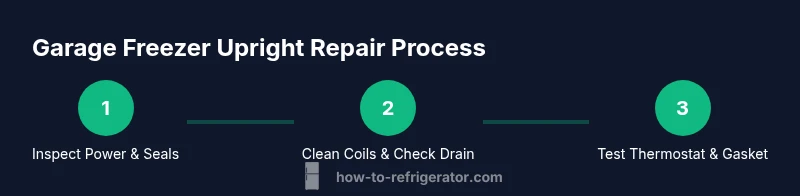
- 1
Unplug and Prepare
Disconnect the garage freezer upright from power and remove contents if needed. Wait 5–10 minutes before inspection to avoid moving parts while capacitors discharge. This pause reduces the risk of electrical shock during initial checks.
Tip: Label shelves and items so you can return them to their original spots later. - 2
Check the Door Gasket
Close the door on a lightweight sheet of paper at multiple points; if the paper slides out easily, the gasket is likely worn. Clean the gasket and run a simple water test to confirm a tight seal. Replace the seal if there are cracks or deformities.
Tip: A proper seal dramatically reduces warm air intrusion and frost formation. - 3
Inspect Condenser Coils
Locate the coils (usually behind a vented panel). Use a vacuum with a crevice tool or a soft brush to remove dust and debris. Avoid bending fins; if fins are damaged, consider a fin comb or professional service.
Tip: Dust-rich coils force the compressor to work harder, increasing energy use. - 4
Test Thermostat and Sensor
Verify the thermostat setting is appropriate for garage conditions. Use a thermometer to confirm that the interior temperature matches the dial setting within a few degrees. If readings are inconsistent, the thermostat or sensor may be faulty and require replacement.
Tip: Thermostats drift with time; recalibrate and replace if necessary. - 5
Inspect Defrost System and Drain
If your model has defrost components, inspect the heater, timer, and fuse for signs of failure. Check the defrost drain for blockages; clear with warm water and a pipe cleaner if needed. A blocked drain can cause frost to accumulate rapidly.
Tip: Keep the defrost drain clear to prevent interior ice buildup. - 6
Evaluate Interior Frost and Airflow
Excess interior frost or poor airflow suggests blocked vents or overfilled shelves. Clear frost with a controlled defrost if required (per model guidelines) and rearrange items to promote circulation. Ensure the fan is running smoothly during normal operation.
Tip: Avoid overpacking; proper airflow keeps temperatures stable. - 7
Reassemble and Test Run
Reconnect power, return contents, and monitor for 24–48 hours. Record temperatures and any frost redevelopment. If the unit performs as expected, you’ve completed a successful service cycle.
Tip: Document the results for accountability and future maintenance.
FAQ
What is a garage freezer upright and how is it different from a standard freezer?
A garage freezer upright is designed for variable garage temperatures and often has heavier insulation and a larger operating range. It may be frost-free or require manual defrost, and cooling components are configured for steadier performance in non-climate-controlled spaces.
A garage upright is built for tougher conditions than a typical kitchen freezer, with insulation and components suited to a garage. It may defrost differently and needs careful maintenance.
Why does frost form quickly in a garage freezer upright?
Frost forms faster when warm, humid air infiltrates through a worn door gasket, or when coils are dirty and cannot reject heat efficiently. Garage temperatures also swing, causing more frequent cycling and condensation on interior surfaces.
Frost happens when warm air sneaks in or the coils can’t reject heat well, especially in a humid garage.
How do I test thermometer accuracy in a garage freezer upright?
Place a known-temperature reference (such as a calibrated fridge thermometer) at the center of the freezer and compare readings 24 hours apart. If the readings differ by more than a few degrees, calibrate or replace the thermometer.
Use a trusted reference thermometer and compare readings over a day to verify accuracy.
Can I move or defrost a garage freezer upright safely during maintenance?
Yes, but unplug the unit first and use proper lifting techniques to avoid injury. For manual defrost, follow the manufacturer’s guidelines to avoid damaging components. If the frost is heavy, perform a controlled defrost rather than a rapid, forceful approach.
Unplug it and follow the manual for defrosting to stay safe and protect parts.
What’s the best defrost frequency for a garage upright?
Defrost frequency depends on model and environment. Manual defrost units may require a few times per year, while frost-free models minimize maintenance but still benefit from coil cleaning and seal checks. Follow the manufacturer’s schedule and monitor frost buildup.
Check your model’s defrost scheme and monitor frost growth to decide when to defrost.
Should I hire a professional for coil cleaning or electrical faults?
If you’re uncomfortable with electrical components, refrigerant lines, or cooling system diagnosis, a licensed HVAC or appliance technician is recommended. Simple coil cleaning and gasket replacement are often DIY-friendly for those with basic tools.
If in doubt about electricity or refrigerant, call a pro for safety and proper repair.
Watch Video
Top Takeaways
- Inspect seals and coils regularly to prevent frost and energy waste
- Use thermometer data to guide thermostat calibrations
- Keep the area around the garage freezer upright clear for optimal airflow
- Defrost drains must remain unobstructed to prevent ice buildup