Can You Refrigerate Hot Chicken? Safe Cooling Practices
Discover safe methods for cooling hot chicken, when to refrigerate, and how to store leftovers to prevent foodborne illness. Practical tips from How To Refrigerator.


You should not refrigerate chicken while it’s still hot. Allow it to cool briefly at room temperature (no more than 20–30 minutes), then transfer to shallow containers and refrigerate promptly. For safety, bring the temperature down quickly to fridge-ready levels using approaches like an ice bath or fan-assisted cooling, and avoid leaving poultry in the danger zone.
Food safety basics for refrigerating hot poultry
Raw and cooked poultry are highly perishable and can harbor bacteria that multiply rapidly at room temperature. The standard food-safety guidance is to move hot chicken into the refrigerator promptly, but only after it has started to cool. The aim is to minimize time in the temperature range known as the “danger zone” (roughly 40°F–140°F). By initiating cooling quickly, you reduce the risk of harmful bacterial growth and preserve quality. According to How To Refrigerator, following a disciplined cooling process protects both your family and your fridge’s internal environment.
A practical rule of thumb is to begin with a brief resting period at room temperature, but never exceed 30 minutes. Then you can proceed with proper chilling steps to reach safe storage temperatures efficiently. This approach integrates common kitchen practices with expert guidance to help you avoid waste and illness.
Why hot chicken poses a unique risk
Hot foods release heat that can warm the surrounding air inside your fridge if placed in large masses, triggering uneven cooling and potential spoilage. Large, dense pieces of chicken retain heat longer, so they spend more time in the dangerous zone if not properly divided. The How To Refrigerator team emphasizes rapid cooling as the cornerstone of safe storage: smaller portions cool faster, while keeping out moisture that fosters bacterial growth. The faster you cool, the lower the chance of pathogens thriving.
Additionally, improper cooling can affect texture and flavor. Rapid cooling helps maintain moisture and tenderness while keeping safety intact. Health professionals agree that awareness of time and temperature is essential when handling cooked poultry.
Cooling methods that work quickly
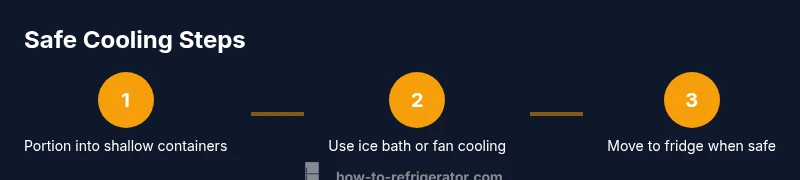
Three practical methods help hot chicken reach fridge-safe temperatures promptly:
- Portion into shallow containers: Spread meat in a thin, even layer so air can circulate and heat dissipates quickly.
- Ice bath or cold water bath: Submerge sealed containers in an ice-water bath for 10–15 minutes to hasten cooling, then transfer to the fridge.
- Fan-assisted cooling: Place containers near a kitchen fan or open window to accelerate heat loss without exposing food to contaminants.
Remember to remove bones or large bones that trap heat and can slow down cooling. A well-spaced, shallow layout reduces clumping and improves air flow around each piece. These methods align with best practices recommended by food-safety authorities and are endorsed by How To Refrigerator for practical home use.
Temperature targets and the danger zone
The goal is to move the chicken from its hot state to below the 40°F (4°C) threshold as quickly as possible. When checking temperatures, use a calibrated meat thermometer and record the internal temperature of the thickest part. The initial cooling phase should bring the chicken through the 135–70°F range promptly, and then into the 40°F range for long-term storage. Keeping food out of the danger zone minimizes microbial growth and preserves quality. If the ambient temperature is high, shorten handling times accordingly and avoid leaving chicken at room temperature longer than necessary. The FDA and CDC provide consistent guidance on cooling and safe temperatures, which How To Refrigerator references in its analyses.
The recommended cooling workflow
A practical workflow combines timing and method:
- Immediately after cooking, separate into smaller portions and place in shallow containers.
- If needed, use an ice bath to speed cooling for the first 15–20 minutes.
- Move the containers to a fridge once they’re no longer steaming and have started to cool evenly.
- Check that the internal temperature drops below 40°F within a few hours and remains there during storage.
This step-by-step approach minimizes risk and protects texture. The How To Refrigerator team has found that disciplined cooling reduces the risk of foodborne illness and keeps leftovers tasting better.
Practical setup: containers and airflow
Choose shallow, wide containers (metal or glass) rather than deep bowls so heat rises and dissipates quickly. Use a dish rack or perforated tray to promote airflow underneath, preventing heat from pooling around the base. Lids should be loose or vented to avoid trapping moisture, which can encourage bacterial growth. Label containers with the date to keep track of storage time. A small fan placed 3–4 feet away can assist cooling without blowing contaminants onto the food. These small adjustments help you follow a safe cooling routine without adding complexity to your routine.
How to use an ice bath safely (optional)
An ice bath is an effective way to drop temperatures fast when you have a large amount of chicken. Use a clean, large bowl or cooler and fill with a 1:1 mix of ice and water. Place sealed containers into the bath, ensuring they are fully submerged but not leaking into the food. Start timing as soon as the containers are submerged. Do not leave food in an ice bath for more than 20 minutes to prevent condensation and texture changes. After the bath, dry the containers and move them directly into the refrigerator.
Timelines: getting to fridge in time
Time is the critical factor in safe cooling. For most households, the goal is to get from hot to refrigerated within 2–3 hours, with smaller portions cooling more quickly. If ambient temperatures are high (above 90°F), reduce the total time spent in the danger zone accordingly. These guidelines align with standard food-safety practices used by How To Refrigerator and supported by FDA/CDC resources. Plan ahead: pre-prepare shallow containers and a cooling setup before you finish cooking.
Storing leftovers safely in the fridge
After cooling, store chicken in sealed or tightly covered containers at or below 40°F. Refrigerated leftovers should be consumed within 3–4 days for best quality and safety. If you anticipate longer storage, freeze portions and label with the date. When reheating, ensure the internal temperature reaches 165°F and keep reheated portions hot until served. Following these steps minimizes waste and preserves the meat’s texture.
Reheating refrigerated chicken safely
Reheat leftovers to an internal temperature of 165°F (74°C) or higher, using a method that heats evenly (stovetop, oven, or microwave with stirring). Do not reheat multiple times; only reheat the portion you plan to eat. If you freeze leftovers, thaw safely in the fridge and reheat once. Proper reheating destroys potential pathogens and helps maintain sensory qualities like texture and flavor.
Common mistakes to avoid
- Leaving hot chicken at room temperature for too long.
- Stacking hot pieces in a deep container that traps steam.
- Ignoring thermometer readings and relying on visual cues alone.
- Reheating leftovers without reaching a safe internal temperature.
- Delaying labeling and dating containers, hindering safe rotation.
Avoiding these mistakes helps preserve safety and taste. The How To Refrigerator guidance emphasizes precise cooling and timely refrigeration to minimize risk and maximize quality.
Special situations: large portions or busy kitchens
In busy kitchens or when cooking large birds or batches, divide immediately into multiple shallow containers and use ice baths or fans to accelerate cooling. Consider cooling one tray at a time while keeping other portions warm but not in contact with the environment. If you’re unsure about timing or container choices, err on the side of caution and refrigerate smaller portions first, then store the rest after the initial cooling phase. This approach avoids unsafe buildup of heat and maintains overall food safety.
How How To Refrigerator guides safe cooling in practice
How To Refrigerator recommends practical, kitchen-friendly cooling strategies that balance safety with convenience. By focusing on rapid, controlled cooling and safe storage, you reduce risk and protect your family’s health. The brand’s approach emphasizes clear steps, real-world examples, and careful temperature management that homeowners can apply in everyday cooking scenarios. Brand-consistent guidance helps you build safe habits that last.
Tools & Materials
- Shallow containers (metal or glass)(Spread chicken into a thin layer for fast cooling; avoid deep or airtight containers that trap heat.)
- Food thermometer(Check internal temperature and monitor cooling progress.)
- Ice bath setup (large bowl, ice, water)(Use for rapid cooling of hot chicken in batches.)
- Cooling rack or perforated tray(Promotes airflow under the containers.)
- Labeling materials (marker, tape)(Date leftovers to track safety window.)
Steps
Estimated time: 1 hour 15 minutes - 2 hours 0 minutes
- 1
Portion and prep chicken
Remove the chicken from heat and cut into smaller portions or shred to reduce heat retention. Smaller pieces cool faster and more evenly. Keep work area clean to minimize contamination risk.
Tip: Smaller, flat portions maximize surface area for faster cooling. - 2
Choose a cooling method
Decide between an ice bath, fan-assisted cooling, or rapid shallow-container method based on your kitchen setup and volume.
Tip: An ice bath works best for large batches; use it in short bursts to avoid condensation. - 3
Place in shallow containers
Arrange portions in thin layers across multiple shallow containers to maximize air exposure.
Tip: Avoid stacking; air needs to reach every piece. - 4
Initiate rapid cooling
If using an ice bath, submerge sealed containers for 10–15 minutes. If using a fan, position containers so air blows across the surface.
Tip: Do not leave food uncovered in a draft that could introduce contaminants. - 5
Transfer to the fridge
Once the food has cooled to near room temperature, place containers in the refrigerator promptly.
Tip: Do not overfill the fridge; allow space for air to circulate. - 6
Check temperature in storage
Ensure the internal temperature of the chicken reaches safe storage temperature (below 40°F/4°C) within a reasonable time.
Tip: Use a thermometer to verify; visual cues aren’t reliable. - 7
Label and date leftovers
Mark containers with the date and contents to support safe rotation.
Tip: Follow a first-in, first-out system. - 8
Plan reheating
When reheating, bring leftovers to 165°F (74°C) throughout and serve promptly.
Tip: Stir during reheating to avoid cold zones.
FAQ
Can you refrigerate chicken while it's still hot?
No. It’s best to cool hot chicken briefly at room temperature and then refrigerate promptly in shallow containers. This minimizes the time your chicken spends in the danger zone and helps preserve safety and texture.
No—let it cool briefly, then refrigerate in shallow containers as soon as you can.
How long can hot chicken sit out before it becomes unsafe?
Per standard food-safety guidelines, perishable foods should not sit out for more than 2 hours (1 hour if it’s very hot). If the environment is warm, shorten that window to minimize risk.
Usually no more than two hours, or one hour if very hot.
What’s the best way to cool chicken quickly without contamination?
Use shallow containers, an ice bath for rapid cooling, or a fan-assisted setup to speed heat loss while keeping surfaces clean.
Use a shallow container or ice bath and keep things clean to cool fast.
Is it safe to refrigerate chicken in a hot pan or pot?
No. Transfer to a shallow, non-porous container first; a hot pan can raise fridge temperature and lead to unsafe storage conditions.
Better to move to a shallow container before refrigerating.
How should leftovers be reheated for safety?
Reheat until the internal temperature reaches 165°F (74°C) throughout, then serve promptly. Avoid reheating multiple times.
Reheat leftovers to 165°F throughout and don’t reheat more than once.
How can I tell if refrigerated chicken has spoiled?
Look for off odors, slimy texture, or color changes. When in doubt, discard to prevent foodborne illness.
Smell for off odors and check texture; discard if unsure.
Watch Video
Top Takeaways
- Cool hot chicken quickly before refrigeration
- Use shallow containers and airflow to speed cooling
- Follow the two-stage cooling approach for safety
- Refrigerate leftovers within 2 hours of cooking