Can You Put Hot Food in the Refrigerator? Safe Cooling Guide
Discover safe cooling practices for hot foods, including cooling times, container choices, fridge placement, and practical steps to prevent bacterial growth.


Yes, you can put hot food in the refrigerator, but only after it’s cooled enough to prevent warming other foods. Move hot dishes into shallow containers to speed cooling, keep the fridge at 35–40°F, and don’t crowd the shelves. This approach minimizes bacterial growth and helps maintain appliance efficiency.
Safe cooling basics
Many homeowners ask can you put hot food in the refrigerator, and the answer hinges on food safety and appliance performance. The short version is yes, but only if you cool the food quickly and store it properly. The goal is to minimize the time the food spends in the temperature danger zone (roughly 40°F to 140°F or 4°C to 60°C), where bacteria multiply fastest. How the fridge behaves depends on its design, the amount of food inside, and how you raise the food's surface area for cooling. In practice, you want to transition hot foods from a cooking vessel to a collection of shallow containers, spreading the heat across a wide area so the internal temperature drops rapidly. This approach not only makes the food safe to enter the refrigerator but also helps maintain the quality and texture of other items on your shelves. According to How To Refrigerator, following a structured cooling routine reduces the risk of foodborne illness and keeps your fridge running efficiently.
Temperature targets and timing
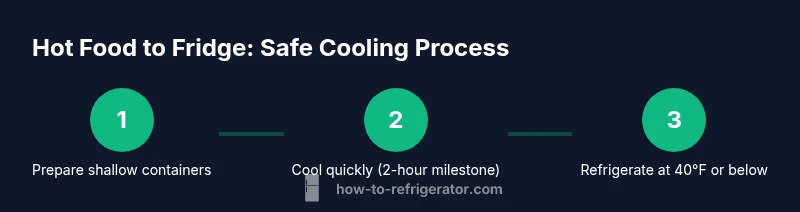
Food safety guidance commonly centers on two cooling milestones. First, hot foods should reach 70°F (21°C) within two hours; then, the remaining cooling should bring the item to 40°F (4°C) or below within four hours total. This two‑stage cooling rule minimizes time spent in the temperature danger zone and reduces bacterial growth. Real-world factors—like the size of the dish, the starting temperature, and your refrigerator’s efficiency—will influence the exact timing. Using shallow containers, a rapid but gentle spread of heat, and a thermometer helps you stay on track. The bottom line is: quick, deliberate cooling supports safety while protecting other foods in your fridge.
Equipment and container choices
Choosing the right containers matters. Use shallow, wide containers to maximize surface area and speed up cooling. Stainless steel or BPA-free plastics with tight-fitting lids are ideal; lids should be loose enough to vent steam if needed. A cooling rack or tray under containers can prevent heat buildup on shelves. A food thermometer is essential to verify that foods have passed through the danger zone and reached safe temperatures before full refrigeration. Small portions cool faster than large, dense masses, so consider dividing leftovers into multiple shallow containers. Finally, label items with date and contents to track freshness and avoid waste.
Cooling methods and practical approaches
Air cooling on a counter is not a good option for long cooling when temperatures are warm. Instead, aim for rapid, safe cooling using practical methods. If you’re starting with hot soups, stews, or rice, place them in shallow pans and rest them on a cool surface away from direct heat sources. For stubbornly hot batches, an ice-water bath around the outer container can help reduce surface temperature quickly, but never immerse sealed containers in ice water, as liquid can leak and contaminate. A fan or cold air moving across the containers can also help, provided you maintain clean, food-safe surfaces. The goal is to move heat out of the food efficiently so it reaches safe refrigeration temperatures sooner rather than later.
Fridge placement and organization
Once cooled to safe levels, store hot foods on shelves rather than the fridge door, where temperatures fluctuate most. Do not stack or crowd containers, which slows down cooling and raises the risk of cross‑contamination. Group similar items together and leave space around containers for air to circulate. If your fridge is very full, consider temporarily transferring extra portions to a secondary cooler to maintain proper cold zones. Regularly check door seals and keep the fridge temperature steady around 35–40°F (1.7–4.4°C) to protect all stored foods.
What to do with different foods
Different foods require different handling. Soups and stews are often best in wide, shallow containers. Cooked grains and pasta cool quickly when spread thinly and stirred occasionally. Meat, poultry, and fish should be cooled rapidly and stored in small portions to avoid reheating large blocks later. Rice and dairy products should be cooled and stored promptly to prevent bacterial growth. For sauces and gravies, cool in shallow pans and transfer to airtight containers once you confirm they’re below 40°F. Following these guidelines helps ensure safe storage without compromising flavor or texture.
Common mistakes and how to avoid them
A frequent error is leaving hot food on the counter for too long. The two-hour rule matters: never exceed two hours at room temperature before refrigeration. Crowd the fridge with hot pots, which can warm nearby items and delay cooling. Don’t use a top-heat source like a stove or oven rack to speed cooling inside the fridge; this can create hot spots and uneven cooling. Finally, avoid guessing temperatures; use a thermometer and log temperatures to verify that foods pass through 70°F and then reach 40°F promptly. Consistency matters for long-term food safety.
Quick-start checklist for hot foods
- Move hot foods to shallow containers immediately after cooking.
- Spread out to maximize surface area for faster cooling.
- Use a thermometer to confirm 70°F within 2 hours and 40°F within 4 hours total.
- Place cooled foods on separate shelves away from door airflow.
- Label with date and contents; don’t exceed recommended storage times.
- Avoid placing large, heavy containers directly on shelves; use a rack if possible.
- Clean surfaces and containers between uses to prevent cross‑contamination.
Reheating and leftovers guidelines
When reheating leftovers, bring leftovers to at least 165°F (74°C) to ensure safety before serving. Store leftovers in small portions and use within 3–4 days for best quality. Reheat only the portion you intend to eat, not the whole batch, to minimize repeated cooling and reheating cycles. If you’re unsure whether leftovers reached the safe temperature, reheat until steaming hot and check with a thermometer. Good reheating practices help maintain flavor while ensuring safety.
Final reminders: routine and maintenance
Developing a routine around cooling hot foods supports ongoing safety. Regularly audit your fridge’s temperature with an appliance thermometer and calibrate if needed. Keep containers clean and organized, avoid overcrowding, and train household members on proper cooling steps. A consistent approach reduces the risk of foodborne illness and keeps your kitchen running smoothly. The How To Refrigerator team emphasizes that safe cooling is a repeatable habit, not a one-off task.
Tools & Materials
- Shallow, wide containers(4–6 cup capacity per portion; metal or BPA-free plastic)
- Food thermometer(Verify internal temperatures after cooling; calibrated)
- Loose-fitting lids or foil(Vent steam; helps keep moisture in when appropriate)
- Cooling rack or tray(Elevates containers for air circulation)
- Timer or smartphone(Track cooling milestones (2-hour and 4-hour marks))
- Measuring cups or scale(Helpful for portioning food quickly)
- Ice bath setup (optional)(For very hot foods needing rapid initial cooling, use with care)
Steps
Estimated time: 30-60 minutes for prep and initial cooling; total time to reach 40°F may take 2-4 hours depending on batch size
- 1
Transfer to shallow containers
As soon as cooking ends, move hot foods into shallow, wide containers to maximize surface area. Do not leave large, heavy pots on the counter for extended periods. Spreading heat out speeds cooling and reduces the chance of entering the temperature danger zone.
Tip: Aim for a depth of no more than 2 inches to encourage fast, even cooling. - 2
Begin rapid cooling
If possible, place containers on a cool surface away from direct heat and open air. Use an ice bath around the outside of the container for very hot foods, but do not submerge or seal containers in ice to avoid contamination and spills.
Tip: Stir gently once the surface cools to promote uniform cooling. - 3
Check milestone temperatures
Use a food thermometer to verify the food drops below 70°F (21°C) within two hours. Then continue cooling to 40°F (4°C) or lower within the next two hours. Timing is key to minimize bacterial growth.
Tip: Keep a timer handy and document the temperatures for quality control. - 4
Refrigerate promptly
Once foods reach safe temperatures, transfer them to the main refrigerator shelves, preferably away from the door to reduce exposure to warm air. Do not stack while still warm; allow space for air to circulate.
Tip: Label items with date and contents to avoid overgrowth and waste. - 5
Reheat safely later
When reheating leftovers, heat to at least 165°F (74°C) throughout. Reheat only the portion you will eat, and refrigerate any remaining portions promptly after reheating.
Tip: Use a thermometer to confirm safe reheating temperatures.
FAQ
Can hot soup be placed directly in the fridge?
Directly placing very hot soup into the fridge is not recommended. It can raise the fridge temperature and affect other foods. Instead, cool it in shallow containers or an ice bath briefly before refrigerating.
Directly putting hot soup in the fridge isn't recommended. Let it cool a bit in shallow containers before refrigerating.
What is the ideal fridge temperature for storing cooled foods?
Keep the refrigerator at 35–40°F (1.7–4.4°C). This range supports safe storage for most leftovers and reduces bacterial growth.
Aim for about 35 to 40 degrees Fahrenheit inside your fridge.
How long can hot food sit before refrigeration?
Hot foods should not sit out for more than two hours. In hot environments, cap that down to one hour to be extra safe.
Don't leave hot food out for more than two hours, or one hour in hot environments.
Is it better to refrigerate in large pots or small portions?
Small portions in shallow containers cool faster and more evenly than large pots. Avoid placing large volumes directly in the fridge when hot.
Small portions cool faster; avoid dumping large pots into the fridge when hot.
Can I use an ice bath to cool food in the fridge?
An ice bath around the outside of containers can speed cooling, but do not submerge or seal containers if there is any risk of leaks or contamination.
An ice bath around the container can help cool faster, but don’t submerge sealed containers.
What should I refrigerate first when the fridge is crowded?
Prioritize foods that are closest to room temperature and those with higher risk (meats, dairy, leftovers). Spread them across shelves to encourage rapid cooling.
Put the higher-risk foods on shelves spread out for better cooling.
Watch Video
Top Takeaways
- Cool hot foods quickly in shallow containers
- Follow the 2-hour and 4-hour cooling milestones
- Store cooled foods on internal shelves away from the door
- Use a thermometer to verify temperatures before long-term storage
- Reheat leftovers to 165°F before consuming