When to Refrigerate Cooked Chicken: Safe Storage Guide
Learn exactly when to refrigerate cooked chicken, how long it lasts, and best storage practices. This How To Refrigerator guide covers temps, labeling, reheating, and common mistakes to prevent foodborne illness.


To keep cooked chicken safe to eat, refrigerate it within two hours of cooking (one hour if the room is above 90°F). Store in airtight containers or wrap tightly, and keep it at 40°F (4°C) or lower. In the fridge, cooked chicken stays fresh for about 3-4 days when properly stored.
Why Proper Refrigeration Matters
Understanding when to fridge cooked chicken is a core food-safety skill for any home cook who wants to prevent illness and reduce waste. When you finish cooking, your top priority is cooling quickly and keeping the meat below the dangerous temperature zone. This is not just a chore for professional kitchens; it’s a practical habit for families at home. According to How To Refrigerator, keeping perishable foods at 40°F (4°C) or lower minimizes bacterial growth. This simple rule pays off in flavor, texture, and safety, because warm meat left out too long can become unsafe to eat even if it looks and smells fine. So, learn the timing, set a routine, and treat fridge safety as a nonnegotiable step in meal prep.
The science behind refrigeration is straightforward: bacteria multiply rapidly in the “danger zone” between 40°F and 140°F (4°C and 60°C). By bringing the temperature down quickly and maintaining a cold environment, you slow or halt this growth. That matters most for poultry, whose juices can carry bacteria more readily than some other foods. Mastering the basics of safe storage makes family meals less risky and reduces waste from forgotten leftovers.
Safe Timeframes for Cooked Chicken in the Fridge
When you want to know how long cooked chicken can be safely stored, the key guideline is the 40°F (4°C) rule plus a practical timeframe. Cooked chicken stored in airtight containers or wrapped tightly will stay safest for about 3-4 days in a consistently cold fridge. If your refrigerator temperature drifts above 40°F (4°C), even by a small amount, the safe window shortens and the risk of spoilage rises. How To Refrigerator Analysis, 2026 notes that consistent temperatures around 34-40°F (1-4°C) optimize shelf life for leftovers like chicken. Beyond the safety window, quality also declines quickly—texture can become rubbery or dry, and flavors fade. If you notice anything off, rely on your senses and err on the side of caution.
For households that plan ahead, freezing is a viable option to extend storage time. In general, cooked chicken freezes well and retains quality for several months when properly packaged. The critical factor remains protection from freezer burn and exposure to air, which means using airtight containers or freezer bags and labeling with the date. Even with freezing, avoid leaving leftovers at room temperature for extended periods before going to the freezer; the faster you chill, the better.
How to Store Cooked Chicken Correctly
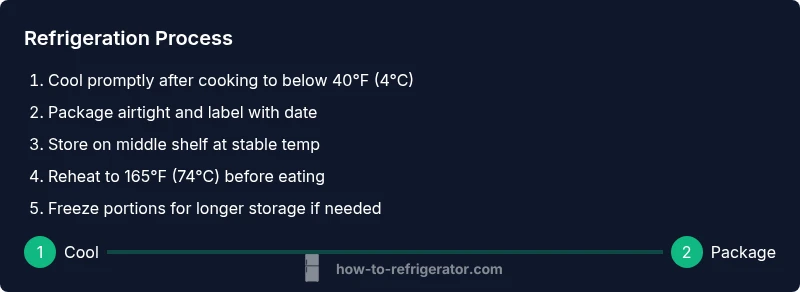
Storage starts with cooling, packaging, and labeling. Here are the best practices to ensure safety and quality:
- Cool quickly: Within two hours of cooking, or one hour if ambient temperatures are above 90°F, move leftovers into a shallow container to speed chilling.
- Package securely: Use airtight containers or wrap tightly with plastic wrap and a layer of foil to limit air exposure.
- Label clearly: Write the date on each container or bag so you can track freshness and avoid guessing.
- Place strategically: Store cooked chicken on the middle shelf where temperatures stay most stable, not on the fridge door where heat fluctuates.
- Separate from raw foods: Avoid cross-contamination by storing cooked chicken away from raw poultry and other raw meats.
Signs of Spoilage and When to Discard
Rely on a combination of time, temperature, and senses. If chicken smells sour or off, shows a slimy texture, or has unusual color (greenish tint or gray patches), discard it. Mold growth (even small spots) means it must be thrown away. Any doubt about storage conditions means erring on the safe side and discarding. Always check the date and review storage conditions if you’re uncertain about how long something has been in the fridge. Inconsistent refrigeration, prolonged exposure to room temperature, or previous damage to packaging can shorten safe storage time even further.
If leftovers look or smell questionable, do not taste test to check safety. Foodborne pathogens may be present without obvious changes in appearance or odor. When in doubt, throw it out and sanitize surfaces to prevent cross-contamination.
Freezing Cooked Chicken and Thawing Guidelines
Freezing cooked chicken is a reliable way to extend shelf life while preserving flavor and texture. For best results:
- Package tightly: Use airtight containers or heavy-duty freezer bags, removing as much air as possible.
- Label and date: Indicate the storage date so you can monitor duration.
- Freeze time frame: Cooked chicken generally retains quality for 2-6 months in a freezer, depending on the cut and packaging quality.
- Thaw safely: Thaw in the refrigerator overnight, or use the defrost setting in a microwave if you plan to reheat immediately. Avoid thawing at room temperature, which allows bacteria to multiply rapidly.
- Reheat after thawing: Reheat to 165°F (74°C) throughout before consuming.
Remember, once cooked chicken is thawed in the refrigerator, it should be eaten within 3-4 days. Do not refreeze thawed chicken unless it was cooked first after thawing.
Reheating Cooked Chicken Safely
Reheating is a common step that deserves care. To ensure even heating:
- Use a thermometer: Reheat until the internal temperature reaches 165°F (74°C) throughout.
- Choose a method: Oven or stovetop methods often yield even heating; microwaving is convenient but may heat unevenly.
- Cover when reheating: Use a microwave-safe lid or foil to retain moisture and heat evenly.
- Don’t overheat: Excessive reheating can degrade texture and flavor.
- Reheat only once: Reheating multiple times increases the risk of bacterial growth and quality loss.
If the chicken was previously stored correctly and reheated to the safe temperature, leftovers can be enjoyed with confidence. Always test the center of the portion and verify the temperature before serving.
Common Mistakes and Quick Fixes
Even small missteps can ruin leftovers. Common mistakes include leaving chicken out at room temperature for too long, not cooling quickly, storing in a nonairtight container, and mixing raw with cooked foods in the same storage. Quick fixes include moving leftovers to the fridge promptly, transferring to airtight containers, and labeling with dates to avoid mystery leftovers. Regularly checking fridge temperatures helps maintain a safe environment for all perishable foods. If you find you frequently forget leftovers, set reminders or designate a specific shelf for cooked proteins to simplify planning and safety.
Tools & Materials
- Airtight containers (glass or BPA-free plastic)(Choose containers with tight seals to prevent moisture loss and contamination.)
- Plastic wrap or aluminum foil(For additional barrier when storing in bowls or plates.)
- Permanent marker(Label dates on containers or bags.)
- Fridge thermometer(Helps verify the fridge stays near 40°F (4°C).)
- Freezer bags or airtight freezer-safe containers(Use for freezing portions.)
- Food-grade bags for portioning(Helpful for batch freezes and thawing portions)
Steps
Estimated time: 25-40 minutes
- 1
Prepare and cool the chicken
Cool cooked chicken promptly after cooking by transferring to a shallow container to speed up cooling. This reduces the time spent in the danger zone and makes refrigeration faster. Allow the food to reach at least 70°F (21°C) within 1 hour.
Tip: Spread into thin layers or use multiple shallow containers for rapid cooling. - 2
Package securely for storage
Seal the chicken in airtight containers or wrap tightly with plastic wrap and foil. Minimize air exposure to prevent drying and freezer burn if you plan to freeze. Ensure containers are clean and dry before adding the leftovers.
Tip: Remove as much air as possible from bags before sealing. - 3
Label the date and store on a stable shelf
Label each container with the date and place them on the middle shelf where temperature is most stable. Avoid fridge doors where temperature fluctuates with every opening.
Tip: Date labels help you prioritize usage and reduce waste. - 4
Check fridge temperature
Confirm your fridge is at or below 40°F (4°C). If you don’t have a thermometer, consider investing in one to prevent accidental temperature rises that shorten shelf life.
Tip: A small investment prevents large waste and health risks. - 5
Plan for reheating
When ready to eat, reheat to 165°F (74°C) and check with an instant-read thermometer. Reheat in small portions to ensure even heating and avoid overheating.
Tip: Stir or turn portions for uniform warmth. - 6
Use within the safe window
Aim to consume refrigerated leftovers within 3-4 days. If freezing, store for longer and thaw safely in the fridge before reheating.
Tip: When in doubt about freshness, err on the side of caution and discard. - 7
Freeze for longer storage
If you won’t eat leftovers within a few days, freeze them in airtight portions. Frozen cooked chicken is best within 2-6 months for quality and safety.
Tip: Label each bag with the date and portion size for easier use. - 8
Avoid re-freezing thawed leftovers
Only thaw what you plan to use; refreezing thawed chicken compromises quality and can pose safety risks. If you thaw in fridge, keep refrigerated and use within 3-4 days.
Tip: Thaw gradually in the fridge for best results.
FAQ
How long can cooked chicken stay in the fridge?
Typically 3-4 days when stored properly at 40°F (4°C) or lower. If the fridge temp drifts upward, use within a shorter window.
Cooked chicken usually lasts about 3 to 4 days in the fridge if kept at the right temperature.
Can I store cooked chicken at room temperature?
No. Do not leave cooked chicken out for more than two hours, or one hour if temperatures are above 90°F.
Leftover chicken should not sit out at room temperature for more than two hours, or one hour in hot weather.
Can I freeze cooked chicken?
Yes. Freeze cooked chicken in airtight containers or bags. For best quality, use within 2-6 months.
Yes, you can freeze cooked chicken; just seal it well and use within a few months for best quality.
Should I reheat leftovers more than once?
Ideally, reheat only once to a safe temperature. Reheating multiple times increases safety risks and may degrade quality.
Try to reheat leftovers only once to 165°F, then discard any remaining portions.
What is the safe reheating temperature for chicken?
Reheat until the internal temperature reaches 165°F (74°C) throughout.
Heat the chicken until it’s 165 degrees Fahrenheit all the way through.
What should I do if the chicken looks okay but smells off?
Trust your senses; if it smells sour or off, discard even if the appearance seems fine.
If it smells off, it’s safer to discard it rather than risk illness.
Watch Video
Top Takeaways
- Store promptly at 40°F (4°C) or below
- Use airtight containers and date-label leftovers
- Eat refrigerated leftovers within 3-4 days
- Reheat to 165°F (74°C) before serving
- Freeze portions for longer storage in airtight packaging