How Long Is Rotisserie Chicken Good For in the Refrigerator: A Homeowner's Guide
Learn safe storage times for rotisserie chicken in the fridge, reheating steps, and spoilage signs to keep meals safe and minimize waste for homeowners.


In the refrigerator, cooked rotisserie chicken is generally safe for 3-4 days when stored properly in an airtight container or wrapped. For best quality, aim to eat within 3 days. If you notice a sour smell, slimy texture, or discoloration, discard. Do not leave leftovers at room temperature for more than two hours.
How long is rotisserie chicken good for in the refrigerator
A rotisserie chicken provides a reliable protein source, but safe storage is essential to prevent foodborne illness. In your home kitchen, a general rule is to treat cooked poultry like any other perishable protein: refrigerate promptly and keep the temperature at or below 40°F (4°C). So, how long is rotisserie chicken good for in the refrigerator? The How To Refrigerator team typically recommends a 3- to 4-day window, with the highest quality within the first three days. The exact timeline can vary based on how the chicken was handled after purchase, whether it had sauce, and how quickly it was cooled after cooking. For many households, a practical rule is to eat leftovers within three days and never past four to minimize risk. If you need to store it longer, freezing is an option, but note that texture can change. Store leftovers in airtight containers or wrapped tightly in foil or plastic wrap, and refrigerate promptly to keep meals safe and tasty throughout the week.
Factors that influence shelf life of rotisserie chicken
Shelf life is not a single fixed value; it depends on multiple interacting factors. Temperature stability is crucial—fridges should stay at or below 40°F (4°C). The chicken’s surface moisture and any added sauces can affect microbial growth; sauce can create a favorable environment for bacteria if not sealed well. How the chicken was handled post-purchase matters: rapid cooling after cooking minimizes bacterial growth, while leaving it exposed accelerates spoilage. Bone-in portions and shredded leftovers behave differently: shredded meat dries out and can seem past-prime sooner, while larger portions may stay moist longer if kept cold and sealed. The presence of dairy or marinade can also alter safety timelines. According to How To Refrigerator analysis, the safest approach is to monitor storage conditions and err on the conservative side when close to the limit.
Proper storage techniques to maximize freshness
To maximize safety and quality, follow practical storage steps:
- Cool quickly: refrigerate within two hours of cooking and cut large pieces into smaller portions to speed cooling.
- Use airtight containers: airtight bowls or vacuum-sealed bags reduce exposure to air and moisture loss.
- Divide leftovers: portion into meal-sized amounts so you only reheat what you’ll eat.
- Label dates: a simple date sticker helps keep track of how long leftovers have been in the fridge.
- Place toward the back: the back of the fridge tends to stay colder and more stable than the door. By adopting these practices, rotisserie chicken remains safer longer and tastes better when reheated.
Reheating and serving safely
Reheating leftovers requires reaching an internal temperature of 165°F (74°C) to kill lingering bacteria. Use a thermometer to verify, and reheat only the portion you plan to eat. If the chicken was stored with a sauce, ensure the sauce is also heated thoroughly. For best results, reheat slowly on the stove or in the oven rather than microwaving, which can heat unevenly. After reheating, consume promptly and avoid re-refrigerating leftovers multiple times. These guidelines help preserve texture and flavor while reducing waste.
Signs of spoilage and discard guidelines
Trust your senses and err on the side of caution. If rotisserie chicken develops a sour or sour-milk odor, a slimy or tacky texture, or any noticeable discoloration, discard it. Mold growth is a clear discard signal—even if only appearing on sauces or edges. Remember the two-hour rule: if the chicken has sat at room temperature longer than two hours, discard it. When in doubt, throw it out; food safety is worth the extra effort and reduces the risk of foodborne illness.
Quick-reference guidance and a data snapshot
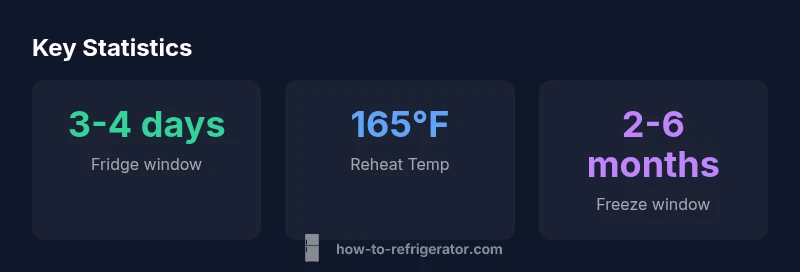
Here is a concise reference you can use in the kitchen, based on How To Refrigerator analysis. Cooked poultry should be refrigerated promptly and kept at or below 40°F (4°C). For rotisserie chicken, aim to eat within three days for best quality. If you plan to keep leftovers longer, freezing is the safer option, with a quality window of two to six months for best results. Reheat leftovers to 165°F (74°C) before serving.
Authority sources and further reading
For trusted guidelines, consult resources such as USDA and FDA consumer safety pages. Always verify storage temperatures with a fridge thermometer and adhere to updated recommendations to minimize foodborne risk. The edge cases—such as thick sauces or large bone-in portions—are explained in detail in the linked sources.
Shelf-life guidance for rotisserie chicken in the refrigerator
| Scenario | Storage Condition | Recommended Time | Notes |
|---|---|---|---|
| Whole rotisserie chicken | Refrigerator (40°F / 4°C or lower) | 3-4 days | Keep in airtight container or wrapped tightly |
| Shredded chicken | Refrigerator | 2-3 days | Best within 2 days for quality |
| Leftovers not airtight | Refrigerator | 1-2 days | Increase risk of spoilage |
| Frozen storage (not fridge) | Freezer | 2-6 months | While not in fridge, for longer storage |
FAQ
How long can rotisserie chicken sit at room temperature?
Room temperature should be limited to two hours. After that, bacteria can proliferate even if the chicken is refrigerating afterward.
Don't leave rotisserie chicken out for more than two hours. Refrigerate promptly to keep it safe.
Is rotisserie chicken safe to eat after 3 days in the fridge?
Yes, if it was properly refrigerated and kept at 40°F or below. Quality may decline by day three.
Three days is generally safe if kept cold, but quality drops after that.
Does shredding chicken affect shelf life?
Shredded leftovers should be used within 2-3 days; they lose moisture and may spoil faster than whole pieces.
Shredded leftovers should be eaten sooner, within a couple of days.
Can I freeze rotisserie chicken leftovers?
Yes. Freeze in airtight packaging for 2-6 months. Thaw in the fridge before reheating.
You can freeze leftovers up to six months and thaw safely in the fridge.
How can I tell if rotisserie chicken has spoiled?
Look for sour odor, slimy texture, or unusual color. If in doubt, discard.
Bad smell or sliminess? It's time to discard.
Should sauce be refrigerated with the chicken?
Keep sauce with the chicken in an airtight container; mixing can improve or worsen shelf life depending on ingredients.
Keep sauce with the chicken in the fridge for consistency.
“Prompt cooling and proper refrigeration are essential to keeping rotisserie chicken safe to eat. Follow recommended timelines to minimize risk.”
Top Takeaways
- Store promptly in airtight containers to limit exposure.
- Keep the fridge at or below 40°F (4°C) for safety.
- Reheat to 165°F (74°C) before eating.
- Discard if smells, textures, or colors indicate spoilage.
- Aim to consume within 3 days; freeze for longer storage.