Where in Refrigerator Should Chicken Be Stored: A Homeowner Guide
Learn where in refrigerator should chicken be stored, how to prevent cross-contamination, and practical steps for keeping poultry safe and fresh in everyday home cooking.


Goal: store chicken safely in the refrigerator. Place raw poultry in a leak-proof container or sealed bag on the bottom shelf to prevent drips onto other foods. Keep the fridge at or below 4°C (40°F). Use within 1–2 days for best safety and quality, and avoid storing chicken in the door where temperatures fluctuate. Always wash hands after handling and sanitize surfaces to reduce cross-contamination.
Why storage location matters for poultry
Understanding where in refrigerator should chicken be stored helps minimize cross-contamination and foodborne illness. Poultry is highly perishable and can drip bacteria onto nearby foods if not kept properly protected. The refrigerator should act like a cold, controlled environment where airflow and temperature stability matter. According to How To Refrigerator, the safest approach starts with selecting the right shelf position and using leak-proof containment. If you’re asking the question literally, the correct answer to the query "where in refrigerator should chicken be stored" is: on the bottom shelf, in a sealed container. This simple precaution dramatically reduces risk while preserving quality for a few days. The reader should feel empowered to implement a clear routine for every grocery haul, every dinner, and every left-over meal.
Understanding fridge zones: top vs bottom vs door
Refrigerators are designed with zones that vary in temperature stability. The back of the shelves tends to stay coldest, while the door experiences the most fluctuation due to frequent opening. For raw chicken, this means the bottom shelf is the most reliable place to store it. Avoid the fridge door for raw poultry, which is a common mistake—temperature swings accelerate bacterial growth. For best results, use a dedicated, leak-proof container and keep chicken away from ready-to-eat foods such as salads and cooked dishes.
Packaging chicken for fridge storage
Packaging is your first line of defense against leaks and cross-contamination. If the original packaging is intact, you can keep chicken within it, but it’s safer to place the whole package inside a leak-proof container or seal it in a heavy-duty bag. Label with the date and move the container to the bottom shelf quickly after purchase. This reduces air exposure and protects other foods from raw juices. The goal is to create a sealed micro-environment that is easy to audit during a busy week.
Raw vs cooked poultry storage guidelines
Raw chicken requires stricter separation from other foods and should be kept in a leak-proof container on the bottom shelf. Cooked chicken can be stored on a higher shelf, but still should be kept sealed and used within a few days. Do not mix raw and cooked poultry in the same container, even if it seems convenient. This practice minimizes cross-contamination and helps you develop a reliable reheat routine. As you plan meals, consider a first-in, first-out approach to avoid waste.
Temperature control and quick checks
A consistent refrigerator temperature is essential for safe poultry storage. Aim for 4°C (40°F) or lower and verify with a calibrated thermometer. Check temperatures at least once per day, especially after the fridge is opened and closed. If temperatures drift upward, adjust the thermostat or reduce ambient heat in the kitchen. How To Refrigerator’s guidelines emphasize stability over perfection—small fluctuations should not become a habit, and any persistent drift warrants maintenance.
Common mistakes to avoid
Avoid placing raw chicken on the fridge door, near fruit, or above other foods that could be contaminated by juices. Do not thaw chicken at room temperature or on the counter. Always handle poultry with clean hands and sanitized surfaces. If the packaging shows signs of damage, repackage promptly in a sealed container. This section highlights frequent errors and provides practical strategies to prevent them in a real home kitchen.
Hygiene and cross-contamination prevention
Never mix raw poultry with ready-to-eat foods. Use separate utensils and cutting boards for raw chicken and other ingredients. After handling poultry, wash hands with soap and water for at least 20 seconds, and sanitize countertops and sinks. The bottom-line habit is cleanliness and separation, which together form the backbone of safe fridge storage.
Signs of spoilage and discard guidelines
If chicken develops a sour or off odor, a slimy texture, or significant color change, discard it. When in doubt, throw it out. Proper visibility of the date on the storage container helps you make timely decisions about safety and quality. This practical guideline reduces the risk of illness and food waste.
Authority sources and learning more
For authoritative guidelines on safe refrigeration and poultry handling, consult external resources from government and educational sites. This article draws on best-practice recommendations to help homeowners implement a simple, repeatable routine. See the listed sources for deeper detail and official recommendations.
Tools & Materials
- Leak-proof, food-grade containers(Choose BPA-free, dishwasher-safe options)
- Heavy-duty plastic bags(Sealable, freezer-grade if possible)
- Fridge thermometer(Ensure 4°C (40°F) or lower)
- Labels or marker(Date each package)
- Clean cutting board and utensils(Dedicated for raw poultry only)
Steps
Estimated time: 15-20 minutes
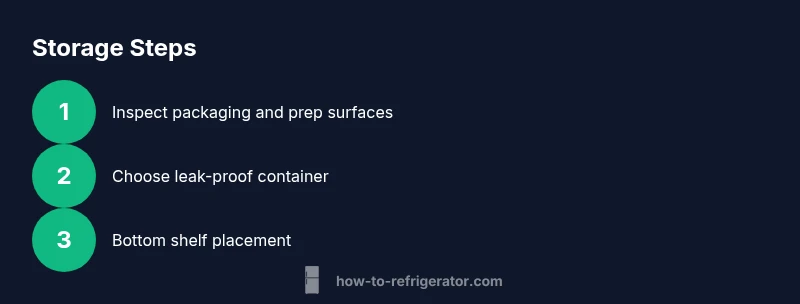
- 1
Inspect packaging and prep surfaces
Open or inspect poultry packaging and read the date. Clear a space on the counter and wipe down with sanitizer. This reduces the chance of cross-contamination from compromised packaging.
Tip: If the packaging is damaged, repackage in a leak-proof container before refrigerating. - 2
Choose storage container
Select a leak-proof container or heavy-duty bag that can contain juices. Place it on a tray to catch leaks and keep it on the bottom shelf away from produce and ready-to-eat foods.
Tip: Double-bag if you’re storing in a tray; this provides extra protection against leaks. - 3
Place on bottom shelf/back
Put the container on the bottom shelf, toward the back where temperatures remain most stable. Avoid the fridge door to reduce temperature fluctuations that can speed spoilage.
Tip: Position near the back edge where cold air lingers the longest. - 4
Label with date
Date every package and use the oldest stock first. This makes FIFO (first in, first out) a simple habit and helps prevent waste.
Tip: If you freeze portions later, note freeze date as well. - 5
Verify temperature and doors
Check the fridge temperature with a thermometer and ensure the door isn’t interfering with the cool air flow. Keep the door closed as much as possible during prep.
Tip: Set up a quick morning check to ensure stability after opening the door. - 6
Use or discard within recommended window
Raw chicken should be used within 1–2 days; cooked chicken within 3–4 days. Discard any that show spoilage signs and sanitize afterward.
Tip: Plan meals to avoid keeping raw poultry longer than the safe window.
FAQ
Where in the fridge should raw chicken be stored?
Store raw chicken on the bottom shelf in a leak-proof container to prevent juices from dripping onto other foods.
Keep raw chicken on the bottom shelf in a sealed container to prevent juices from reaching other foods.
What temperature should the fridge be for poultry safety?
Keep the refrigerator at 4°C (40°F) or lower. Use a thermometer to verify and adjust as needed.
Set your fridge to four degrees Celsius or below and check it with a thermometer.
Can I store chicken in the fridge door?
No. The door experiences temperature swings that can promote spoilage. Use a stable shelf instead.
No—avoid the fridge door for raw poultry due to temperature fluctuations.
How long can raw chicken stay in the fridge?
Raw chicken is generally safe for 1–2 days in the fridge; cooked chicken lasts 3–4 days. Always check for spoilage signs.
Raw chicken lasts about 1–2 days; cooked chicken can last 3–4 days in the fridge.
Should I wash chicken before storing?
Do not wash raw chicken; it can spread bacteria. Rinse hands and surfaces instead, and rely on proper cooking.
Don’t wash raw chicken. Wash your hands and surfaces instead and cook thoroughly.
Can cooked chicken be stored with raw chicken?
Keep cooked chicken separate from raw poultry to avoid cross-contamination. Use separate containers or sections.
Keep cooked and raw poultry apart and use separate containers.
Watch Video
Top Takeaways
- Store raw chicken on the bottom shelf in a leak-proof container.
- Keep the fridge at or below 4°C (40°F) for safety.
- Avoid door storage and prevent cross-contamination with separate utensils.
- Label dates and use FIFO to minimize waste.