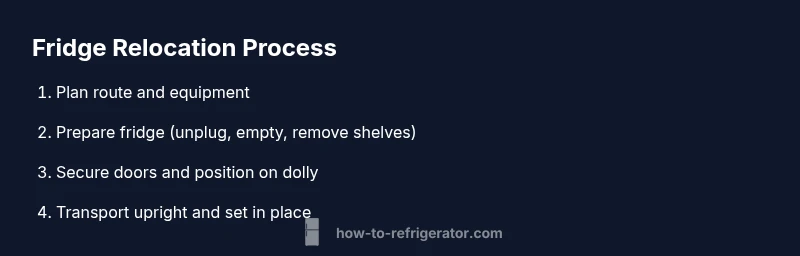
Can You Lay a Refrigerator When Moving? A Practical Guide
Learn whether it's safe to lay a refrigerator on its side during a move, why orientation matters, and step-by-step precautions to protect the compressor and seals.


Typically you should keep a refrigerator upright during a move. Laying it down can shift oil and put stress on seals. If you must transport on its side or back, minimize the time tilted, secure the doors, and let the unit stand upright for several hours before plugging in. For best results, plan a straight, upright move whenever possible.
Can You Lay Down a Refrigerator During a Move?
Moving a refrigerator requires careful orientation. Can you lay down a refrigerator when you move it? Generally, keep it upright during transport to protect the compressor and seals. According to How To Refrigerator, improper orientation can force oil away from its intended place and stress gaskets, leading to leaks or poor cooling. If you absolutely must tilt the unit to fit through a doorway or into a tight space, minimize tilt and time, and ensure the doors cannot swing open during transit.
Safety first: planning your move and understanding orientation
Before you start, map the route, measure doorways, and plan how the fridge will travel. A straight, upright path minimizes the need to tilt. Secure the fridge with straps and a moving dolly, and keep the unit away from stairs or uneven surfaces. Remember: the safest approach is to move the fridge upright whenever possible, protecting both the appliance and your home from accidental damage.
Reasons you should avoid laying a refrigerator flat
A refrigerator's internal oil and refrigerant rely on gravity in a specific orientation. Laying the unit on its side or back can cause oil migration, uneven compressor lubrication, and potential damage to the evaporator and seals. Additionally, lines and hoses may kink, and shelves can shift, creating hazards. While a brief tilt may occur during a tight move, plan to return to upright promptly.
When laying it down is absolutely unavoidable
If access constraints force you to lay the fridge down for a short move, do so with care. Transport it on its side away from vents and doors, avoid full side-to-side tilts, and protect the exterior with moving blankets. After the move, stand the fridge upright and let it rest at least as long as the time it spent on its side before plugging in, if manufacturer guidelines permit. Always check the manual.
Pre-move preparation: empty, unplug, protect
Empty all compartments, remove perishable items, and defrost if needed to prevent spills. Unplug the unit at least a few minutes before you begin to avoid electrical hazards. Remove shelves and drawers or secure them in the interior to prevent shifting. Wrap the doors, seals, and exterior with blankets to prevent dents during handling.
Transport readiness: securing the appliance for the journey
Install a dolly under the fridge's base, with a blanket layer to prevent scratches. Strap the fridge to the dolly and secure it in the moving vehicle with tiedowns to resist movement. Keep the fridge in an upright position or a minimal tilt and avoid stacking heavy items on top that could topple the unit.
Carrying and unloading: keeping the unit straight
During loading and unloading, maintain vertical orientation as much as possible. Use a second person to guide the fridge, monitor the width, and avoid abrupt starts or stops. Place the appliance on a level surface at the destination and check that the feet and rollers are properly aligned before moving away.
Post-move waiting period and setup
After the fridge reaches its new location, set it level and reconnect the power only after the interior has returned to stable temperature. If you tilted the unit, wait for a period determined by the manufacturer before plugging in. Verify door alignment, gasket seal, and ensure the interior remains dry and free of frost or condensation after settling.
Common mistakes to avoid during relocation
Do not ignore manufacturer guidance or rely on guesswork. Avoid dragging the fridge by the door, putting extra weight on the doors, or forcing it through tight spaces without proper equipment. Never run the compressor while the fridge is unplugged or tilted, as this can cause damage. Plan ahead and use purpose-built moving equipment.
Next steps and homeowner tips
Create a checklist before your move and practice safe handling. After setup, monitor cooling performance and listen for unusual noises. If you encounter leaks, frost buildup, or persistent temperature irregularities, contact a professional. The How To Refrigerator team recommends following installation manuals and manufacturer guidelines to maximize fridge longevity.
Tools & Materials
- Moving dolly/appliance trolley(Weighted for large fridges; secure with blankets.)
- Moving blankets(Protect appliance exterior and seals.)
- Straps or tie-downs(Secure fridge to dolly and vehicle interior.)
- Gloves(Protect hands and improve grip.)
- Screwdriver set (flathead/Phillips)(Optional for removing shelves or doors.)
- Pry bar or wedges(Optional for positioning on tight routes.)
- Tape measure(Useful for doorway clearance checks.)
- Owner manual(Reference for manufacturer guidelines.)
Steps
Estimated time: 1–2 hours
- 1
Plan the move route and equipment
Survey the route, clear obstacles, and identify doorway widths. Confirm you have a dolly, blankets, and straps ready. A well-planned route minimizes the need to tilt and reduces risk of damage to walls or floorings.
Tip: Walk the path with a helper to visualize each turn before you lift. - 2
Power down and unplug
Power off the fridge, unplug the cord, and remove any removable interior parts. This prevents electrical hazards and protects the unit from power surges during transport.
Tip: Let the appliance sit unplugged for a minute to avoid moisture near controls. - 3
Secure doors or remove doors
If doors swing, secure them with tape or remove them if possible. Use protective padding to prevent scratches or dents during handling.
Tip: If removing doors, keep screws in a labeled bag for reassembly. - 4
Remove shelves and bins
Take out shelves, drawers, and bins to reduce weight and prevent shifting inside the cabinet. Wrap them separately or place them in the vehicle with the fridge.
Tip: Store small parts in a labeled container to avoid loss. - 5
Protect exterior and prepare base
Wrap the exterior with moving blankets and prepare the base with a soft layer to prevent scratches. Position the fridge over the dolly feet for a secure lift.
Tip: Check for water leaks before packing; moisture can make floors slippery. - 6
Lift onto the dolly and strap
With a helper, lift the fridge onto the dolly, then secure with straps to prevent rolling. Keep the unit as vertical as possible while mounting.
Tip: Use knee-friendly lifting technique to protect your back. - 7
Secure in the vehicle
Place the fridge upright in the vehicle or with a slight, controlled tilt. Strap it to anchor points and avoid pressure on doors and panels.
Tip: Avoid stacking heavy items atop the fridge. - 8
Unload and position at destination
Carefully move the fridge into the new space, keeping it upright. Level it as soon as it’s in position and prepare surrounding area for setup.
Tip: Have a second person guide to prevent accidental bumps. - 9
Wait before plugging in
Allow the fridge to rest in the new location, then reconnect power and wait for the interior to stabilize before use.
Tip: If tilted, follow manufacturer guidance on wait time before startup.
FAQ
Is it safe to lay a refrigerator flat for moving?
No, laying a refrigerator flat is generally discouraged because it can affect the oil distribution and sealing. If you must tilt briefly, minimize time and return to upright as soon as possible. Always refer to the manufacturer’s guidelines.
Laying a fridge flat is usually not recommended. If you must tilt briefly, do so carefully and upright again quickly.
How long should you wait before plugging in after moving?
Wait the recommended period after moving before plugging in. This allows any displaced oil to resettle and reduces the risk of startup damage. Check the manual for exact guidance.
Wait a while after moving, then plug in according to the manual.
Can removing doors help during transport?
Yes, removing or securely padding doors can prevent swinging and damage during transit. Reattach them carefully at the destination.
Removing or padding doors helps prevent damage while moving.
What signs indicate I need professional service after a move?
If you notice persistent leaks, unusual noises, frost buildup, or the fridge fails to cool after relocation, consult a technician. These can indicate compressor or seal issues.
If it doesn’t cool or you hear strange noises, get a professional check.
Should I defrost before moving?
Defrosting reduces the risk of spills and ice buildup during handling. Make sure any defrosted water is cleaned up before transport.
Defrosting helps prevent spills during the move.
Watch Video
Top Takeaways
- Keep the fridge upright during moves for safety and longevity
- If tilting is unavoidable, minimize tilt time and secure doors
- Unplug, empty, and protect shelves before transport
- Wait to plug in after relocation to allow stabilization