Can You Lay a Refrigerator Down to Transport? A Safe Move Guide
Learn whether it's safe to lay a refrigerator on its side for moving. This How To Refrigerator guide explains risks, safer alternatives, prep steps, and a practical transport plan to protect your appliance during relocation.


Can you lay a refrigerator down to transport? The short answer is no—most manufacturers and repair pros advise moving a fridge upright. Lying it on its side or back can compress the compressor, dislodge coolant lines, and cause oil migration, leading to costly failures. If you must move it on its side, secure the doors and plan for a thorough upright rest before use.
Why upright transport matters
Moving a refrigerator upright preserves the internal oil and coolant alignment and minimizes the chances of forcing oil away from the compressor. When a fridge is tilted or laid flat, oil can flow into the refrigerant lines, and vibration can loosen connections. The result can be reduced cooling efficiency, noisy operation, or more serious failures. According to How To Refrigerator, upright transport is the safest approach for most models, especially standard top- and bottom-freezer configurations. Even if a move seems quick, the long-term cost of damage can far exceed the short-term savings of a diagonal haul. Plan your route, confirm doorway widths, and select the proper moving equipment to keep the appliance vertical throughout the journey. This upfront planning reduces the risk of surprises in tight hallways or stairwells and helps ensure your fridge will work as intended in its new location.
The risks of laying a refrigerator down
Tilting a refrigerator introduces several risk factors that aren’t obvious at a glance. The compressor, mounted near the bottom or back, relies on gravity to keep oil distributed. When the unit is rotated onto its side or back, oil can move away from the compressor, potentially causing startup resistance or overheating. The coolant in the sealed system can also shift, which may lead to longer rest periods before reactivation or, in worst cases, leaks. Vibration during transport can loosen refrigerant connections, seals, or tubing. Even a brief tilt can create misalignment that affects defrost cycles or temperature control. If you’re faced with a narrow doorway or a long stairwell and must improvise, consider disassembly options or professional assistance instead of risking a lay-down move.
Manufacturer guidance and common exceptions
Most manufacturers recommend upright transport and installation, and they often caution against side- or back-tilting except under very limited circumstances. How To Refrigerator notes that when the option to transport upright isn’t feasible, extra care is required: use protective coverings to keep doors from swinging, maintain a shallow tilt, and avoid repeated tilts during handling. Some rare exemptions apply to unusually shaped or compact fridges where a partial tilt is unavoidable, but these exceptions are model-specific and should be verified in the user manual. If your appliance is older or under warranty, check the warranty terms to avoid voiding it due to improper handling during relocation.
If you must move on its side: precautions
If there is truly no alternative to moving the fridge on its side, take deliberate precautions. Secure the doors so they cannot swing open during transport, use thick moving blankets to protect door surfaces, and employ straps rated for appliance movement. Keep the tilt shallow and avoid rough handling that can jolt internal components. Prepare the route in advance to minimize stops and bumps, and ensure you have at least one helper to guide and steady the unit. After placing the fridge in its new spot, don’t power it on immediately—give it time to settle.
Pre-move prep: securing doors, straps, and clearance
Preparation is the key to a safer relocation. Empty the interior completely and remove shelves to reduce weight and prevent items from shifting. Secure the doors with painter’s tape or a strap so they do not swing during transport. Clear the path of obstacles, measure door frames, and choose equipment rated for appliance weight. Protect floors and walls with moving blankets or cardboard, and have a helper nearby to assist with lifting and guiding the fridge onto a dolly. Label the appliance and route to avoid confusion at the destination.
Lifting and securing the fridge for transport
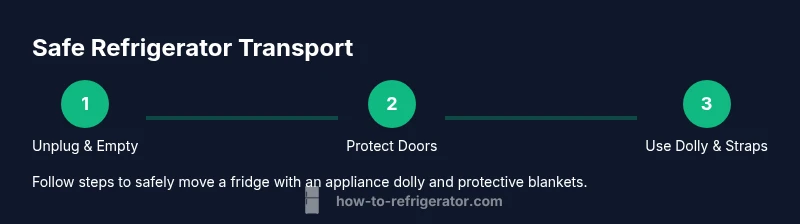
Begin by positioning the dolly and blankets so the fridge can roll smoothly onto it. With a second person, tilt the fridge only enough to slide the dolly under it, then gently lower onto the wheels. Center the load so weight is balanced left-to-right and front-to-back. Strap the fridge to the dolly with two or three straps, threading them over solid points to prevent the doors from moving. Once secured, test the setup by gently pushing to ensure there’s no shifting. Keep the unit upright during the move and avoid sudden accelerations or decelerations.
Transport options that minimize risk
Whenever possible, use an appliance dolly designed for refrigerators, not a generic hand truck. If you’re going through narrow doorways, temporarily remove doors or hinges only if you’re confident in reassembly afterward. Enlist help and plan your path to avoid stairs or steep ramps. Transport in a vehicle with a flat, level floor, and secure the fridge to anchor points or tiedowns to prevent tipping. After unloading, move carefully to the final resting place, again ensuring the unit remains upright.
After repositioning: settling time and checks
Once the fridge is in place, leave it standing upright for several hours or as recommended in the manual before plugging it back in. This settling period lets refrigerant and oil settle back into their proper positions. Reconnect the power and monitor the temperature closely for the first several hours. If the unit runs unusually loudly or fails to reach the desired temperature, it may require a service check. When in doubt, contact a professional technician for a quick diagnostic. This approach protects your investment and helps ensure reliable operation after relocation.
Practical takeaways from expert guidance
Transporting a refrigerator safely hinges on preserving the integrity of the compressor and sealed system. Upright moves are the safest option for most models, while side-tilt moves should be avoided unless absolutely necessary and performed with strict precautions. Secure doors, use a proper dolly, and have a helper for stability. Always allow a settling period after repositioning before powering the unit back on. Planning ahead reduces the risk of damage and keeps your appliance functioning as intended in its new location.
Tools & Materials
- Appliance moving dolly (heavy-duty)(4-wheeled with strap attachments; weight-rated for your fridge)
- Moving straps (2)(1.5–2 m length; secure to dolly and fridge frame)
- Protective moving blankets(Wrap to safeguard doors and surfaces during transport)
- Tape or clamps to secure doors(Painter’s tape or door clamps to prevent swinging)
- Gloves(Grip and protect hands during handling)
Steps
Estimated time: 60-120 minutes
- 1
Unplug and empty the fridge
Power down the fridge and unplug it from the wall. Remove all food, move shelves and drawers aside, and wipe up any spills. This reduces weight and prevents shifting items during transport, while also protecting you from electrical hazards. If you have ice or water lines, avoid disturbing them and keep the area dry.
Tip: Remove items and pack them separately to prevent spills during movement. - 2
Secure the doors
Close the doors firmly and secure them with tape or a strap so they won’t swing open during transit. A door that pops open can cause injury or damage the gasket. Ensure the tape won’t leave residue on finish when removed.
Tip: Use multiple light tapes or a soft strap to avoid door damage. - 3
Prepare the moving setup
Set up the dolly on a flat, stable surface and lay blankets to protect the fridge base and door faces. If you must tilt for loading, keep tilt to a minimum and maintain balance. Have a helper guide the base as you slide the unit onto the dolly with slow, coordinated movement.
Tip: Clear the route of rugs or cords to prevent rolls slipping. - 4
Roll the fridge onto the dolly
With a helper's guidance, gently roll the fridge onto the dolly, ensuring it’s centered and the weight is evenly distributed. Do not lift the full weight; use momentum and controlled motion. Lock the dolly wheels once the unit is loaded.
Tip: Keep hands clear of the wheels and hinge area during loading. - 5
Secure to the dolly and strap down
Secure the fridge to the dolly using straps across sturdy points. Tighten just enough to prevent shifting but not so tight that panels buckle. Double-check that the doors remain closed and the load is balanced.
Tip: Test the unit by gently pushing on it to confirm stability. - 6
Transport upright and protect the route
Move with the fridge in an upright orientation. Keep a clear path and avoid stairs if possible. If stairs are unavoidable, take extra care with two-person lifting and slower speeds. Tie down to anchor points in the vehicle if needed to prevent tipping.
Tip: Drive slowly, anticipate door openings, and avoid sudden stops. - 7
Unload and position upright at destination
Carefully reverse the loading steps to unload the fridge and set it upright in its final location. Remove straps and blankets, and position the appliance with a few inches of clearance on all sides for ventilation.
Tip: Have a second person ready to spot and guide during unloading. - 8
Let the fridge settle before powering on
After repositioning, keep the unit upright and unplugged for several hours or as the manual recommends. Once powered, monitor the compressor and temperature to ensure proper operation. If temperatures are inconsistent, seek a professional check before extended use.
Tip: Patience prevents long-term compressor stress.
FAQ
Is it dangerous to lay a refrigerator on its side for moving?
Yes. Laying a refrigerator on its side can push oil away from the compressor and disrupt the sealed system, increasing the risk of failure. Upright transport is the safer option in most cases.
Laying a fridge on its side is risky because it can move oil away from the compressor; upright transport is safer.
Can I transport a fridge on its back if there’s no other choice?
Only if there is no feasible upright method and you take extra precautions—secure doors, protect surfaces, and minimize tilt duration. Check your model’s manual for any model-specific guidance.
Back transport is only a last resort with extra precautions and manufacturer guidance.
How long should a fridge settle before powering on after moving?
Let the fridge stand upright for several hours or as recommended by the manual to allow refrigerant and oil to reseat properly before plugging in.
Let it stand upright for several hours before plugging in after you move it.
Should I hire a professional to move a fridge?
If you lack the proper equipment or the route is challenging (stairs, tight corners), a professional moving service is the safer option to prevent damage.
If the move is difficult or you don’t have the right gear, consider professional movers.
What signs indicate fridge damage after a move?
Unusual noises, unusual warm spots, frequent cycling, or failure to reach proper temperatures are signs to check. If these occur, consult a technician.
Unusual noises or not cooling properly after moving means you should get a check.
What’s the safest equipment for moving a fridge?
Use an appliance dolly with straps designed for heavy items, thick moving blankets for protection, and ensure all anchors are secure before transport.
A sturdy appliance dolly with straps and blankets is the safest setup.
Watch Video
Top Takeaways
- Transport upright whenever possible for safety and reliability.
- Secure doors and use a proper appliance dolly with straps.
- If side-tilting is unavoidable, proceed with precautions and limit time on its side.
- Allow the fridge to settle upright before powering on after relocation.
- Plan the move, protect surfaces, and have help ready to avoid damage.