Can You Run Two Fridges on One Circuit? A Homeowner's Guide
Find out if two refrigerators can share a circuit, how to calculate running and startup loads, and when dedicated circuits are needed. A practical guide for homeowners.


You can run two refrigerators on one circuit if the circuit has adequate amperage headroom and both appliances share a properly rated outlet and breaker. The key is calculating the running and startup loads, avoiding overloads, and following local electrical codes. When in doubt, split onto separate circuits.
Understanding the Basics: Why It Matters
When homeowners consider adding a second refrigerator to their kitchen, the most important question is not just space but power. The ability to place two refrigerators on one circuit hinges on the circuit’s amperage capacity, the starting surge of each unit, and how both appliances are wired and protected. A miscalculation can lead to nuisance trips, warm food, or, in the worst case, overheating. According to How To Refrigerator, understanding these concepts early helps you avoid costly rewiring or safety hazards. In practice, many households operate multiple appliances on shared circuits, but the safety margin must be clearly defined and respected. If either fridge is older or has a high startup surge, the risk of nuisance trips increases, making professional evaluation prudent. can you have two refrigerators on the same circuit is a common home improvement question with a straightforward electrical logic behind it.
Circuit Capacity: Amps, Loads, and Safety Margins
A kitchen circuit typically operates at 15 or 20 amps in many homes, with 120-volt outlets supplying each appliance. The critical metric is amperage headroom—the amount of current left after the refrigerator loads are subtracted from the circuit’s rating. If both fridges draw substantial running current and a startup spike occurs simultaneously, you can quickly exceed the breaker rating. How To Refrigerator analysis shows that, in practice, a well-ventilated, modern fridge can have a running load around 1–2 amps, but startup can spike higher, sometimes double in certain models. When two fridges share a circuit, you must add their running loads and estimate startup surges to ensure you stay under the circuit’s limit. If you’re unsure, the safer path is to use a separate circuit for at least one unit.
How Refrigerators Draw Power: Running vs Startup
Refrigerators do not draw constant power. They cycle on and off, which means the average running load is often much lower than the peak startup current. The compressor start-up can produce a brief surge that easily exceeds the appliance’s running load. This surge can trip a breaker even if the average demand seems modest. In many homes, two fridges on a single 15A or 20A circuit can be feasible if both units have moderate startup surges and the circuit feeding them only serves them and a few small outlets. However, the variance across models means you must verify each unit’s specifications and consider worst-case startup scenarios. can you have two refrigerators on the same circuit remains a function of the combined startup spikes and operating loads.
When Two Fridges on One Circuit Makes Sense
A single, large kitchen with a shared, low-usage circuit may support two fridges if the total running current remains well under the circuit rating and there is enough headroom for startup surges. This is more plausible when you have newer, energy-efficient models with modest startup draws. However, if either fridge has an unusually high surge, or if you run other devices on the same circuit, the risk of tripping increases. In many cases, professionals recommend a dedicated circuit for at least one fridge to avoid interference with other devices and to maintain consistent cooling. can you have two refrigerators on the same circuit is contingent on both the appliances’ electrical characteristics and the overall panel loading.
Calculating Your Load: A Simple Method
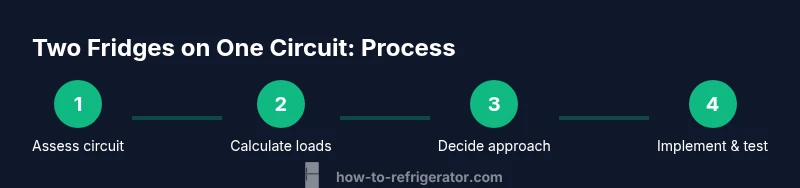
Here’s a practical, homeowner-friendly way to estimate feasibility. Start by finding the running current (amps) and the startup surge (amps) for each fridge from the nameplate or manufacturer spec sheet. Add the running currents together, then add the startup surge for both units (use the higher surge if they’re likely to start at the same time). Compare this total to the circuit’s amperage rating (15A or 20A). If you’re within 75–80% of the circuit rating for continuous loads, you’re inside a comfortable safety margin. Use the rule of thumb that running loads are typically safe but startups are the limiting factor. can you have two refrigerators on the same circuit becomes a calculation task rather than a guess.
Wiring and Outlets: What to Check Before You Plug In
Ensure both refrigerators are on properly rated outlets and that those outlets are on a single, appropriately sized breaker. Avoid using extension cords or power strips for long-term fridge operation, as they can overheat and create fire hazards. If the existing circuit already serves other high-draw appliances (like a microwave or dishwasher), that allocation can push you past a safe limit. For safety, verify the breaker’s rating and the outlet’s ability to handle repeated startup surges. If there’s any question about wire gauge, breaker type, or protection devices, consult a licensed electrician. can you have two refrigerators on the same circuit is manageable with the right protective devices and clean wiring.
Real-World Scenarios: Small Kitchen vs. Large Kitchen
In a compact kitchen with two upright fridges and a single 15A circuit, the practical risk is higher if you also run a coffee maker or microwave. In contrast, a large kitchen with a 20A circuit and energy-efficient fridges can sometimes accommodate two units, especially if the outlets are dedicated and the panel has spare capacity. Always check your panel layout, labeling, and the age of your breakers. In all scenarios, track running times and be prepared to disable nonessential appliances if a trip occurs. can you have two refrigerators on the same circuit is often dictated by the size and layout of your kitchen and the panel’s capacity.
What the Code Says and When to Hire a Pro
Electrical codes emphasize safe circuit loading and proper protection. Many jurisdictions require independent circuits for large appliances in kitchens when multiple units are used or when there's a risk of overload. If your plan involves adding a second fridge to an existing circuit, you should consult a licensed electrician to confirm compliance with local codes and to ensure the panel and breaker ratings are appropriate. The wiring method and the choice of a dedicated circuit may depend on the fridge’s electrical characteristics and the overall kitchen load. The How To Refrigerator team recommends involving a pro to avoid code violations and to guarantee enduring performance. can you have two refrigerators on the same circuit should be reviewed against your local code and safety standards.
Safety-First Checklist Before You Add a Second Fridge
- Check spec sheets for running and startup currents.
- Confirm the circuit rating and available headroom.
- Ensure outlets and wiring are in good condition and properly protected.
- Avoid sharing with other high-draw devices on the same circuit.
- Schedule a quick professional evaluation if there’s any doubt about capacity or code compliance.
- Monitor for trips after a test run and adjust as needed.
Tools & Materials
- Clamp meter(To measure running current (amps) on each fridge while it’s running.)
- Voltage tester(To verify outlet voltage and baseline wiring condition.)
- Electrical tape(For securing wiring connections and labeling circuits.)
- Notepad or mobile device(To record spec sheets, panel labeling, and load calculations.)
- Manufacturer spec sheets(Bring running and startup current values for accurate math.)
- Licensed electrician contact info(Have a pro lined up in case you need professional wiring or code verification.)
Steps
Estimated time: 60-90 minutes for a self-check; longer if scheduling a professional evaluation
- 1
Identify existing circuit setup
Locate the breaker serving the kitchen outlets and identify other devices on the same circuit. Note the breaker rating (15A or 20A) and whether the outlets are shared with high-draw appliances. Understanding current allocations helps set a safe baseline.
Tip: Label the circuit on the panel diagram and verify that the fridge outlets are indeed on the same breaker. - 2
Gather refrigerator specs
Collect running amperage and startup surge data from the nameplates or manuals for both fridges. If data isn’t available, use typical values for modern energy-efficient models as a rough guide. Accurate specs are essential for safe calculations.
Tip: Use manufacturer data rather than rough estimates for critical decisions. - 3
Calculate total running and startup loads
Add the running amps of both units and stack the startup surges (use the higher surge if both could start at once). Compare the sum to the circuit amperage. If you’re under 80% of the circuit rating for continuous loads, you have a margin to work with.
Tip: Document the math so you can review it later or share with a pro. - 4
Decide on wiring strategy
If the combined load approaches capacity or startup surges threaten trips, plan for a dedicated circuit for at least one fridge. Consider upgrading to a 20A breaker if the panel allows and code permits. Decide whether to relocate one fridge to a separate circuit.
Tip: Dedicated circuits are the simplest path to consistent cooling. - 5
Consult or hire a professional
Consult a licensed electrician to verify panel capacity, wire gauge, conduit runs, and adherence to local codes. A pro can install a dedicated circuit or confirm that sharing is still permissible.
Tip: Even if you feel confident, a quick pro check reduces risk of code violations. - 6
Test and monitor after setup
Power on the fridges and run a test period to observe for breaker trips or overheating. If trips occur, shut down nonessential devices and reassess wiring.
Tip: Keep an eye on the first few hours of operation; startup surges can be surprising.
FAQ
Can two refrigerators legally share a single kitchen circuit?
Many jurisdictions allow two refrigerators on one circuit if the combined load stays within the circuit rating and all wiring protects appropriately. However, codes often prefer dedicated circuits for kitchens when multiple large appliances are present. Always check local codes and consider a professional assessment.
In many places you can share a circuit if it stays within limits, but local codes may require a dedicated circuit for safety.
What is the rough amp draw for a modern refrigerator?
Modern energy-efficient fridges typically run below 2 amps and have startup surges higher than running current. Exact figures vary by model, so check the nameplate for running amps and surge values.
Most new fridges run under two amps, with brief startup surges higher than the running current.
If my two fridges trip the breaker, what should I do?
Shut off nonessential devices, then reassess the load. If trips persist, separate one fridge onto its own circuit or upgrade the circuit with professional help.
If trips happen, remove other devices and consider a dedicated circuit for one fridge.
When should I hire a pro instead of DIY?
If you’re unsure about amperage calculations, wiring gauge, or code compliance, hire a licensed electrician to avoid safety risks and code violations.
When in doubt, hire a licensed electrician to ensure safety and code compliance.
Are there safer alternatives to sharing a circuit?
Yes—use dedicated circuits for each fridge or split the load by moving one fridge to a separate, appropriately rated circuit. This minimizes startup surge conflicts and electrical noise between appliances.
A dedicated circuit for each fridge is often safer and more reliable.
Does age or model affect the decision?
Older units or models with higher startup surges are more likely to cause trips on shared circuits. Newer, energy-efficient models typically perform better on shared circuits but still require calculation.
Older fridges can push a shared circuit over the limit; newer models are usually better but still need checks.
Watch Video
Top Takeaways
- Assess circuit headroom before adding a second fridge.
- Know running vs startup loads and plan for surges.
- Prefer dedicated circuits when in doubt.
- Involve a licensed electrician for code compliance.
- Monitor performance after installation to ensure safety.