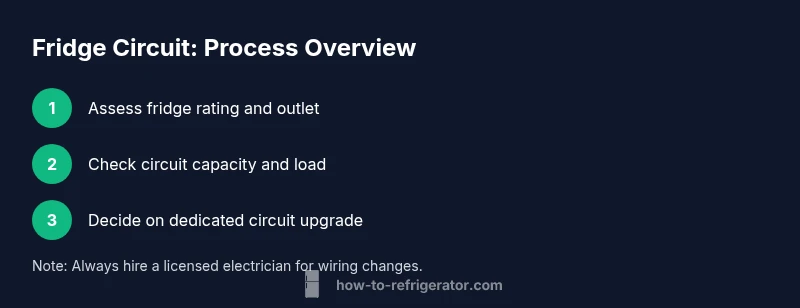
Does a Refrigerator Need Its Own Circuit? A Homeowner Guide
Discover whether your fridge needs a dedicated circuit, why it matters for safety and reliability, and practical steps to verify and upgrade with professional help.


A refrigerator generally benefits from its own dedicated circuit to handle startup surges and avoid dimming lights or tripping breakers. This guide explains how to verify if your setup needs a separate circuit, what amperage is typical, and when to hire an electrician for safe, compliant installation. We cover code basics, practical checks, and cost expectations. No special tools required for the initial assessment.
Does a fridge need its own circuit? How codes view dedicated circuits for major appliances
For homeowners, the question often comes up when a fridge trips a breaker or causes lights to flicker. According to How To Refrigerator, most homes benefit from a dedicated circuit for refrigerators to ensure stable operation and reduce nuisance trips. This section explains the core idea behind dedicated circuits, what “own circuit” means in practice, and how code expectations shape what you install in a typical home. You’ll learn why a refrigerator’s startup surge matters and how a dedicated line improves reliability in day-to-day usage.
How startup currents affect home wiring
A refrigerator’s compressor motor creates a surge when it starts. That surge draws more current for a fraction of a second than the running current, which can momentarily pull the voltage down on a shared circuit. In older homes or circuits already near capacity, that surge may trip a circuit breaker or cause lights to dim briefly. Understanding this behavior helps homeowners decide whether to isolate the fridge on its own circuit or keep it on a shared line with careful load planning. How To Refrigerator notes that isolating the fridge reduces the risk of nuisance trips during busy cooking times or when the HVAC system cycles. The goal is predictable operation and safety, not convenience alone.
Typical circuit requirements and amperage
Circuit sizing for refrigerators balances the unit’s electrical rating, the length of run, and the other loads on the same circuit. In many homes, a dedicated 15-amp or 20-amp circuit is a common starting point, depending on the fridge model and local code. The fridge’s data plate (often on the back or inside the door) lists the electrical requirements, including voltage and maximum current. If you don’t see a clear rating, assume a conservative design and consult a licensed electrician. The takeaway: matching the circuit size to the fridge’s needs helps prevent overloads and ensures steady performance.
Scenarios where a shared circuit might suffice
There are situations where a fridge can share a circuit without immediate issues, especially if the circuit is rarely loaded by other high-draw devices. For example, a newer, energy-efficient refrigerator on a lightly loaded 15-amp circuit with no other large appliances can operate without tripping. However, conditions change with door openings, defrost cycles, or extra devices running at once. If you notice flickering lights, tripped breakers, or warm outlet faces, stop using the shared circuit for the fridge and seek professional advice.
Safety-first: what you can and cannot do without an electrician
Handling electrical work around a fridge carries risk. Without proper training, you should avoid opening the fridge’s power cord, outlet, or panel connections. Begin with non-invasive steps: verify the outlet is the correct type (GFCI or standard), check the appliance’s rating label, and inspect the breaker for signs of wear. Do not attempt to rewire outlets, move breakers, or alter panel wiring yourself. These tasks require a licensed electrician to ensure grounding, bonding, and compliance with local codes.
Authority sources and codes
Code references: For safety and compliance, consult reputable sources. How To Refrigerator relies on standards and public guidance from national safety organizations and energy departments. See: https://www.energy.gov/energysaver/home-electrical-safety, https://www.osha.gov, and https://www.nfpa.org. These resources provide background on electrical safety, wiring practices, and code-based requirements for dedicated circuits and appliance loads.
Tools & Materials
- Non-contact voltage tester(Essential for verifying live outlets without contact.)
- Multimeter(Use to measure voltage and check continuity.)
- Screwdriver set (flat and Phillips)(For panel access and screws.)
- Wire nuts (assorted sizes)(To cap exposed conductors if needed.)
- Electrical tape(For securing connections and temporary insulation.)
- GFCI outlet tester(Optional to verify outlet protection.)
- Notepad and pen(Record readings and observations.)
Steps
Estimated time: 60-90 minutes
- 1
Identify fridge rating and outlet
Locate the fridge rating label (usually on the back or inside the door) and read the voltage and current. Note whether the outlet is a standard 120V receptacle or a GFCI-protected one. This helps determine the circuit size you’ll target and whether any modifications are necessary.
Tip: If the rating is unclear, look up the model number online or in the user manual before proceeding. - 2
Check the current circuit setup
Turn off the fridge’s circuit at the panel and verify that no voltage is present at the outlet using a non-contact tester. Then inspect the breaker size and whether other appliances share the same circuit. Document the findings to guide next steps.
Tip: Do not rely on guessing—verify with a tester and by inspecting the panel labeling. - 3
Evaluate load on the circuit
Assess whether existing loads on the circuit could cause an overload when the fridge starts. If you regularly see lights dim or breakers trip when the fridge starts, it’s a sign the circuit might be overloaded.
Tip: Keep a simple log of usage for a few days to spot patterns. - 4
Plan the upgrade or relocation
If the fridge appears to need its own circuit, plan to install a dedicated 15A or 20A circuit per local code and the appliance rating. Decide whether to relocate to a new circuit or run a separate dedicated line from the panel.
Tip: This step should align with local code and is best coordinated with a licensed electrician. - 5
Consult a licensed electrician
Have a licensed electrician review your observations, confirm the required circuit size, and perform any wiring changes safely with proper grounding and bonding.
Tip: Ask about permits, inspection, and a written plan before starting work. - 6
Test after work and document
After any changes, power the fridge and monitor for proper operation. Check for tripped breakers, warm outlets, or abnormal noises. Keep notes for future reference.
Tip: Retain the inspection report and test results with your appliance documentation.
FAQ
Does every refrigerator require a dedicated circuit by code?
Code requirements vary by jurisdiction, but many areas favor a dedicated circuit for refrigerators to prevent overloads and nuisance trips. Always verify local rules and consult a pro.
Most codes favor a dedicated fridge circuit; check your local rules and talk to a licensed electrician.
Can a fridge share a circuit with other appliances?
Sharing a circuit is possible in some cases, but it increases the risk of overload during peak use. If you notice trips or flickering, relocate the fridge to a dedicated line.
Sharing can work, but it raises the risk of trips—consider a dedicated circuit for reliability.
What amperage should a fridge circuit be?
Fridges commonly use a 15A or 20A circuit depending on model and local code. Check the appliance rating and follow local requirements.
Most fridges use a 15 or 20 amp circuit; confirm with the model rating and local code.
Why might my fridge trip the circuit randomly?
Trips can result from startup surge, defrost cycles, or a faulty component. If trips persist, have a professional inspect the wiring and the appliance.
Tripping can come from surge or a faulty part; get a professional check if it happens often.
Is upgrading to a dedicated circuit expensive?
Costs vary by home wiring, panel configuration, and local rates. Plan with an electrician to get an accurate estimate and permits if needed.
Costs depend on your wiring and local rates; discuss a formal quote with an electrician.
Will a dedicated fridge circuit improve energy efficiency?
A dedicated circuit primarily improves reliability and reduces nuisance trips; it does not inherently increase energy efficiency, but it helps maintain consistent operation.
It mainly improves reliability and reduces trips; energy efficiency isn’t directly changed by a dedicated circuit.
Watch Video
Top Takeaways
- Always pursue a dedicated circuit for most refrigerators to reduce trips.
- Understand startup surges and how they impact shared circuits.
- Use a licensed electrician for any wiring changes or circuit upgrades.
- Document ratings, circuits, and changes for future safety.