Can Refrigerator Doors Be Adjusted? A Homeowner’s Guide
Learn how to adjust refrigerator doors for proper level, seal, and alignment. Step-by-step guidance, tools, safety tips, and troubleshooting for sagging or rubbing doors.


Yes. Most refrigerator doors can be adjusted for level and alignment using hinge screws, shims, and leveling feet. Start by checking if the appliance is plumb and the doors swing evenly. Then adjust the top and bottom hinges or cabinet pivots following your model’s design. This guide shows quick steps, safety tips, and when to call a pro.
Why door alignment matters
Door alignment is more than cosmetic. A properly aligned refrigerator door seals evenly, keeps cold air inside, and reduces energy consumption. When doors sag, you may experience frost buildup at the gasket, increased run time as the compressor works harder, and accelerated wear on seals. The How To Refrigerator team found that simple hinge adjustments and leveling can fix most sagging doors without replacing parts. This matters not only for energy efficiency but also for maintaining consistent temperatures inside the fridge and freezer compartments. If you notice uneven gaps at the top and sides, a quick check of level and hinge position is a good first step. Also consider how frequently you use the door—heavy usage can contribute to gradual sag over time.
By addressing misalignment early, you protect the cabinet from additional stress and extend the life of the door seal. Keep in mind that even minor shifts can have a noticeable impact on performance. In this context, “adjustment” means small, precise changes to hinges, leveling feet, or cabinet pivots, not wholesale replacement of parts. If a door rubs against the cabinet or gasket, start with a level check and then move to hinge adjustments as described in this guide.
Hinge designs and their impact on adjustment
Most modern refrigerators use a few common hinge styles, and the way you adjust them depends on the design. A top hinge with a cam screw usually controls tilt, while the bottom hinge often handles leveling. Some models feature concealed Euro hinges that require a provided hex key or Torx driver to fine-tune alignment. The bottom line: identify which hinge you can adjust, then apply small, incremental turns to tilt the door toward or away from the cabinet until the gaps are even and the door seals cleanly. If your door has a hinge with pre-drilled adjustment points, follow the model’s diagram to avoid over-tightening or stripping threads. If uncertain, consult your user manual before proceeding.
When to adjust vs replace parts
Adjusting hinges and leveling feet will solve most door misalignment issues. However, if a hinge is bent, the cabinet frame is warped, or the door won’t hold its position even after multiple adjustments, you may need replacement parts or professional service. Check for visible damage on the hinge barrel, hinge screws, and the door itself. If the door is rubbing high on one side or bottom, it’s often a symptom of sag that can be corrected with careful shimming or feet leveling. Avoid forcing screws or prying on the cabinet; this can cause more damage and void warranties. In persistent cases, a qualified appliance technician can assess structural issues and perform precise hinge or frame repairs.
Safety and best practices
Safety first: unplug the refrigerator before handling any screws, hinges, or leveling components. Work on a clean, dry surface and use a flashlight to inspect hard-to-see areas. Use protective gloves to avoid pinching your fingers, and avoid over-tightening screws—this can strip threads or crack the hinge. Have a helper when lifting or adjusting heavy doors to prevent injury. If you’re unsure about the hinge type or the correct torque, pause and consult the manual or a pro. Finally, re-check door alignment after moving the fridge slightly to ensure cables and lines aren’t under tension.
Authoritative sources
For further reference and validation of best practices, consult reputable sources:
- https://www.energy.gov
- https://www.nist.gov
- https://www.consumerreports.org
These sources provide general guidance on appliance efficiency, safety, and maintenance that complement hands-on DIY tasks like adjusting refrigerator doors.
Tools & Materials
- Level(A small carpenter’s level (2–4 inches) works; ensure the fridge is level front-to-back and side-to-side.)
- Screwdriver set(Phillips and flathead as needed for hinge screws.)
- Hex key / Allen wrench(Size varies by model (commonly 3/16" or 4 mm).)
- Adjustable wrench(Helpful for stubborn fasteners or feet nuts.)
- Shims (plastic or wood)(Optional for fine-tuning tilt if your model requires it.)
- Measuring tape(Use to check consistent gaps along the door edge.)
- Towel or cloth(Protects surfaces during adjustments.)
Steps
Estimated time: 30-60 minutes
- 1
Check level and door sag
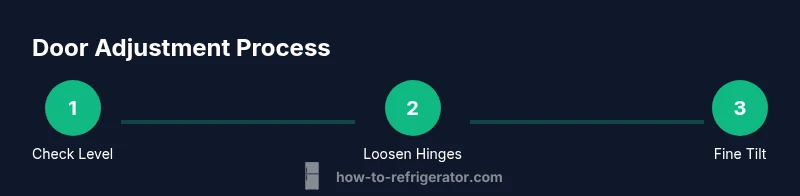
Place the level on the top edge of the fridge door to determine if the unit is plumb. Note whether the door edge sits visibly higher on one side. If there’s any tilt, plan to adjust the hinges or feet to bring the door back to level.
Tip: Use a helper to hold the door steady while you check the level to avoid misreadings. - 2
Identify the adjustable hinge
Inspect the top hinge and bottom hinge for adjustment screws or cams. If you see a cam screw, you’ll typically rotate it to tilt the door; if there are leveling feet, plan to raise or lower the foot as needed.
Tip: Refer to your model’s manual to confirm which hinge you should adjust first. - 3
Loosen hinge screws slightly
With the fridge unplugged, use the appropriate screwdriver to loosen hinge screws by about a quarter turn. Do not remove screws completely; you need a bit of give to adjust without dropping the door.
Tip: Support the door with one hand while loosening screws to prevent it from snapping closed. - 4
Make a small tilt adjustment
Turn the hinge cam or leveling screw in small increments (about 1/8 to 1/4 turn). After each adjustment, re-check the door alignment against the cabinet edges and ensure it clears the gasket evenly.
Tip: Make tiny adjustments and test the door after each turn to avoid over-shooting alignment. - 5
Re-tighten screws and recheck
Gently re-tighten the screws while holding the door in place. Recheck the level and the gap along the door edge. If necessary, repeat the tilt adjustment in smaller increments.
Tip: Use a torque-limited screwdriver if available to avoid over-tightening. - 6
Check door seal and corner gaps
Close the door and inspect the seal all around. A properly aligned door should seal evenly—no visible gaps. If you notice rubbing or catching at a corner, adjust again in small steps.
Tip: Pay attention to the bottom corners where most misalignment shows up first. - 7
Test with daily use
Open and close the door multiple times, simulating typical usage. Verify that the door does not rub, and the seal remains intact after the door returns to closed position.
Tip: Check both hinged doors if you have a French-door or double-door configuration. - 8
If issues persist, consider further steps
If alignment remains off after adjustments, the issue may be related to warped cabinetry or a bent hinge. In such cases, consult a professional technician or consider replacement parts.
Tip: Document the steps you’ve taken so you can share details with a technician.
FAQ
Can all refrigerator doors be adjusted?
Most refrigerator doors are adjustable, but some older models or specialty doors may have fixed hinges. Check your owner’s manual or model number to confirm whether hinge cams, leveling feet, or non-adjustable pivots are used. If you cannot find an adjustment point, you may need professional help or a replacement hinge.
Most doors can be adjusted, but some models have fixed hinges. Check the manual to confirm your specific door design.
What tools do I need to start adjusting?
You’ll typically need a level, a screwdriver set, and an Allen wrench. Some models also use hex cams or torx screws, so have the appropriate driver on hand. Measuring tape helps verify consistent gaps.
Grab a level, screwdrivers, and the right hex key to start.
What if the door still rubs after adjustment?
If rubbing persists after multiple small adjustments, inspect the gasket for damage and check the door for sagging or warping. Gasket damage can prevent a clean seal, while a bent cabinet frame may require professional service.
If it still rubs after tweaks, check the seal and consider professional help for frame issues.
Is it safe to adjust refrigerator doors?
Yes, as long as you unplug the unit and use proper tools. Avoid forcing components and follow the model’s manual for torque specifications. If you’re unsure, seek professional assistance.
Yes—unplug first, use the right tools, and don’t force parts.
Can door alignment affect energy efficiency?
Proper door alignment helps maintain a tight seal, reducing cold air leakage and energy use. Misaligned doors can cause the compressor to run longer, increasing energy consumption and wear.
Yes, good alignment helps the door seal and saves energy.
When should I call a professional?
If hinges are bent, the cabinet is warped, or adjustments fail to fix the issue after several attempts, a professional technician should assess and repair the hinge system or frame.
Call a pro if hinges are bent or the frame is warped.
Watch Video
Top Takeaways
- Check level before adjusting any hinges
- Make incremental hinge turns
- Test door gaps and seal after each adjustment
- Don’t force bent hardware—seek help
- Document settings for future reference