Can a Refrigerator and Freezer Be on the Same Circuit? A Homeowner's Guide
Explore whether a refrigerator and freezer can share a circuit, how to assess load, and practical steps to keep your kitchen safe. Expert guidance from How To Refrigerator helps homeowners troubleshoot and plan upgrades.


Can a refrigerator and freezer share a circuit? In many homes, a dedicated fridge circuit is recommended, but both units can run on one 15- or 20-amp circuit if the combined load stays within safe limits and no other high-draw devices share the line. Always verify appliance labels and your panel, and consult a licensed electrician for certainty.
Why this question matters for homeowners
When a refrigerator and freezer share a circuit, your kitchen experience can swing from smooth operation to sudden trips. The electrical setup determines reliability, energy efficiency, and safety. According to How To Refrigerator, many homes use 15-amp or 20-amp circuits designed for singular appliance loads. The How To Refrigerator team emphasizes that knowing both the appliance's draw and the circuit's capacity helps you avoid nuisance trips and potential hazards. In practice, this means checking the rating on each unit, noting whether they run simultaneously, and planning for contingencies like door openings and defrost cycles. This article will walk you through practical checks, load calculations, and when to upgrade to a dedicated circuit so you can fix the issue with confidence.
How household circuits are designed
Most residential circuits are protected by either 15-amp or 20-amp breakers. A refrigerator on a single circuit is a common arrangement, because it concentrates the heavy, intermittent loads of cooling equipment in one place. However, continuous loads should not routinely consume the full circuit; many codes treat refrigerator operation as a continuous load, requiring not more than 80% of the circuit rating. That means a 15-amp circuit ought not to run a fridge at more than about 12 amps under typical conditions. The decision to share a fridge and freezer depends on their combined running load, their starting surges, and other devices on the same circuit. Always ensure proper wiring, grounding, and a clean outlet dedicated to heavy appliances where possible.
Can a fridge and freezer share a circuit?
Sharing is technically possible if the two units are relatively small and their combined running current plus startup surges stays within the circuit's rating. In practice, many building codes and electrical professionals prefer a dedicated circuit for refrigeration equipment to minimize trip risk and voltage drops. If you decide to share, avoid plugging other heavy devices (microwaves, dishwashers, or space heaters) into the same circuit. Also consider the freezer's location and the fridge's compressor cycles to prevent simultaneous high-load events.
Reading the label and calculating load
Start by locating the appliance data plate on each unit. Note the running amperage (A) or the wattage (W). If you have watts, divide by the supply voltage (usually 120V) to estimate amps. Add the running amperages of both units, and factor in a rough startup surge (often 2-3x running current for a split second). Compare this total to your circuit rating. If it approaches or exceeds the circuit's limit, upgrading may be necessary. How To Refrigerator analysis shows that many households underestimate startup surges and total combined load, which can lead to nuisance trips.
Safety considerations and code compliance
Always treat refrigeration circuits with care. Use a dedicated outlet, avoid extension cords, and ensure the outlet is on a GFCI/AFCI-protected circuit where required by local code. Refrigerators can experience voltage dips when other loads cycle on and off; this can affect performance and safety. If in doubt, consult a licensed electrician.
When to call an electrician and upgrading circuits
If your load calculation shows you exceed the circuit rating or you notice frequent trips, hire a licensed electrician to install a dedicated fridge/freezer circuit. They can size the conductor, select the correct breaker, and ensure proper grounding and wiring. This protects both appliances and your home electrical system.
Practical setup tips to avoid overload
- Place the fridge and freezer on a dedicated circuit where possible to reduce risk of overload from other devices.
- Keep the area around the outlets clear and free of heat sources; proper ventilation helps maintain efficiency and reduces startup strain.
- Use sturdy, properly rated outlets and avoid daisy-chaining on a single strip or extension cord for refrigeration equipment.
- Schedule routine maintenance (coil cleaning, door seals, and defrost drains) to keep energy use predictable and reduce load fluctuations.
Maintenance that supports safe circuit load
Regular maintenance ensures compressors run efficiently and start reliably. Clean condenser coils at least once a year, inspect door seals for leaks, and defrost if you notice frost buildup in the freezer. Efficient operation reduces running current and helps keep total load within safe limits on your circuit.
What to watch for during appliance cycling and surges
Be alert for frequent breaker trips, warm outlets, flickering lights, or humming sounds when the compressor starts. These can indicate overload or wiring issues. If you observe any of these signs, pause usage on shared circuits and consult a professional to reassess circuit capacity and wiring.
Tools & Materials
- Clamp meter(Measures running current; essential for load calculation)
- Multimeter(Verifies voltage and continuity)
- Voltage tester(Safely checks outlets)
- Notebook and pen(Record ratings, breaker numbers, and calculations)
- Safety gloves(Protect hands during inspection)
- Labeling tape(Mark circuits during testing)
Steps
Estimated time: Estimated total time: 1-3 hours
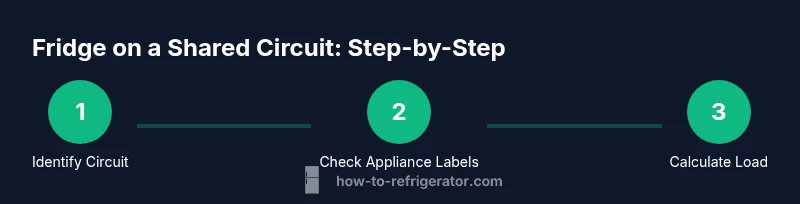
- 1
Identify the circuit feeding the fridge and freezer
Locate the breakers or fuses for the kitchen outlets that power the fridge and any freezer. Note the breaker numbers and any other devices on the same circuit. This establishes the starting point for load testing.
Tip: Take a photo of the panel label and circuit map for later reference. - 2
Find appliance ratings on data plates
Inspect each unit’s data plate to record running amperage (A) or wattage (W). If only watts are listed, convert to amps by dividing by the supply voltage (usually 120V).
Tip: If you can’t access the plates safely, check the user manual or manufacturer website for the amperage. - 3
Estimate starting surge and running load
For each unit, use the running amps from the labels. Acknowledge that compressors draw a brief surge at start-up; plan for a short spike when adding the two devices together.
Tip: Keep a conservative margin—don’t assume steady-state load equals peak load. - 4
Add loads and compare to circuit rating
Sum the running currents and compare to the circuit’s breaker rating. If the total approaches or exceeds the rating, sharing the circuit may be unsafe.
Tip: Use a margin of safety; if in doubt, move toward a dedicated circuit. - 5
Decide on dedicated vs shared circuit
If the combined load is high or startup surges push limits, plan for a dedicated fridge/freezer circuit. Document the plan for your electrician.
Tip: Document measurements and decisions to speed up professional help. - 6
Coordinate with a licensed electrician
If upgrading is necessary, schedule a qualified electrician to size conductors, select breakers, and verify grounding and GFCI/AFCI protection as required by code.
Tip: Never modify wiring yourself on live circuits; professional guidance is essential.
FAQ
Is it legal to run a refrigerator on a shared circuit?
Electrical codes vary by location, but many jurisdictions require a dedicated circuit for refrigerating appliances. Check local code and consult a licensed electrician for certainty.
Codes vary, but most places prefer a dedicated fridge circuit. Check local rules and consult an electrician.
What amperage should a fridge circuit have?
Most residential fridges are designed for 15- or 20-amp circuits. Use the appliance label to confirm the correct breaker size.
Most fridges use a 15- or 20-amp circuit; check the label to confirm.
Can I use an extension cord with a fridge?
Extension cords should not be used as a permanent fridge outlet. They can overheat and may violate code.
Don't rely on extension cords for a fridge; plug into a proper outlet.
What happens if the circuit trips?
A tripped breaker interrupts cooling and can indicate an overload or fault. Unplug other devices on the circuit and inspect wiring or call an electrician if it repeats.
If the breaker trips, unplug other devices and check the wiring.
Should I run the freezer on its own circuit?
For reliability, many professionals recommend a dedicated circuit for freezers and refrigerators, especially in busy kitchens.
A dedicated circuit is often best for a freezer and fridge.
How do I know if my circuit is overloaded?
Frequent trips, warm outlets, flickering lights, or appliances failing to start normally indicate overload. Measure the running load on the circuit.
Look for trips, heat, or dim lights; measure the load.
Watch Video
Top Takeaways
- Assess whether sharing is safe before plugging both appliances into one circuit.
- Use appliance data plates to calculate actual running load and startup surge.
- Upgrade to a dedicated circuit if load approaches or exceeds the breaker rating.