How to Tell If Your Refrigerator Is Leaking Freon: Urgent Guide
Urgent, practical steps to spot a freon leak in your refrigerator. Learn signs, safety, and when to call a pro—with How To Refrigerator for quick, safe fixes.


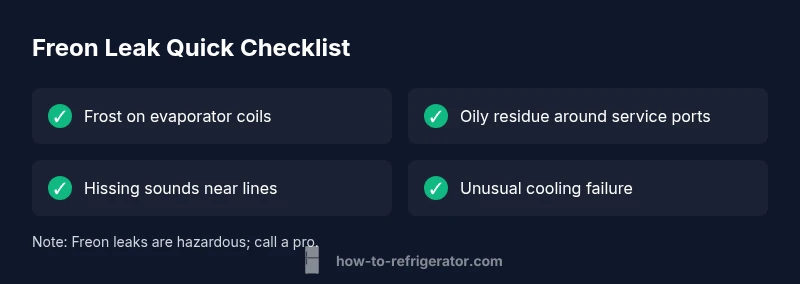
Most signs of freon leakage include frost on the evaporator coil, oily residue near service ports, and a noticeable drop in cooling efficiency. If you observe these, unplug the fridge, keep away from flames, and contact a licensed refrigeration technician—handling refrigerants requires certification and proper safety measures. Freon exposure can irritate eyes, skin, and lungs, and leaks may worsen if ignored. This is urgent.
Immediate Risks and Why You Should Act Fast
Freon leaks in a refrigerator are not just a minor nuisance. Freon is a chemical refrigerant that can cause health risks if inhaled in poorly ventilated spaces, and the leak can reduce the cooling efficiency, leading to spoiled food and potential health issues. The How To Refrigerator team emphasizes safety and prompt action. In this section, you'll learn why it's urgent to identify leaks early and how to prioritize safety while you assess the situation.
- Health hazards: Inhalation of refrigerant vapors can irritate the eyes, nose, and lungs. Prolonged exposure in a small space is especially risky.
- Food spoilage: A leak reduces cooling efficiency; perishable items may spoil faster than expected.
- Environmental impact: Some refrigerants are potent greenhouse gases; leaks contribute to emissions.
- System damage: Extended leaks can stress the compressor and shorten the appliance's life.
What to do now:
- If you smell solvents or see a chemical-like odor, ventilate the area and leave doors open to improve air exchange.
- Do not attempt to puncture or seal the sealed refrigerant circuit yourself.
- Unplug the refrigerator and keep children and pets away until a professional arrives.
Real-world caution: The How To Refrigerator team notes that refrigerant handling requires proper credentials. Acting quickly and safely reduces risk and buys time for a proper fix.
Common Warning Signs You're Likely Dealing with a Leak
Look for a combination of symptoms that point to a freon leak rather than a routine temperature fluctuation. Common warning signs include frost or ice buildup on the back of the freezer or evaporator coil, a hissing or sizzling sound near the refrigerant lines, and a noticeable drop in cooling performance even on the coldest settings. You may also notice an oily film or small droplets around service ports, which indicates lubricant seepage from the sealed system. A sudden increase in energy usage or frequent cycling of the compressor can also be a hint that the system is working harder due to a leak.
What this means for you:
- Frost on coils typically means the evaporator is getting cold unevenly due to low refrigerant charge.
- Hissing noises suggest pressure changes as refrigerant escapes.
- Oil residues indicate that lubricating oil from the compressor lines has leaked into the refrigerant loop.
If you observe any of these signs, do not assume it is a simple fix. Schedule an inspection with a licensed technician who can diagnose the leak and advise on next steps.
Where Leaks Occur in a Refrigerator and How to Spot Them
Freon leaks typically occur at the joints, copper lines, service ports, and in the evaporator coil inside the freezer compartment. The most reliable indicators are visual: oil staining along copper tubing, dampness around ports, and unusual frost patterns along the back wall. Start with the areas behind the rear panel or access covers where the compressor and condenser are located. A trained tech will use leak detectors or electronic halide sensors to confirm the leak. While you may not have access to the internal sealed line, you can look for obvious signs from the outside: a hissing sound, frost near door seals, and abnormal condensation on exterior surfaces.
Safety reminder: never poke or cut into refrigerant lines. Handling refrigerant requires certified equipment and procedures, and improper handling can worsen leaks or cause injuries.
How to Assess Cooling Performance Safely
A straightforward way to gauge potential freon issues is by monitoring cooling performance over a 24-hour period. Note the internal temperatures in both the freezer and fresh-food compartments, compare with manufacturer specifications, and track any unusual temperature swings. If the freezer reads well below zero but the fresh-food compartment fails to reach the target temperature, a refrigerant issue could be present. Use a digital thermometer placed at different shelves for consistent readings. Do not rely on the ice-maker as the sole indicator because it can malfunction for reasons unrelated to freon leaks. Also check the door gaskets for leaks—poor seals can mimic a cooling problem by letting warm, humid air enter the compartment.
If performance declines alongside frost or noises, treat it as a leak suspicion and contact a pro promptly.
Safe Troubleshooting Steps You Can Take Now
This section outlines safe checks that do not disturb the sealed refrigerant circuit. Start by unplugging the unit to prevent accidental operation while inspecting. Check that the condenser coils are clean and unobstructed; dirty coils force the compressor to work harder and can accelerate wear. Inspect door seals for cracks or gaps and correct any misalignment. Move items away from vents in the interior to ensure proper air circulation. If you notice a persistent chemical smell, calling a professional is non-negotiable. Keep a log of symptoms, including dates, temperatures, and noises, to share with the technician. Remember: never attempt to recharge the refrigerant yourself or seal a suspected leak. A pro will evacuate and repair the system safely.
Crucial safety rule: work in a well-ventilated area and wear gloves when handling any parts near the rear of the unit.
When to Call a Pro and What to Expect
When symptoms persist or signs point toward a freon leak, the safest course is to call a licensed refrigeration technician. A professional will confirm the leak using appropriate detectors, evacuate refrigerant as required, repair or replace faulty components, and recharge the system to the correct specification. Expect an on-site assessment that includes testing of pressure, leak location, and function of the compressor and evaporator. The technician should provide a written estimate, discuss replacement options for any damaged parts, and outline post-repair checks. How To Refrigerator recommends asking about warranty coverage and the service provider's certifications to ensure you receive compliant, safe service. Following the repair, schedule a follow-up check to ensure the system maintains correct pressures and temperatures.
Note: If you smell gas or have trouble ventilating the space, leave the area and call your utility or emergency services for guidance.
Prevention Tips to Avoid Future Leaks
Regular maintenance can reduce the odds of freon leaks. Clean the condenser coils every 3-6 months, replace worn door seals promptly, and ensure proper airflow around the rear of the fridge. Schedule annual professional inspections to catch small issues before they become leaks. Keep the area around the appliance free of dust, grease, and clutter that can block cooling fins or vents. If you ever replace components or perform minor repairs, insist on certified parts and proper refrigerant handling procedures to maintain system integrity. By staying proactive, you’ll minimize downtime, extend the life of the unit, and protect your family’s health.
Steps
Estimated time: 1-2 hours
- 1
Power Down Safely
Unplug the fridge to prevent accidental operation while you inspect. Leave it off for at least 5 minutes before touching components. This reduces risk of injury and prevents unintended refrigerant movement.
Tip: Keep children and pets away; use a flashlight to inspect behind access panels without forcing anything loose. - 2
Check for Frost and Ice Patterns
Open the freezer and look for unusual frost buildup along the evaporator coils or back wall. Note where frost forms—it helps technicians pinpoint the leak path.
Tip: Take photos from multiple angles to share with a pro. - 3
Inspect Visible Refrigerant Lines for Oil Residue
Look for signs of oil staining or dampness around copper lines and service ports. Oil traces often accompany refrigerant leaks.
Tip: Do not touch or attempt to clean sealed lines; oil can be irritating and may indicate a leak path. - 4
Test Door Seals and Airflow
Check door gaskets for cracks and ensure the door closes flush. Remove items blocking interior vents to promote proper airflow.
Tip: A poor seal can mimic a cooling problem, confusing the diagnosis. - 5
Check Temperature Readings
Place a thermometer in the freezer and in the fresh-food compartment. Compare to manufacturer specs and monitor over several hours.
Tip: Use consistent placement and avoid opening the door frequently during testing. - 6
Plan Next Steps with a Pro
If signs point to a leak, schedule a professional service for leak sealing and refrigerant recharge if applicable.
Tip: Ask about warranty coverage and certifications before work begins.
Diagnosis: User reports fridge cooling poorly with frost, hissing sounds, or oil residues near refrigerant lines.
Possible Causes
- highFreon leak from sealed refrigeration system
- lowWorn door gasket causing temperature swing
- lowClogged defrost drain causing ice buildup
Fixes
- hardCall a licensed refrigeration technician to locate and repair the leak; refrigerant handling requires certification.
- easyIf issue seems limited to door seals or ventilation, address those first.
- easyDocument symptoms and arrange service; avoid attempting to recharge or seal refrigerant yourself.
FAQ
What are the earliest signs of a freon leak in a refrigerator?
Earliest signs include frost on the evaporator, hissing noises near refrigerant lines, reduced cooling efficiency, and oil residues around service ports.
Look for frost, hissing sounds, and reduced cooling to spot a leak early.
Can I fix a freon leak myself?
No. Freon leaks require licensed technicians and proper equipment to evacuate and recharge the system safely.
No DIY fixes here; leak repair needs a pro.
Is freon dangerous to health?
Yes. Freon exposure can irritate the eyes, skin, and lungs, especially in poorly ventilated spaces.
Freon exposure is hazardous; ventilate and call a pro.
How long does a freon leak repair take?
Repair time varies by leak severity and parts, but expect on-site assessment plus possible repair or refrigerant recharge.
It varies; a professional will estimate duration after inspection.
What should I do immediately if I suspect a leak?
Unplug the fridge, ventilate the area, and contact a licensed technician.
Unplug it now and call a pro for safe handling.
How can I prevent freon leaks in the future?
Keep coils clean, replace worn seals, and schedule regular professional maintenance.
Regular maintenance helps prevent future leaks.
Watch Video
Top Takeaways
- Identify frost/oil signs around refrigerant lines.
- Do not DIY refrigerant repairs—call a licensed pro.
- Unplug and ventilate if you sense a leak or odor.
- Keep a symptom log to speed up service.