Can You Refrigerate Rice While Warm? Safe Cooling and Storage
Learn whether you can refrigerate warm rice and discover safe cooling, storage, and reheating practices to keep leftovers edible and free from bacteria in your kitchen.


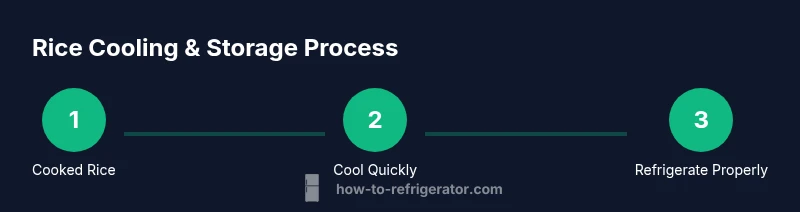
Yes, you can refrigerate rice once it has cooled, but you should act quickly. Transfer warm rice into shallow, airtight containers within two hours and refrigerate promptly to below 40°F (4°C). Reheat thoroughly to steaming hot before eating, and avoid leaving leftovers at room temperature for extended periods. Also, label with date and consume within 3-4 days.
Why Rice Safety Matters
According to How To Refrigerator, safe handling of cooked rice hinges on rapid cooling and proper storage to minimize bacteria growth. Rice can harbor heat-tolerant spores of bacteria such as Bacillus cereus, which may multiply if rice is kept warm or left out too long. The How To Refrigerator team emphasizes that the goal is to move cooked rice from the danger zone (between 40°F and 140°F, or 4°C and 60°C) as quickly as possible. Small, frequent portions cool more rapidly than a large mound in a pot, reducing the window for bacterial growth. This is especially important in households where rice is served as a staple, or kept as leftovers for later meals.
Beyond safety, proper cooling preserves texture and flavor. When rice sits in a warm environment too long, starches continue to gelatinize unevenly, leading to mushy grains or hard clumps. By following the recommended cooling steps, you protect both your health and your meal quality.
What happens if rice is left warm too long
Leaving rice in the warm range for extended periods increases the risk of toxin formation and bacterial growth. Bacillus cereus can produce toxins that are not destroyed by reheating, meaning reheating may kill some bacteria but not the toxins already formed. As a result, ingesting poorly cooled rice can cause foodborne illness with symptoms like nausea, vomiting, and abdominal cramps. Home cooks often underestimate the speed at which rice cools; therefore, rapid cooling is essential, especially in warm climates or when cooking large batches. The takeaway is simple: quick cooling and proper storage are non-negotiable steps in safe rice handling.
To minimize risk, discard rice left unrefrigerated beyond two hours, particularly if the room is warm. If rice has been stored for more than a day or two, it's safest to err on the side of caution and refrigerate or freeze in small portions rather than leaving it to sit in the kitchen.
Cooling rice quickly after cooking
Effective cooling begins at the moment rice leaves the pot. Spread hot rice in a thin, even layer on a clean, broad tray or baking sheet to maximize surface area. Use a clean spatula to break up clumps and promote air circulation. If you can, fan the sheet or place it near a cool kitchen vent to speed heat loss. After about 15-20 minutes, when the rice has noticeably cooled, transfer it to shallow, airtight containers. Avoid stacking thick layers of hot rice into a single container, as the inner portions will linger above safe temperatures.
Set a timer and monitor the temperature; the goal is to reach below 40°F (4°C) within two hours of cooking. If your kitchen is very warm, you should shorten the initial cooling window and move to the fridge sooner. The key is to move hot rice into the cooling path and reduce ambient warmth while preserving texture.
Temperature targets and storage implications
Once cooled, store rice in the refrigerator at or below 40°F (4°C). This temperature slows bacterial growth and helps maintain texture. Use airtight containers to avoid moisture loss or absorption of other fridge odors. Label each container with the date so you can track freshness and plan consumption within a safe window. While refrigeration is suitable for several days, freezing is an option for longer storage. When in doubt, prioritize safety: if rice smells off or shows visible mold, discard it.
For best results, plan portions that you can reheat in a single serving to avoid repeated heating cycles of the same rice.
Choosing containers and labeling for safety
The container choice matters. Use shallow, stackable containers with tight-fitting lids to promote rapid cooling and secure storage. Clear containers help you see leftovers at a glance, reducing the chance of forgetting items in the back of the fridge. Label each container with the date and content using a waterproof marker or pre-printed labels. For easy portioning, consider 1–2 cup portions; smaller portions cool faster and reheat more evenly. If you freeze, use freezer-safe containers and leave a little headspace to accommodate expansion.
Organized storage reduces waste and makes it easier to follow safe reheating practices.
Refrigeration vs freezing: when to use each
Refrigeration works well for leftovers you plan to eat within 3-4 days. For longer storage, freezing is a reliable option. Freeze rice in small portions (about 1–2 cups) on a tray until solid, then transfer to freezer-safe bags or containers. Frozen rice can retain quality for about 1-2 months. When ready to eat, thaw overnight in the fridge or reheat directly from frozen using a microwave or stovetop method, ensuring it reaches a safe internal temperature.
This approach minimizes waste and preserves flavor and texture more reliably than rewarming from large, thick blocks of rice.
Reheating rice safely: steps to reach steaming temperature
Reheating should restore the rice to steaming hot throughout to ensure safety. Microwave method: place rice in a microwave-safe dish with a splash of water to reintroduce moisture, cover, and heat in 1-minute intervals, stirring between intervals until steaming. Stovetop method: add a small amount of water or stock, cover, and heat on low until fully warmed, fluffed with a fork. Check that the center reaches at least 165°F (74°C) before serving.
Avoid reheating rice more than once and do not leave reheated rice at room temperature for more than two hours. These steps help maintain food safety while preserving texture.
Microwave vs stovetop reheating: pros and cons
Microwave reheating is fast and convenient, but it can unevenly heat thicker rice portions. To counter this, stir halfway and add a splash of water to maintain moisture. Stovetop reheating yields more even heat distribution and creamy texture for some dishes but requires more time and attention. In both methods, ensure the final temperature is steaming hot throughout to minimize safety risks. Choose the method that fits your schedule while adhering to safety guidelines.
Common myths and mistakes about rice storage
Many home cooks believe rice left out overnight is still safe if smells fine. This is a risky assumption, as toxins may form even if the rice looks and smells normal. Another common myth is that reheating always makes leftovers safe; while reheating kills many bacteria, it does not remove toxins already produced. Always cool rice quickly, store properly, and reheat thoroughly to an internal temperature that is hot to the touch. Finally, avoid keeping leftover rice in the fridge for too long; freshness windows help ensure quality and safety.
Quick-reference time guidelines
For safe handling, aim to cool cooked rice and place it in the fridge within two hours. Consume refrigerated rice within 3-4 days, or freeze for longer storage. Reheat to steaming hot, ideally to an internal temperature of 165°F (74°C). When in doubt about safety or quality, discard rather than risk illness.
Authority sources
- U.S. Food Safety and Inspection Service (FSIS): https://www.fsis.usda.gov/food-safety
- Center for Disease Control and Prevention (CDC): https://www.cdc.gov/foodsafety
- U.S. Food and Drug Administration (FDA): https://www.fda.gov/food-safety
Practical kitchen checklist
- Cook rice to the desired texture, then begin cooling immediately.
- Use shallow, airtight containers and label with date.
- Cool rice to below 40°F (4°C) within two hours.
- Reheat to steaming hot, check internal temperature, and avoid multiple reheats.
- Freeze portions for long-term storage and thaw safely.
Authority sources (alternate)
For further guidance on safe rice handling, consult official sources such as FSIS, CDC, and FDA guidelines. These organizations provide general safety principles applicable to home cooking and leftovers, including rapid cooling, proper storage temperatures, and safe reheating practices.
Practical kitchen checklist (alternate)
- Prepare cooling plan before cooking large batches.
- Create portioned containers for quick cooling and reheating.
- Keep an accurate fridge temperature and labeled storage items.
- Follow reheating rules to reach a safe internal temperature before serving.
Tools & Materials
- Airtight, shallow containers(2–3 cups per portion; shallow to promote cooling)
- Labeling supplies(date and contents on each container)
- Food-safe thermometer (optional)(verify reheating to at least 165°F (74°C))
- Cooling rack or baking sheet(spread rice in a thin layer for rapid cooling)
- Spatula or spoon for portioning(efficient transfer and portioning)
- Ice bath option (optional)(only for very small batches; not required)
Steps
Estimated time: 60-90 minutes
- 1
Prepare and plan for safe cooling
Have all containers, labels, and tools ready before you finish cooking. This ensures you can move quickly to the cooling stage and reduce the time hot rice spends in the danger zone.
Tip: Pre-warm containers lightly to avoid shocking the hot rice, then spread it out evenly on a tray. - 2
Spread rice into a shallow layer
Transfer hot rice to a flat baking sheet or shallow pan and use a fork to fluff. A thin layer cools faster than a dense mound, helping you reach safe temperatures sooner.
Tip: If rice is clumped, gently break apart with a fork to increase surface area. - 3
Cool briefly at room temperature
Allow the rice to cool at room temperature for 15-20 minutes, but do not exceed 30 minutes. Prolonged room-temperature cooling invites bacterial growth.
Tip: Keep the kitchen well-ventilated to speed heat loss and prevent condensation. - 4
Transfer to refrigeration in shallow containers
Move the cooled rice into airtight containers, distributing evenly to minimize thick layers. Place containers in the fridge promptly.
Tip: Don’t stack hot containers; allow them to cool briefly before piling to prevent uneven cooling. - 5
Label and date each portion
Seal and label every container with the date you cooked the rice. This helps you plan safe consumption windows and reduces waste.
Tip: Use a consistent label format to make quick rotation easier. - 6
Reheat to steaming hot before serving
When ready to eat, reheat rice until all parts reach 165°F (74°C). Stir mid-reheat for even heating and check that steam is visible throughout.
Tip: Avoid reheating multiple times; store leftovers properly and reheat once if possible.
FAQ
Can rice be left out at room temperature safely?
No. Rice should not be left at room temperature for more than two hours. Bacteria can grow rapidly in the danger zone and may produce toxins that survive reheating.
Rice left out too long can cause illness, so refrigerate quickly after cooking.
What is the safe cooling window for cooked rice?
Aim to cool rice to below 40°F (4°C) within two hours of cooking, then store in the fridge. Shorter cooling times reduce the risk of toxin formation.
Cool the rice fast and refrigerate promptly.
Can I freeze cooked rice?
Yes. Freeze in small portions to maintain texture, then thaw in the fridge or reheat directly from frozen. This extends storage safely beyond the typical fridge window.
Freezing is a good option for longer storage.
Is it safe to reheat rice multiple times?
It's best to reheat only once. Reheating multiple times increases the chance of uneven heating and quality loss, and may raise safety concerns.
Reheat once and discard extra leftovers after reheating.
What should I do if rice smells off after cooling?
If rice smells sour or shows visible mold or unusual texture, discard it. Do not rely on taste as a safety test.
Trust your senses—when in doubt, throw it out.
Does fridge temperature affect rice safety?
Yes. A fridge temperature of 40°F (4°C) or below slows bacterial growth, helping preserve safety and texture. Use a fridge thermometer to confirm.
Keep the fridge cold and monitor it with a thermometer.
Watch Video
Top Takeaways
- Cool rice quickly in shallow containers
- Refrigerate within two hours of cooking
- Store in labeled portions at 40°F (4°C) or cooler
- Reheat to steaming hot (165°F/74°C) before eating
- Freeze leftovers for long-term storage
- Use safe, organized storage to reduce waste