How to Remove Ice Maker from Samsung Refrigerator: A Step-by-Step Guide
Learn how to safely remove the ice maker from Samsung refrigerators with a clear, step-by-step guide. Includes tools, safety tips, model variations, and troubleshooting for risk-free maintenance.


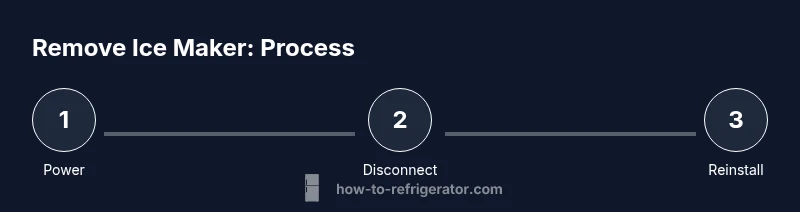
You can safely remove the ice maker from a Samsung refrigerator by unplugging the unit, shutting off the water supply, removing the trim and mounting screws, disconnecting the water line, and lifting the ice maker out. Gather a few basic tools and follow the step-by-step guide to avoid leaks or damage.
Why you might need to remove the ice maker
Removing the ice maker is commonly required for cleaning, clearing jams, or replacing faulty components. If you’re tackling this task, you might search for how to remove ice maker from samsung refrigerator to learn the steps. According to How To Refrigerator, starting with power-off and water shutoff reduces risk and avoids leaks or electrical shocks. Samsung ice makers are designed for occasional servicing, and proper disassembly minimizes the chance of damaging the dispenser, the wiring harness, or the plastic mounting frame. Before you begin, identify your model’s ice maker module. Some units are mounted behind a faceplate or trim, while others are integrated with the freezer cabinet. A calm, methodical approach keeps parts aligned and prevents lost screws. Collect your safety equipment and lay out towels to catch any residual water. As you proceed, remember that ice maker removal is a maintenance task rather than a repair for a failed ice maker that refuses to dispense.
Safety and prep steps
Safety first. Unplug the refrigerator from the wall outlet and shut off the dedicated ice-maker water supply valve. Move the unit to a clear workspace and place towels or a shallow tray to catch spills. Wear protective gloves and safety glasses to guard against sharp edges or leaking fittings. If your model requires removing a trim piece, do so gently with a small screwdriver to avoid cracking plastic. Always have the owner’s manual handy for model-specific screws or connectors. By following these steps, you reduce the risk of electric shock, water damage, and scratches.
Understanding model variations and what to expect
Samsung refrigerators come in different configurations; some ice makers detach with a few screws, others use a locking clip or a harness behind a plastic cover. The How To Refrigerator team found that model-specific guides are essential because misidentifying a connector can bend a pin or damage the water line. Before you touch any wiring or tubing, take clear photos from multiple angles. If the ice maker uses a built-in sensor, note how it connects to the main control board. Understanding these variations helps you plan the disassembly and reduces surprise during removal.
How removal interacts with water line and electrical connectors
Disconnecting a water line requires releasing the compression nut carefully to avoid spraying water. Keep a bucket or towel ready. Do not yank on hoses; instead, loosen fittings slowly and check for residual pressure. The electrical connector is typically a small plug behind the ice-maker assembly; press the release tab evenly and pull straight out. If the connector feels stiff or brittle, stop and reassess with a flashlight. A calm, patient approach minimizes damage to seals and ensures a clean reassembly.
Reinstallation and testing after removal
When reassembling, reverse the steps in the proper order, ensuring all mounting screws, clips, and covers snap back into place. Reconnect the water line and tighten fittings securely, then restore power. Turn the water supply back on slowly and check for leaks using a paper towel along the connection. If you hear unusual noises or see a drip, power down again and tighten the fitting. Run a few cycles with the ice maker empty to verify proper operation and no leaks.
Common issues after removal and troubleshooting
After removal and reassembly, you may encounter leaks, ice production issues, or misaligned bins. If you notice leaks around fittings, reseat the tubing and tighten slowly; do not over-tighten. Ice production may take several cycles to resume after reassembly; ensure the bin and sensor are properly seated. If a sensor or connector appears damaged, replace components or consult a professional.
Tools & Materials
- Phillips head screwdriver (size #2)(Essential for mounting screws)
- Nut driver or small socket set(For mounting screws and fittings)
- Pliers(Assists with clamps or water-line fittings)
- Gloves(Protect hands from sharp edges and hot surfaces)
- Towel or small bucket(Catches drips and spills)
- Flashlight(Helps inspect connectors in tight spaces)
- Owner's manual or model information(Identify model-specific screws and connectors)
- Masking tape or small labels(Keep track of screws and parts)
Steps
Estimated time: 25-45 minutes
- 1
Power down and prepare
Unplug the refrigerator from the wall outlet and shut off the dedicated ice maker water supply. Move to a clear workspace and lay towels to catch any water. Have the owner’s manual handy for model-specific screws or connectors.
Tip: Use a flashlight to locate hidden screws and double-check the power cord before touching metal parts. - 2
Remove ice bin and trim
Remove the ice bin and any trim covers that hide the ice maker mounting. Keep small screws in a labeled container to prevent loss. This step exposes the mounting screws and electrical connector.
Tip: If trim is stubborn, use a plastic pry tool to avoid cracking. - 3
Disconnect electrical connector
Locate the electrical connector behind the ice maker and press the release tab while pulling straight out. Do not twist or yank; misalignment can damage the harness.
Tip: Take a photo of the connector orientation before disconnecting. - 4
Release the water line
With the power off, loosen the water-line fitting slowly using a wrench or pliers; have a towel ready for residual water. Do not force fittings; reduce pressure first.
Tip: Place a towel under the connection to catch any remaining water. - 5
Remove mounting screws
Unscrew the mounting screws that secure the ice maker frame to the cabinet. Gently slide the unit away from the wall while supporting it to avoid bending tubing.
Tip: Label screws so reinstallation is straightforward. - 6
Lift out the ice maker
With the screws removed, lift the ice maker straight out to avoid tangling hoses. Inspect for any mounting clips or brackets that must be detached separately.
Tip: Work slowly and keep parts aligned to prevent damage. - 7
Inspect, store, or replace
Inspect the ice maker for wear on seals, hoses, and the sensor; decide whether to repair, replace, or reinstall later. If you plan reinstallation, set aside all screws and note connection points.
Tip: If a seal is damaged, replace before reassembly.
FAQ
Do I need to unplug the refrigerator to remove the ice maker?
Yes. Unplugging the fridge helps prevent electrical shock while you disconnect water lines and remove components.
Yes, unplug the fridge to stay safe while you work on the ice maker.
Is removing the ice maker a warranty issue?
Warranty terms vary by model and provider. Check your documentation or contact Samsung support before attempting removal.
Check your warranty terms; removing an ice maker can affect coverage in some cases.
What tools do I need for Samsung ice maker removal?
A Phillips screwdriver, a nut driver or small socket, pliers, towels, and a flashlight are commonly sufficient. Some models may require a trim removal tool.
You’ll typically need a screwdriver, a nut driver, and towels.
Can I reinstall the ice maker after maintenance?
Yes. Reinstall by reversing the removal steps, ensuring seals and connections are secure.
Yes, reinstallation is possible if you keep track of all connections and screws.
What if water leaks after removal?
Shut off the water, inspect fittings for tightness, and test again. A drip usually means a loose connection or damaged seal.
If leaks show up, power down and recheck the connections.
Are all Samsung ice makers removed the same way?
There are variations between models. Always consult model-specific guides and photos for accurate steps.
Models differ, so refer to your specific guide for best results.
Watch Video
Top Takeaways
- Power down safely before any work
- Document connections with photos for reassembly
- Follow model-specific steps to avoid damage
- Test for leaks after reassembly