Where Do Refrigerators Get Water From
Discover exactly where refrigerators draw water from, how the supply line is installed, and how filters, reservoirs, and maintenance affect your ice and water dispenser. A data-driven guide by How To Refrigerator to help homeowners troubleshoot confidently.


Most modern refrigerators with ice makers or water dispensers source water from your home's cold-water supply via a dedicated supply line. A water inlet valve controls flow, sending water through tubing to an internal reservoir or directly to the ice maker. An onboard filter then purifies water before dispensing. Some models pre-filter and store water in a built-in tank.
How refrigerators get water: the core mechanism
Where do refrigerators get water from? Most modern refrigerators with ice makers or water dispensers source water from your home's cold-water supply via a dedicated supply line. A water inlet valve at the rear of the unit opens when you press for ice or a drink, allowing water to flow through a short run of flexible tubing to an internal reservoir or directly to the ice-making tray. The path may be different depending on the model, but the principle is the same: water is drawn from the house, regulated, filtered, and then cooled or dispensed on demand. According to How To Refrigerator, the reliability of this flow depends on the supply line condition, the integrity of the valves, and the health of the filter. If you notice no water or weak flow, the issue could be a kinked line, a failed inlet valve, or a clogged filter. Understanding this core mechanism helps homeowners troubleshoot more effectively without unnecessary part replacements.
Water line connections and installation basics
The installation starts at the home’s cold-water supply valve, typically under the sink or behind the fridge. A copper or flexible braided line runs from this shut-off valve to the fridge’s water inlet. Always use the manufacturer-approved tubing and fittings, and ensure a tight seal to prevent leaks. Plan for a few inches of slack to avoid line kinks, and route the line away from heat sources or moving components. If your home uses PEX or copper, select compatible fittings and use pipe-safe sealants. Most models require a gravity-free line with a straight run and a clean, accessible shut-off valve for maintenance. How To Refrigerator recommends testing the line after installation by running water for a few minutes to purge air and check for drips.
Filters and water quality: what actually gets filtered
Water quality starts at the source and continues through the fridge’s filtration system. The onboard filter removes common particulates and chlorine taste to improve clarity and flavor. Filter cartridges typically target particles in the range of a few microns, reducing sediment and odors. Replacing the filter on the manufacturer’s schedule helps maintain taste and flow; delayed replacement can lead to slower dispensing and reduced water quality. Some models enable dual filtration stages or upstream pre-filters, especially in areas with poorer water. Always verify the correct filter model for your refrigerator, as improper filtering can alter dispenser performance and water flavor.
Storage tanks vs direct-line systems
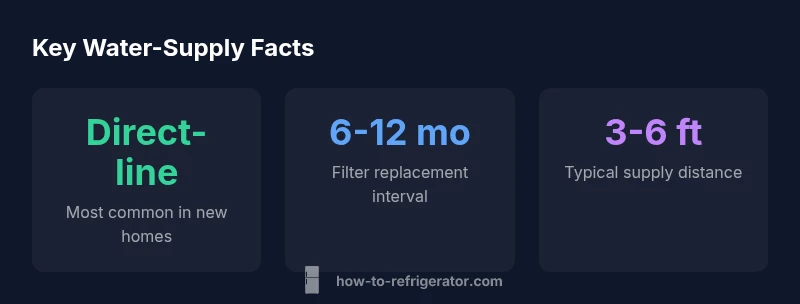
Not all fridges connect directly to the water line. Some models use an internal reservoir or tank that fills from the supply line and then feeds the ice maker and dispenser. Direct-line systems supply water immediately to the ice maker, which can reduce wait times but depend more on consistent line pressure. Reservoir-based designs can be more forgiving in homes with variable water pressure but may require occasional manual refills or more frequent filter changes to maintain taste. The choice often depends on plumbing layout, space behind the unit, and how you use ice and water daily.
Smart features and how they affect water supply
Modern refrigerators increasingly include smart sensors and diagnostic alerts that monitor water flow, filter life, and valve performance. If the filter is overdue or the valve detects a fault, you may see a notification on the display or a blockage-inspired error code. Some models adjust dispensing based on detected line pressure or temperature, which can slow dispensing during peak demand or high ambient temperatures. Understanding these features helps homeowners distinguish normal operating variability from actual faults, reducing unnecessary service calls. How To Refrigerator notes that smart diagnostics are helpful, but routine checks remain essential for long-term reliability.
Troubleshooting common water-supply problems
If the ice maker stops producing ice or the dispenser pours only a trickle, start with the simplest checks: verify the water supply valve is fully open, inspect the line for kinks, and confirm the filter isn’t overdue. A leak at the inlet valve or hose connection is a common culprit; wipe spills and tighten fittings as needed. For slow flow, consider replacing the water filter and flushing the line to remove trapped air. If freezing forms at the freezer coil or defrost drain becomes blocked, water distribution can be impeded—addressing these issues requires careful inspection and sometimes professional service. Always unplug the unit before servicing internal components.
Maintenance and long-term care
Create a simple maintenance calendar that includes checking the supply line for wear, inspecting the shut-off valve for leaks, and replacing the water filter on schedule. A quick annual visual inspection can catch loosened connections or worn gaskets before they cause bigger leaks. Keep the exterior clean to minimize dust around vents and the rear panel, which helps airflow and overall performance. If you move or relocate the fridge, disconnect and drain the line, then re-connect with care to ensure a new purge and leak test. As part of the homeowner routine, re-check connections after any plumbing work in the area.
Moving, upgrading, or replacing a fridge with a water dispenser
When upgrading or replacing a fridge, verify that your new model supports the water-feature you want (ice maker, crush ice, or water dispenser) and whether your home has a suitable cold-water supply. If you’re retrofitting an older home, you may need a new shut-off valve or longer supply lines. Before installation, turn off the water at the main valve and perform a leak test after connecting the new line. Plan for a short purge to remove air and to verify that the ice maker fills correctly. This approach minimizes post-installation troubleshooting and ensures steady performance.
Water-supply configurations for refrigerators
| Scenario | Water Source | Connection Type | Maintenance Frequency |
|---|---|---|---|
| Ice maker direct-line | Dedicated cold-water supply | Inlet valve + tubing | Filter replacement every 6-12 months |
| Internal tank reservoir | Internal reservoir | Independent tank with pump | Inspect leaks yearly |
| Non-dispense models | No direct water line | N/A | Not applicable |
FAQ
What is the most common water source for refrigerators?
Most fridges with ice makers connect to a dedicated cold-water supply line from the home's plumbing. If your home lacks a line, consider a retrofit or use a model without an ice maker.
Most fridges with ice makers use a dedicated cold-water line. If your home doesn’t have one, you might choose a model without an ice maker.
Do all refrigerators require a water line?
No. Some compact or older units operate with an internal reservoir. Refrigerators with ice makers typically need a cold-water supply.
Not all need a water line—some use reservoirs; many with ice makers do need a line.
How do I know when to replace the fridge water filter?
Check the manufacturer's recommended interval; signs include off-taste, cloudy water, or slower dispensing. Replace as advised.
Follow the manufacturer's schedule, and watch for taste or flow changes.
Can I connect a fridge to a hot water line?
No. Fridges require cold-water supply; connecting to hot water can damage components and create safety hazards.
Don't hook it to hot water.
What maintenance is needed after moving the fridge?
Shut off and disconnect the water line, check for leaks, and purge air by running water for a few minutes after reconnecting.
Turn off, inspect, and run water after reconnecting.
Why is the ice maker dispensing slowly?
Likely a clogged filter or a restricted line, a faulty inlet valve, or ice maker alignment issue. Check the filter, then inspect line and valve.
A slow ice maker is usually a clogged filter or kinked line.
“Understanding where the water comes from helps homeowners diagnose problems quickly and avoid unnecessary replacements.”
Top Takeaways
- Identify your fridge's water source first
- Check supply line for kinks and valve for leaks
- Replace filter on schedule to maintain taste and flow
- Prefer direct-line connections for reliable water supply
- When moving, shut off water and disconnect safely