How Long Does Cookie Dough Last in the Refrigerator? A Practical Guide
Learn how long cookie dough lasts in the refrigerator, what factors affect shelf life, and practical storage tips to maximize freshness, including safe freezing and spoilage signs for home bakers.


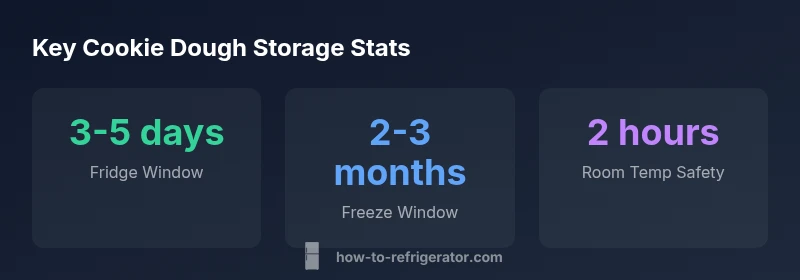
The general rule is that standard cookie dough stored in the refrigerator lasts about 3-5 days. Dough with eggs or dairy should be used within 2-3 days to minimize safety risk. If you won’t bake soon, freezing is safer for longer storage, typically 2-3 months. Always seal the container tightly and label with the date you mixed the dough.
How long does cookie dough last in the refrigerator?
The exact window depends on ingredients, storage methods, and whether the dough contains eggs or dairy. For standard chocolate chip dough kept in an airtight container, a safe fridge window is typically 3-5 days. If the dough contains eggs or dairy, aim for 2-3 days and refrigerate at a steady 34-40°F (1-4°C). If you plan to bake later than that window, freezing dough is the safer option, usually allowing 2-3 months of storage. Always seal and label with the date to track age and prevent waste.
Key factors that influence shelf life
Storage duration is driven by temperature stability, ingredient sensitivity, and how you handle the dough.
- Temperature stability matters: a consistently cold fridge slows bacterial growth.
- Ingredient sensitivity: eggs, dairy, and cream-based add-ins shorten the safe window.
- Handling and exposure: keeping dough sealed minimizes moisture loss and contamination.
- Air exposure and moisture: use airtight containers to preserve texture and prevent freezer burn if you freeze later.
- Labeling: dating the dough helps you bake while quality remains high, not past its prime.
Egg-based vs eggless dough: storage implications
Egg-based doughs tend to spoil faster in the fridge due to perishable proteins and fats; they usually fit the 2-3 day window. Eggless or dairy-free doughs (using oils or margarine) can last a bit longer in the fridge, often around 4-5 days, but flavor and texture may still shift. If you’re preparing dough ahead, consider freezing as a more reliable long-term option, then thaw in the fridge before baking.
The How To Refrigerator team notes that eggs increase microbial risk, so plan bake days accordingly and rely on freezing for longer-term planning.
Fridge storage best practices: containers, temps, labeling
To maximize longevity:
- Use airtight containers or resealable bags to limit moisture loss and odor transfer.
- Portion dough into evenly sized disks or logs for easy use without re-wrapping.
- Label with date and intended bake date; store dough away from raw meats to avoid cross-contamination.
- Keep in the coldest part of the fridge, not the door, where temperature fluctuates with every opening.
- If dough contains dairy or eggs, avoid frequent temperature changes by minimizing trips in and out of the fridge.
Saving time: dough in logs vs scooped dough
Storing dough in logs offers several advantages: consistent portion sizes, easier freezing, and faster bake days. Logs fit neatly in a loaf pan or tightly wrapped cylinders; scooped dough stores well in freezer bags but can bake unevenly if portions thaw unevenly. Whichever method you choose, ensure you press out excess air and seal securely to prevent freezer burn and odor absorption.
Signs dough has spoiled and what to do
Trust your senses: discard dough if you notice sour smell, color changes (greenish or grayish tint), a sticky or unusually wet texture, or mold. A slight butter or sugar aroma is normal, but off-putting or rancid scents indicate spoilage. When in doubt, err on the side of safety and discard.
Freezing for longer-term storage (beyond the fridge)
Freezing dough is a reliable option for longer storage. Wrap dough tightly in plastic wrap, then place in a freezer bag or rigid container. Freeze up to 2-3 months. Thaw in the refrigerator overnight or bake from frozen with a 1-2 minute longer bake time. Freezing preserves flavor and texture better than extended fridge storage.
Bake-day workflow: planning with dough storage
Plan bake days by spacing out dough portions in the fridge or freezer. On baking day, move required portions to the fridge to thaw slowly, then allow them to come to a workable chill for even spreading and consistent cookies. This approach helps maintain texture and flavor while avoiding last-minute trips to the store.
Common mistakes that shorten shelf life
- Leaving dough at room temperature for extended periods.
- Not sealing dough properly, causing moisture loss or odor transfer.
- Storing dough near strong-smelling foods or raw meat.
- Ignoring dates or mixing new dough on top of older dough, which accelerates spoilage risk.
- Freezing dough without proper wrapping, leading to freezer burn and aroma absorption.
Fridge shelf life by dough type
| Dough Type | Fridge Shelf Life | Notes |
|---|---|---|
| Standard cookie dough with eggs | 3-5 days | Keep airtight; refrigerate promptly |
| Egg-free/vegan dough | 5-7 days | Dairy-free options tend to last longer in fridge |
| Dough with dairy (butter/cream) | 3-4 days | Wrap tightly to limit moisture loss |
| Dough with perishable add-ins | 2-3 days | Use sooner due to dairy content |
FAQ
Can I store cookie dough in the fridge for more than a week?
Most standard cookie dough lasts 3-5 days in the fridge. Some doughs with dairy may last up to 5-7 days, but quality diminishes over time. For stretches beyond a week, freezing is recommended.
Usually not beyond a week; freeze if you need longer storage.
Is it safe to bake dough that has been refrigerated for several days?
Yes, if the dough has remained within its safe window (generally 3-5 days, or up to 7 for some egg-free doughs). Check for off smells or color changes before baking.
If it smells off or looks different, discard.
Does refrigerating dough affect the texture of baked cookies?
Chilling dough often improves flavor and texture by reducing spreading. It can create thicker cookies with more defined edges, especially if the dough has fats that solidify when cold.
Chilling can help cookies rise better and taste fuller.
What is the best way to thaw frozen cookie dough?
Move dough to the fridge to thaw overnight for safe, even thawing. You can also thaw at room temperature for 1-2 hours if you're in a hurry, but avoid warm environments that can promote bacterial growth.
Thaw slowly in the fridge for best results.
Does freezing dough change baking times?
Baking from frozen can take 1-2 minutes longer than dough thawed in the fridge. If cookies look underbaked, continue baking in short increments and watch closely.
Expect a minute or two extra if baking straight from frozen.
“Consistent temperature control and proper sealing are the cornerstones of safe, reliable dough storage. When in doubt, refrigerate promptly and freeze for long-term planning.”
Top Takeaways
- Store dough in airtight containers for best durability
- 3-5 day fridge window for standard dough; freeze for longer
- Label dates to prevent waste and improve planning
- Avoid room-temp exposure; always refrigerate promptly
- Use dough in the recommended window for best results