French Door Refrigerator vs Bottom Freezer: A Practical Comparison
Explore the key differences between french door refrigerators and bottom freezers. This analysis covers design, energy use, storage, price, and maintenance to help homeowners choose the best fridge for their kitchen and budget.


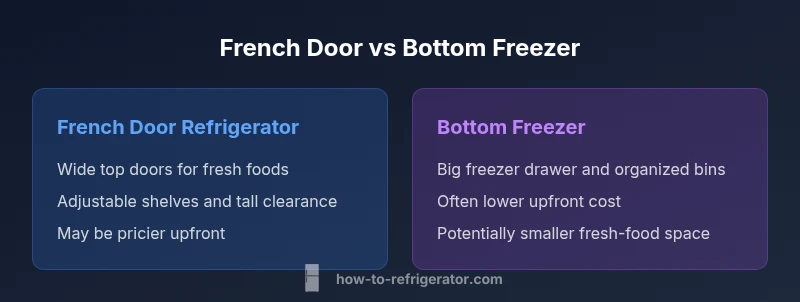
When weighing french door refrigerator vs bottom freezer, the decision hinges on daily access versus freezer capacity and upfront budget. A french door model offers wide, convenient access to fresh foods and tall shelves, while a bottom freezer emphasizes compact fridge layout with a substantial freezer drawer. The How To Refrigerator team frames the choice around layout, storage needs, and long-term value, guiding homeowners to the best fit for their kitchen use.
Overview and Core Differences
Choosing between a french door refrigerator vs bottom freezer is more than a stylistic preference; it reflects how you use your kitchen every day. The french door design places the fresh-food compartment on top with wide, split doors that swing outward, while the bottom freezer layout positions the freezer below a standard-height fridge. In practical terms, french door models tend to excel at groceries that benefit from easy access and visibility, such as produce, dairy, and beverages, thanks to wide shelves and tall interior clearances. Bottom freezers, by contrast, allocate more freezer space with a dedicated bottom drawer or two-section drawer, which many households rely on for bulk meat, frozen meals, and seasonal stock. According to How To Refrigerator, the ultimate choice should align with how you cook, how you shop, and how you organize your kitchen workflows.
When considering the phrase french door refrigerator vs bottom freezer, keep in mind that both designs have evolved toward better energy efficiency and smarter organization. The How To Refrigerator team notes that modern models often include adjustable shelves, temperature-controlled drawers, and improved seal technology. For families who value rapid access to fresh items, the french door configuration can feel more intuitive; for those who prioritize freezer capacity and lower upfront cost, a bottom freezer can deliver strong value. This analysis weaves together accessibility, storage flexibility, and cost to help homeowners decide which design will fit best in their space and lifestyle.
Comparison
| Feature | French Door Refrigerator | Bottom Freezer |
|---|---|---|
| Door Design and Access | Two wide top doors with full-width shelves; easy access to fresh foods | Fridge on top with a bottom freezer drawer; typical single fridge door |
| Storage Flexibility | Large door bins, adjustable shelves, and tall clearance for bulky items | Developer-friendly freezer drawer with organized bins; fridge shelves may be shallower |
| Energy Efficiency Focus | Often optimized for fresh-food handling; efficiency varies by model | Bottom-freezer designs frequently emphasize efficient cooling in both zones |
| Primary Use Case | Best for households that prioritize fresh-food visibility and quick access | Best for households that need substantial freezer capacity or lower upfront cost |
| Price Range (conceptual) | Typically higher upfront for feature-rich models | Usually more affordable upfront with solid long-term value |
| Footprint and Clearance | Requires width for door swing and clearances around the doors | May fit more predictably in tighter spaces since the doors don’t swing outward |
Strengths
- Excellent access to fresh foods with wide, open shelves
- Flexible interior layouts and customizable storage
- Strong resale value on popular modern designs
- Great for entertaining and quick meal prep
Cons
- Typically higher upfront cost and potential repair price tag
- Door openings require more clearance in the kitchen
- Some models have more complex seals and hinges that may need maintenance
French door refrigerators offer superior daily access; bottom freezers excel in freezer space and cost value
Choose french doors if you prioritize easy access and display-worthy interior space. Opt for bottom freezers if you need more freezer capacity and lower upfront cost, especially in smaller or budget-conscious kitchens.
FAQ
What is the main functional difference between a french door refrigerator and a bottom freezer?
The main difference is how they organize space. French door models place fresh food at the top with wide doors, while bottom freezers put more emphasis on the freezer with a storage drawer below the fridge. This affects access, organization, and how you plan your groceries.
The French door puts fresh food at eye level, the bottom freezer centers on freezer capacity. Think about how you shop and cook.
Which design saves more energy?
Energy efficiency varies by model rather than by design alone. Both French door and bottom freezer platforms offer efficient options today, especially in Energy Star certified lines. Look for models with high insulation quality and advanced compressors.
Energy efficiency depends on the model. Check Energy Star ratings when choosing.
Are french doors harder to maintain than a bottom freezer?
Maintenance challenges depend on hardware and seals rather than color or design. French doors may have extra hinge and seal points; bottom freezers may require attention to defrost drains and drawer tracks. Regular cleaning keeps both in good condition.
Maintenance varies by model, but regular care helps both designs last longer.
Which design is better for small kitchens?
In tight spaces, a bottom freezer can fit better if you have to maximize fridge depth while minimizing door clearance. However, if you need quick access to groceries, a compact French door with efficient use of vertical space can also be suitable.
Bottom freezers can save door clearance; French doors save vertical space.
What should homeowners ask when shopping for these designs?
Ask about interior dimensions, door swing clearance, energy certifications, shelf adjustability, drawer organization, and warranty terms. Also compare total capacity with both fresh-food and freezer space considered.
Ask about capacity, door swing, energy rating, and warranty.
Top Takeaways
- Prioritize daily access vs freezer capacity in your decision
- Consider kitchen footprint and door swing when measuring fit
- Balance upfront price against long-term value and energy use
- Assess interior flexibility: adjustable shelves vs organized drawers
- Seek modern efficiency features and reliable seals for longevity