Can You Put a Refrigerator in a Corner? A Homeowner's Guide
Discover whether a refrigerator can fit in a corner and learn practical, safe placement tips for ventilation, door swing, and electrical access. A homeowner-friendly guide from How To Refrigerator.


You can put a refrigerator in a corner, but it requires planning. Ensure adequate ventilation, proper electrical access, and room for the door to swing freely. Check that the corner doesn’t trap heat or block vents, and plan a layout that keeps cords and hoses clear. This guide walks you through step-by-step checks and placement tips.
Can a Refrigerator Fit in a Corner?
The short answer is yes, but the corner is a constrained space that can complicate cooling and accessibility. According to How To Refrigerator, many kitchens naturally create tight zones near walls or cabinets, but with careful placement you can maintain airflow and keep doors usable. Start by confirming the intended corner is open on at least two sides so air can circulate and so you can access the controls, shelves, and door when needed. Consider the fridge’s depth relative to the cabinet face and whether the door can swing fully without colliding with nearby drawers, islands, or pantry doors. If your layout forces the machine into a very tight niche, you may need to rotate the unit or shift adjacent furniture slightly to create a clear path. Remember, a corner setup isn’t inherently bad; it’s simply a matter of balancing space, ventilation, and usability. The takeaway: plan carefully, verify clearances, and test the door movement before you finalize the position.
Ventilation and Clearance: The Corner Constraint
Ventilation is essential for any refrigerator, but in a corner it can become the deciding factor between a long, trouble-free service life and frequent cooling issues. Leave space around the back and sides to allow heat to escape and air to circulate. Avoid packing the appliance tightly against a wall or cabinet that could trap warm air near the condenser. If the corner has an obstructed vent or a drafty gap, consider using a small spacer or trim piece that preserves airflow. When possible, position the unit where it won’t be shaded by cabinets or heat sources like direct sunlight or a nearby oven. Consistent airflow helps the compressor work efficiently and can contribute to energy savings over time. Always reference the model’s manual for any model-specific clearance recommendations and adjust your layout accordingly.
Door Swing and Cabinet Clearance
Door clearance is a practical concern in corner layouts. Depending on the hinge side and door design, the refrigerator may collide with adjacent cabinetry when opened fully. Measure the arc of the door and compare it to the available space. If the swing is restricted, you may need to swap to the opposite hinge configuration (if supported by your model) or reconfigure nearby cabinetry slightly to create a wider opening. Consider the path the door travels when opened and ensure there’s enough room for a person to stand and retrieve groceries comfortably. If you regularly load bulky items, you’ll want extra clearance for easy access. In some kitchens, a shallow-depth model or a convertible configuration can make corner placement more practical. Pro tip: test the door before finalizing placement.
Electrical, Water, and Safety Considerations
Electrical access is critical when placing a fridge in a corner. Ensure there is a grounded outlet nearby and avoid using extension cords, which can pose a fire hazard. If your kitchen’s wiring feels dated, consider upgrading the circuit or consulting a professional to ensure the outlet can handle the appliance’s startup surges. If your fridge includes an ice maker or water dispenser, plan for a nearby water line and proper shutoff valve. Keep the power cord and any plumbing out of the door’s swing zone to prevent leaks or pinching the cord. Also, ensure the floor is clean, level, and free of debris that could impede the appliance’s feet or wheels. Safety first means double-checking electrical and water connections before powering the unit.
Planning and Measurement Before Moving
Thorough planning reduces the risk of damage to the fridge or surrounding cabinetry. Start by measuring the refrigerator’s depth, width, and height, then compare them to the corner’s available dimensions. Don’t forget to account for door swing, clearance for airflow, and space to access shelves. Plan a path from the current location to the corner that avoids stairs, tight turns, or uneven flooring. Enlist a helper to move the appliance safely, and use a protective mat or furniture sliders to prevent floor damage. Mark the final position with painter’s tape so you can step back and confirm it looks right from the doorway.
Alternatives If Corner Placement Isn’t Feasible
If the corner proves too tight for safe ventilation or door operation, explore alternatives instead of forcing the placement. Consider moving the fridge to a nearby wall with better clearance, reconfiguring adjacent cabinets, or choosing a compact model with a shallower depth. For kitchens with limited width, a counter-depth refrigerator can provide more flexibility while keeping the primary work zone functional. In some cases, a side-by-side or French-door configuration mounted on a different wall may offer superior usability without compromising airflow. The objective is a layout that preserves performance, accessibility, and energy efficiency.
Tools & Materials
- Tape measure(2–3 m (6–10 ft) preferred)
- Carpenter's level(Ensure the fridge sits level)
- Stud finder(Useful for wall modifications, not always needed)
- Marker or pencil(Mark final position and door clearance)
- Helper or appliance dolly(Moving the fridge safely requires at least one extra person)
- Flashlight or headlamp(Check back vents and tight corners)
- Furniture sliders or protective mat(Protect floors during movement)
- Leveling feet kit or shims(Adjust for uneven flooring)
- Safety gloves(Grip and protect hands while moving)
Steps
Estimated time: Total time: 1-2 hours
- 1
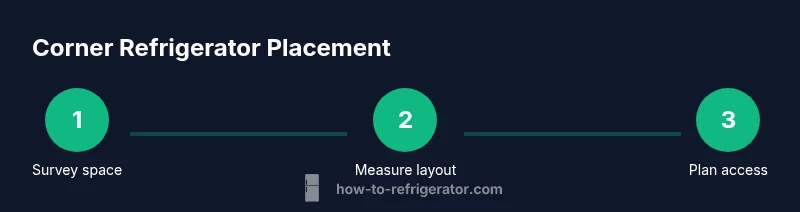
Survey the space
Inspect the corner for open space on at least two sides and note any obstacles. Confirm there’s a nearby outlet and no heat sources that could affect cooling. Visualize the door arc and ensure there’s room for groceries to be loaded without obstruction.
Tip: Take photos of the corner from multiple angles to compare layouts later. - 2
Measure the fridge and the corner
Record the fridge’s depth, width, and height. Measure the available width and depth in the corner, including door clearance. Subtract a small buffer for airflow and door swing to avoid tight fits.
Tip: Double-check measurement units (inches vs centimeters) to avoid miscalculations. - 3
Check electrical and water access
Identify a grounded outlet within reach of the power cord and locate a water line if you have an ice maker or water dispenser. Ensure no cords cross the door path and that cords won’t trap when doors open.
Tip: Test the outlet with a simple device before moving the fridge near it. - 4
Plan your path and clear a route
Clear the route from the current location to the corner, removing small obstacles and ensuring flooring is smooth. If stairs or tight corners exist, enlist a helper and use sliders to protect floors.
Tip: Lay cardboard or a soft mat on the floor to reduce friction while moving. - 5
Position and protect the floor
Place sliders or a protective mat under the fridge, and keep pets and children away during the move. Have a second person assist to guide and steady the unit as you approach the corner.
Tip: Avoid rolling on carpet; move to hard flooring first if possible. - 6
Move the fridge into the corner
Gently slide the appliance into position, keeping a firm grip and maintaining a straight path. Pause if you feel resistance, then re-align before continuing. Stop short of full contact with cabinets to avoid impact.
Tip: Slow and controlled movements prevent cabinet damage. - 7
Level the unit and verify clearance
Adjust leveling feet until the fridge sits evenly. Check the back and sides for consistent air gaps, and ensure the door can swing fully without contact. Confirm there’s no wobble.
Tip: Use a small level on the top edge for quick verification. - 8
Test operation and safety checks
Plug in the fridge, set a baseline temperature, and listen for normal cycling. Verify the door seals well and that airflow around the back is unobstructed. Re-check clearance after the unit settles.
Tip: If the compressor runs constantly, re-check level and ventilation.
FAQ
Is it safe to place a fridge in a corner?
Yes, corner placement can be safe if there is adequate ventilation, proper electrical access, and enough door swing clearance. Always check the model's manual for any model-specific guidance.
Yes—it's safe if you have enough ventilation and a clear door swing, plus proper electrical access.
What is the recommended clearance around a refrigerator?
Clearance recommendations vary by model. Always refer to the owner's manual for your specific unit to ensure adequate airflow and service access.
Check your model's manual for the exact clearance it needs.
Can the fridge door hit cabinets in a corner?
Yes, a tight corner can cause the door to strike nearby cabinetry. Plan the swing and, if needed, adjust nearby cabinets or swap hinge side if supported by your model.
The door can hit cabinets in a tight corner; adjust as needed.
Do corner placements affect energy use?
Placement can influence cooling efficiency if airflow is restricted. Good ventilation and a level surface help the compressor operate efficiently.
Airflow matters for efficiency; keep vents clear.
What should I do if the fridge won’t fit in a corner?
Reconsider layout—move the fridge to a wall with better clearance or choose a shallower model. In some cases, professional layout changes may be warranted.
If it won’t fit, reconfigure the space or consider a smaller model.
When should I hire a professional?
If electrical or water line work is required, or if the weight and handling exceed safe DIY limits, consult a licensed technician.
If you’re unsure about electrical or plumbing changes, hire a pro.
Watch Video
Top Takeaways
- Corner placement is feasible with careful planning.
- Prioritize ventilation and door clearance above all else.
- Verify electrical and water access before moving.
- Test the setup thoroughly and re-adjust if needed.