Average Refrigerator Size in 2026: A Homeowner’s Guide
Discover the average refrigerator size for modern homes, how to measure your kitchen accurately, and practical tips to balance capacity, footprint, and energy efficiency in 2026.


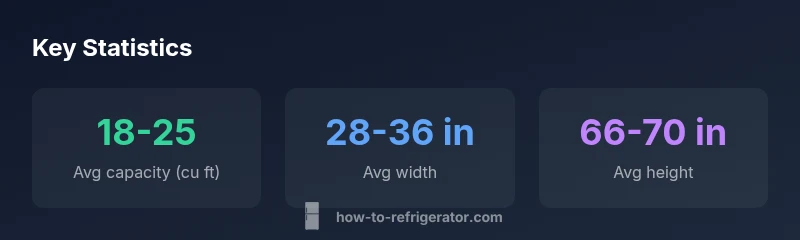
The average refrigerator size for modern homes falls in the 18 to 25 cubic feet range, with standard freestanding models around 20–22 cu ft. Compact under-counter units are typically under 10 cu ft, while large side-by-side configurations can exceed 25 cu ft. Size influences capacity, energy use, and kitchen layout.
How size is defined: cubic feet, dimensions, and capacity
In most households, refrigerator size is described in two complementary ways: interior capacity (cu ft) and exterior dimensions (width x depth x height). The interior capacity reflects usable storage space, while exterior measurements determine fit within your kitchen. When homeowners ask about the "average refrigerator size," they’re usually seeking a balance between usable space and the footprint that fits their floor plan. According to How To Refrigerator analysis, 2026, the typical standard-size fridge sits in the 18-25 cu ft range, with freestanding models converging around 20-22 cu ft. This range captures most family needs without overburdening the kitchen workflow.
For planning, many manufacturers publish a product’s interior volume alongside its exterior size. This helps you compare pantry-style storage against fresh-food and freezer compartments. If you’re remodeling or buying new, remember that claimed "capacity" often includes compartments and shelves that don’t always translate to usable space. As a practical rule, aim for a total internal space that supports your weekly groceries, beverages, and meal-prep habits, not just the advertised number.
Size ranges by refrigerator type
Size expectations vary by configuration. A compact under-counter fridge typically delivers 4-10 cu ft and is ideal for offices, studios, or secondary kitchens. Standard top-freezer or bottom-freezer models commonly hover around 18-25 cu ft, with 20-22 cu ft being especially popular. French-door and side-by-side layouts often move beyond 25 cu ft, sometimes into the 28-28+ cu ft range for families that stock large quantities of frozen goods. In all cases, exterior width typically falls between 28 and 36 inches, while height can range from 66 to 70 inches for standard models and lower for compact units. This variety lets homeowners adapt to shared kitchens, apartment layouts, and dedicated wine or beverage corners.
How to measure for your kitchen: space, doors, and traffic
Begin by measuring the floor space where the fridge will sit, then add clearance for door swing and ventilation—ideally at least 1-2 inches on the sides and 2-3 inches at the top. Consider the path from the doorway to the kitchen to prevent tight turns. The typical doorway width is 28-32 inches; some large fridges require extra clearance to tilt through. First, measure width, then height, and finally depth with doors closed. In practice, most homes end up choosing a model that fits the available footprint while allowing comfortable access to shelves and crisper drawers.
The impact of kitchen layout and workflow on size choice
Layout plays a crucial role in determining the right size. If you have a narrow galley kitchen or limited diagonal space, a taller but slimmer model might work better than a wider one. For open-plan kitchens, a mid-sized refrigerator can balance sightlines with storage, preventing a bulky appliance from overpowering the space. How To Refrigerator analysis notes that people who prioritize weekly meal planning and bulk shopping often opt for slightly larger capacities, while casual cooks lean toward smaller footprints. The key is aligning storage with how you cook and shop.
Energy use and efficiency: does bigger always mean more energy?
Size and energy use are related but not perfectly proportional. Bigger models often consume more electricity, especially if their insulation or defrost systems aren’t optimized. However, modern Energy Star-rated units of similar capacity can vary by efficiency due to compressor design, insulation, and humidity controls. When possible, compare annual energy consumption figures (kWh/year) and look for models with good insulation and a properly sized compressor. In 2026, homeowners are increasingly balancing capacity against energy costs, considering a slightly larger, efficient model rather than a smaller, inefficient one.
How to compare models: dimensions, capacity, and features
Create a comparison worksheet listing interior capacity, exterior width and height, door swing direction, and interior layout (shelves, bins, and freezer). Features such as adjustable shelves, door-in-door access, and smart sensors can influence perceived space and usability. Use the usable space estimate—subtract bulky components like cold-air return ductwork and crisper drawers—to gauge real capacity. Remember that a higher cubic-foot rating does not always mean better practicality if the shelves don’t adapt to your groceries. Keep a tape measure handy when shopping and test the door clearance in your entryway or kitchen corner.
Planning tips for small kitchens and apartments
In compact homes, every inch counts. Consider a counter-depth or counter-height model to reduce protrusion while preserving cabinet alignment. You’ll benefit from interior layout efficiency—adjustable shelves, spill-proof drawers, and slide-out baskets help maximize usable space. For apartment dwellers, standard-width models may be too wide for narrow corridors; look for 24–30 inch options that fit through typical interior doors. Pairing a mid-sized refrigerator with an efficient freezer can satisfy daily needs without sacrificing kitchen flow.
Real-world scenarios: 3 homeowner case studies
Case Study A: A family of four in a mid-sized home chose an 21 cu ft fridge with a 32-inch-wide footprint, finding it both roomy and easy to access. They coordinated shelving to accommodate variable groceries and built a weekly meal-prep routine around freezer space. Case Study B: A studio apartment resident selected a compact 6 cu ft under-counter unit, placing it under a counter with a built-in microwave shelf to save space and maintain a clean line. Case Study C: A couple upgrading to a larger collection of frozen goods opted for a 28 cu ft side-by-side with adjustable shelves, balancing load size with a functional footprint. Each scenario illustrates how real-life needs shape size decisions.
How to decide: balancing capacity, footprint, and budget
Your decision should weight capacity against footprint and upfront cost. Start by calculating your weekly grocery needs, then map those needs onto a realistic footprint that fits doorways and kitchen paths. Budget for delivery, installation, and potential energy costs. Remember that increasing size often brings incremental upgrades in features and energy efficiency, but the most important factor is how the unit fits your space and daily routine. The How To Refrigerator team recommends measuring twice, shopping once, and prioritizing a model that offers flexible storage and efficient energy use.
Size ranges by refrigerator category
| Model Type | Avg Size (cu ft) | Typical Width | Typical Height |
|---|---|---|---|
| Standard (Top/Bottom Freezer) | 18-25 | 30-36 inches | 66-70 inches |
| Compact (Under-Counter) | 4-10 | 18-24 inches | 32-36 inches |
| Counter-Height / French-Door | 24-28 | 24-30 inches | 42-43 inches |
FAQ
What is the standard average refrigerator size for a family of four?
For a family of four, typical models range from 18 to 25 cu ft, with many households choosing around 20-22 cu ft. This supports weekly groceries and meal prep without crowding the kitchen.
For a family of four, expect about 18 to 25 cubic feet.
Do you need a bigger fridge for a busy kitchen?
A busier kitchen may benefit from a larger capacity, but ensure it fits your layout and doorways. Bigger units can be energy-intensive unless they carry strong efficiency ratings.
Bigger can help busy kitchens if space allows and it’s energy-efficient.
Are compact refrigerators enough for a family?
Compact fridges under 10 cu ft are great for small spaces but usually not enough for a family’s weekly groceries. They’re best as secondary units or in studio setups.
Compact fridges work best as secondary units, not the main fridge for a family.
How can I estimate the right size for my kitchen?
Measure floor space, plan for door swing, ventilation, and traffic flow. Compare these measurements to the exterior dimensions of models you’re considering.
Measure your space and doorways, then compare with fridge dimensions.
What impact does clearance space have?
Adequate clearance improves airflow, reduces energy use, and eases door operation. Plan for at least 2-3 inches of side clearance and 2 inches at the top.
Leave space around the fridge for airflow and easy doors.
Is energy efficiency more important than size?
Both matter. A slightly larger, energy-efficient model can beat a smaller, inefficient one in running costs. Compare annual kWh and energy star ratings.
Efficiency often beats pure size when total running costs are considered.
“Size should fit your daily routine and kitchen flow, not just storage. The How To Refrigerator Team emphasizes balancing capacity with footprint and energy efficiency.”
Top Takeaways
- Measure your space before shopping.
- Aim for an 18–25 cu ft range for a family of four.
- Account for door swing and clearance in every layout.
- Prioritize energy-efficient models within your size needs.